


Taiwan’s long-term economic competitiveness will hinge not only on national champions like Taiwan Semiconductor Manufacturing Co. (TSMC, 台積電) but also on the widespread adoption of artificial intelligence (AI) and other emerging technologies, a US-based scholar has said.
At a lecture in Taipei on Tuesday, Jeffrey Ding, assistant professor of political science at the George Washington University and author of "Technology and the Rise of Great Powers," argued that historical experience shows that general-purpose technologies (GPTs) — such as electricity, computers and now AI — shape long-term economic advantages through their diffusion across the broader economy.
"What really matters is not who pioneers a breakthrough first, but which country can take frontier innovations and diffuse them throughout the entire economy," Ding said.
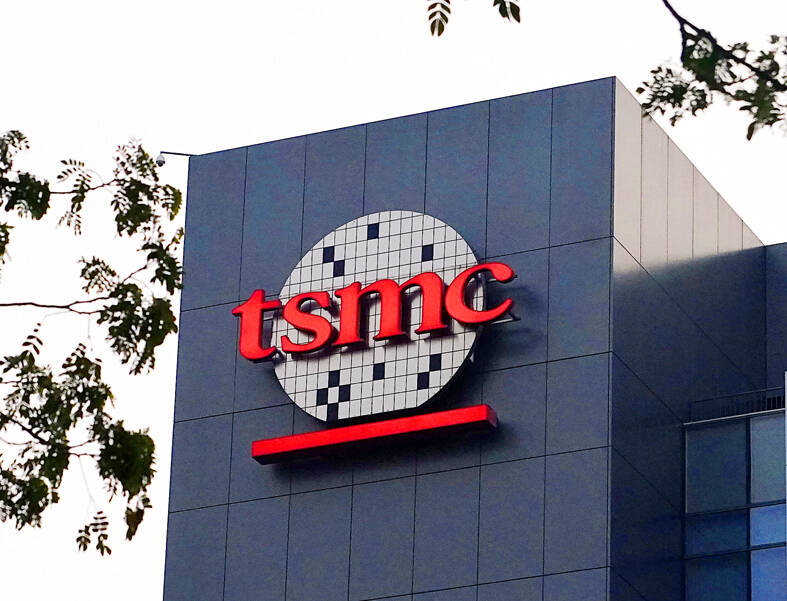
Photo: CNA
Ding said the US is "counterintuitively" in a much stronger position than China in the AI race, despite public perceptions.
Citing data from the 2020 Global Innovation Index, Ding said the US and China were placed similarly in innovation capacity, with average rankings of 11.9 and 13.8, respectively, but diverged sharply in diffusion capacity, with the US ranking around 18th compared with China’s 47.2, according to his analysis.
Applying the framework to Taiwan, Ding said the island’s rise in semiconductors already demonstrates the importance of scaling, manufacturing expertise and dense industrial ecosystems, rather than monopolizing upstream innovation.
Taiwan did not dominate upstream invention in chip technologies, but succeeded by translating overseas innovations into advanced manufacturing processes and building an extensive network of suppliers that enabled global production, Ding said.
However, Ding cautioned that as AI increasingly reshapes services, manufacturing, logistics and other sectors beyond high-tech hardware, relying too heavily on flagship firms may not be enough.
"AI is not just a technology for a few leading companies," he said. "Its economic impact depends on whether small- and medium-sized enterprises, traditional manufacturers and service industries can adopt and adapt it."
For Taiwan, he said, strengthening second-tier universities, vocational training and applied AI skills may be as important as maintaining leadership in advanced manufacturing.
"If the question is long-term economic power," Ding said, "then the ability to spread general-purpose technologies across the economy matters more than dominating any single frontier."
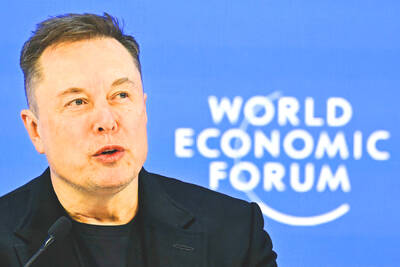
Elon Musk’s lieutenants have reached out to chip industry suppliers, including Applied Materials Inc, Tokyo Electron Ltd and Lam Research Corp, for his envisioned Terafab, early steps in an audacious and likely arduous attempt to break into the production of cutting-edge chips. Staff working for the joint venture between Tesla Inc and Space Exploration Technologies Corp (SpaceX) have sought price quotes and delivery times for an array of chipmaking gear, people familiar with the matter said. In past weeks, they’ve contacted makers of photomasks, substrates, etchers, depositors, cleaning devices, testers and other tools, according to the people, who asked not to

The EU and US are nearing an agreement to coordinate on producing and securing critical minerals, part of a push to break reliance on Chinese supplies. The potential deal would create incentives, such as minimum prices, that could advantage non-Chinese suppliers, according to a draft of an “action plan” seen by Bloomberg. The EU and US would also cooperate on standards, investments and joint projects, as well as coordinate on any supply disruptions by countries like China. The two sides are additionally seeking other “like-minded partners” to join a multicountry accord to help create these new critical mineral supply chains, which feed into

Japan approved ¥631.5 billion (US$3.97 billion) in additional subsidies to hasten Rapidus Corp’s entry into the high-stakes artificial intelligence (AI) chipmaking arena, ramping up support for a project widely regarded as a long shot. The capital is intended to bankroll Rapidus’ work for information technology firm Fujitsu Ltd, one of the initial customers that Tokyo hopes would get the signature endeavor off the ground. The new money raises the fees and investments that the government is injecting into the start-up to ¥2.6 trillion by the end of the current fiscal year to March next year, the Japanese Ministry of Economy, Trade and
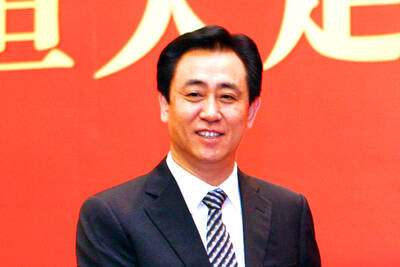
The founder of Chinese property giant Evergrande Group (恆大集團) has pleaded guilty to charges of fraud and bribery, a court said yesterday, the latest blow for what was once the country’s leading developer. Evergrande’s rise was propelled by decades of rapid urbanization and rising living standards, but in 2020, its access to credit dramatically narrowed when the government introduced curbs on excessive borrowing and speculation. The company defaulted in 2021 after struggling to repay creditors. Founder Xu Jiayin (許家印), 67, known as Hui Ka Yan in Cantonese, was reportedly held by police in 2023, with Evergrande saying he had been subjected to


 RSS
RSS