


Zimbabwe’s ban on raw lithium exports is forcing Chinese miners to rethink their strategy, speeding up plans to process the metal locally instead of shipping it to China’s vast rechargeable battery industry.
The country is Africa’s largest lithium producer and has one of the world’s largest reserves, according to the US Geological Survey (USGS).
Zimbabwe already banned the export of lithium ore in 2022 and last year announced it would halt exports of lithium concentrates from January next year.

Photo: AP
However, on Wednesday it imposed the ban with immediate effect, leaving unclear what the lithium mining sector would do in the short term, as Zimbabwe has no facilities to process lithium concentrates.
The move, which also included a blanket ban on export of all raw minerals, aims to capture the added value of refining and processing, thus creating jobs and additional government tax revenue.
However, critics say the push to refine should have come sooner, with Zimbabwe already having lost out on several years of revenues for the hard-pressed local economy.
Prospect Lithium Zimbabwe, owned by Zhejiang Huayou Cobalt, has spent US$400 million on a processing plant that should be operational in the coming weeks, its representative Patience Chizodza told Zimbabwean state broadcaster ZBC.
It would reportedly be the first factory in Africa to refine lithium concentrate into lithium sulfate — a powdered form that is one step closer to the product used in batteries.
The facility should be capable of handling 400,000 tonnes a year of concentrate.
The Zimbabwean state-owned Mutapa Energy Minerals is set to start work in the coming months on a similar plant, chief executive officer Innocent Rukweza told reporters last month.
“We expect that by mid-year — around June at the latest — construction of a concentrate-processing plant will be under way,” Rukweza said.
The US$270 million facility funded by Chinese firms would be able to process 600,000 tonnes annually, he said.
Bikita Minerals, Zimbabwe’s largest lithium mine and owned by Sinomine Resources Group, is working on feasibility studies for the construction of a lithium sulphate plant in December, spokesman Tinomuda Chakanyuka said.
“The project, which will be developed in phases, represents an estimated investment of approximately US$500 million from shareholders,” Chakanyuka said.
The facility would increase local capacity to separate minerals and “contribute to Zimbabwe’s broader industrialization and export diversification objectives,” he added.
Global demand for the soft, white metal was up 20 percent last year from 2024, with a key factor being electric vehicle sales growth in China and Europe and increased demand for batteries, the USGS said.
Zimbabwe’s exports of lithium concentrate rose to 1.5 million tonnes last year, generating the Zimbabwean government revenue of US$571.6 million, the Minerals Marketing Authority of Zimbabwe announced in early last month.
The Zimbabwean government’s moves to ban exports of raw minerals did not impress its critics.
“Government is doing too little, too late,” said Farai Maguwu, executive director of Zimbabwe’s Center for Natural Resource Governance.
With the new rush for critical minerals around the world, “people are asking serious questions about the benefits to the producer country,” he said.
“A country like Zimbabwe is exporting raw lithium and, in the process, enriching China at its own expense,” Maguwu said.
Instead it should be building its own “mine-to-market ecosystem” that manufactures and markets lithium products, he added.
Economist Godfrey Kanyenze accused the Zimbabwean government of a “deficit in policy implementation” when it effectively gave a five-year grace period on the 2022 lithium ore ban by allowing exports of raw concentrates.
Kanyenze said state oversight at Chinese-owned lithium mines was limited, making it difficult to determine how much companies produced and earned.
There have also been allegations of environmental damage and exploitation of workers, including by paying low wages.
“Zimbabwe must learn from countries like Norway, Botswana and Kuwait, which safeguard their natural resources through firm, consistent and strategic policy frameworks,” he said.
SEE CONGO’S ON PAGE 7
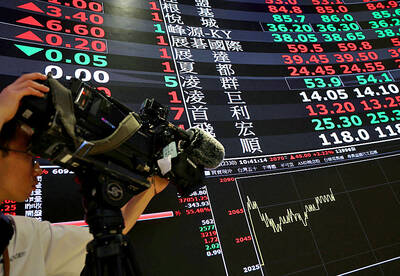
After several years flying high as Asia’s best Nvidia Corp proxy, Taiwan Semiconductor Manufacturing Co (TSMC, 台積電) is increasingly vying with other artificial intelligence (AI) stocks for investor attention. Stock traders are chasing a wider array of beneficiaries as mainstream usage of AI creates demand for hardware beyond the most-advanced chips TSMC makes for Nvidia. Subthemes from the deepening memory crunch to advances in robotics are also luring bids. At the same time, investment caps on single stocks are pushing funds to diversify, while retail investors long familiar with TSMC through its US depositary receipts are being offered a broader set of
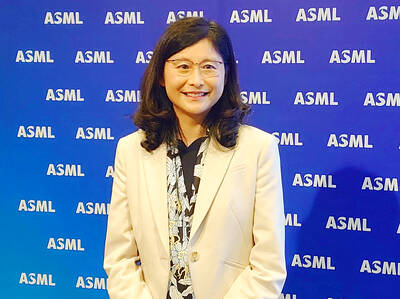
Netherlands-based semiconductor equipment supplier ASML Holding NV yesterday said that it is planning to hire an additional 1,000 people in Taiwan this year in response to growing demand from clients. ASML had previously planned to recruit 600 people this year, but that the plan has been adjusted upward, ASML vice president and ASML Taiwan general manager Grace Wang (汪佳慧) told reporters. ASML has a workforce of more than 4,500 in Taiwan, accounting for about 10 percent of its global total, Wang said. This year’s recruitment campaign would focus on adding people in the customer support, manufacturing and supply chain domains to assist ASML

UNDER MICROSCOPE: Taiwan detained three people who allegedly conspired to buy servers in Taiwan and export them using fraudulent documentation, prosecutors said Nvidia Corp chief executive officer Jensen Huang (黃仁勳) on Saturday urged Super Micro Computer Inc to tighten up on compliance after Taiwan detained three people this week for allegedly making fraudulent declarations about artificial intelligence (AI) servers made by its US partner. The development marked the nation’s first crackdown on semiconductor smuggling, which grew after the US slapped restrictions on exports of high-end chips such as Nvidia AI accelerators to China. Nvidia is “rigorous” in explaining regulations to all of its partners, Huang told reporters after arriving in Taipei. “Ultimately Super Micro has to run their own company,” he said in response to
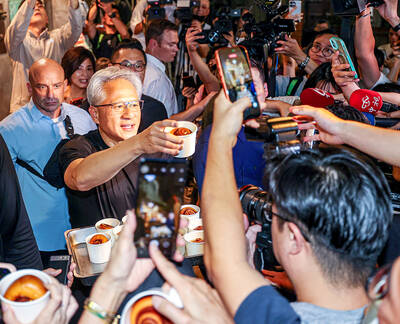
Nvidia Corp yesterday announced that CEO Jensen Huang (黃仁勳) would attend an employee meeting in Taipei tomorrow to celebrate the launch of the company’s Taiwan headquarters project. Huang would attend a gathering at the site of Nvidia’s planned headquarters in Beitou Shilin Technology Park (北投士林科技園區), the company said in a statement. After arriving in Taiwan on Saturday last week, Huang told reporters that he plans to meet with Quanta Computer Inc (廣達) chairman Barry Lam (林百里) and Taiwan Semiconductor Manufacturing Co (TSMC, 台積電) chairman C.C. Wei (魏哲家), and would attend the groundbreaking ceremony for Nvidia’s Taiwan headquarters tomorrow. Nvidia has not yet applied


 RSS
RSS