


China is finally to open its borders to US beef while cooked Chinese poultry is closer to hitting US supermarket shelves as part of a US-China trade agreement.
The US would also allow US companies to ship liquefied natural gas (LNG) to China as part of the bilateral agreement reached following US President Donald Trump’s meeting with Chinese President Xi Jinping (習近平) last month.
It covers a range of barriers from agriculture to energy to the operation of US financial firms in China.
US Secretary of Commerce Wilbur Ross hailed the agreement as “a Herculean accomplishment” forged in record time.
“This is more than has been done in the whole history of US-China relations on trade,” Ross told reporters on Thursday evening at the White House. “Normally trade deals are denominated in multiple years, not tens of days.”
In Beijing, Chinese Vice Minister of Finance Zhu Guangyao (朱光耀) told reporters that the early results of the agreement showed that economic collaboration between the two sides “couldn’t be closer.”
However, while the agreement touches on many of the trade barriers US companies have long complained about, it remains to be seen how far China will go to allow more US exports.
Previous US administrations have hailed market-opening agreements only to be left disappointed.
“The key in these negotiations is specifics that are enforceable — literally the devil is in the details,” said Scott Mulhauser, the former chief of staff at the US embassy in Beijing.
“The more these agreements include real, concrete outcomes rather than platitudes, rehashing old ground or punts to the future, the better they are. American companies, workers, farmers and more are eager for more access to Chinese markets, and they’ll look to ensure reality matches the rhetoric of these promises,” Mulhauser said.
Trump has made the US’ massive trade deficits, and specifically the gap with China, a major issue in his campaign and during the early days of his administration.
He has said that the US’ perennial trade deficits have cost millions of factory jobs and pledged to take a tougher stance in trade negotiations to lower the imbalances.
Under the agreement, the US would welcome Chinese companies negotiating agreements to purchase US-produced LNG.
The US Department of Energy has already authorized the shipment of 543.7 million cubic meters per day of natural gas exports to China and other interested countries, the US Department of Commerce said.
A number of US companies are seeking permits to build facilities to process liquefied gas, which would allow the US to become a net exporter of gas, something it has not been since the 1950s.
China is attempting to turn to natural gas as a way to reduce its dependence on coal and combat the country’s extensive air pollution.
The move would allow China to diversify its supply and provide a significant market for US suppliers — though the expansion could boost prices for US consumers.
Ross downplayed the impact, pointing to the decline in natural gas prices.
“If you look at it on a historical basis, there’s plenty of room to go back up,” he said. “It’s not as though this is going to wreck anybody’s pocketbook.”
The agreement would also ease import restrictions on agricultural goods, including ending China’s ban on beef imports that was imposed in 2003 after a case of mad cow disease.
In exchange, the US would allow the sale of cooked Chinese poultry — a move Ross said could be done safely.
“We do not intend to endanger anybody’s health or safety in the US,” he said.
The agreement would also streamline the evaluation of pending US biotechnology product applications; pave the way for allowing US-owned suppliers of electronic payment services to begin the licensing processes in China; and facilitate the entrance of Chinese banks into the US banking market, among other measures.
The US’ trade deficit in goods and services with China last year totaled US$310 billion, by far the largest imbalance with any country.
The deficit with China represented about 60 percent of the US’ total deficit last year of US$500.6 billion.
The two countries have also agreed to hold high-level talks this summer to be led by Ross, US Secretary of the Treasury Steven Mnuchin and Chinese Vice Premier Wang Yang (汪洋) to work on a one-year plan.
The talks represent the latest effort to resolve contentious trade issues between the world’s two largest economies in a process that began during the administration of former US president George W. Bush under former US secretary of the Treasury Henry Paulson.
Both countries got together twice a year. The administration of former US president Barack Obama continued the effort, but reduced the frequency of the talks to once a year.
While Trump had earlier said China could receive more favorable trade terms from the US in return for help in persuading North Korea to cease its nuclear and missile activities, Zhu downplayed any suggestion of a link between the two.
“Both sides have a deep and close understanding that the US-China economic relationship can’t be politicized.” Zhu said.
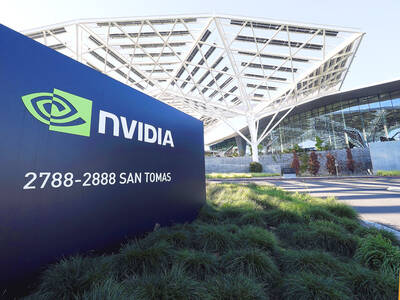
CHIP RACE: Three years of overbroad export controls drove foreign competitors to pursue their own AI chips, and ‘cost US taxpayers billions of dollars,’ Nvidia said China has figured out the US strategy for allowing it to buy Nvidia Corp’s H200s and is rejecting the artificial intelligence (AI) chip in favor of domestically developed semiconductors, White House AI adviser David Sacks said, citing news reports. US President Donald Trump on Monday said that he would allow shipments of Nvidia’s H200 chips to China, part of an administration effort backed by Sacks to challenge Chinese tech champions such as Huawei Technologies Co (華為) by bringing US competition to their home market. On Friday, Sacks signaled that he was uncertain about whether that approach would work. “They’re rejecting our chips,” Sacks

NATIONAL SECURITY: Intel’s testing of ACM tools despite US government control ‘highlights egregious gaps in US technology protection policies,’ a former official said Chipmaker Intel Corp has tested chipmaking tools this year from a toolmaker with deep roots in China and two overseas units that were targeted by US sanctions, according to two sources with direct knowledge of the matter. Intel, which fended off calls for its CEO’s resignation from US President Donald Trump in August over his alleged ties to China, got the tools from ACM Research Inc, a Fremont, California-based producer of chipmaking equipment. Two of ACM’s units, based in Shanghai and South Korea, were among a number of firms barred last year from receiving US technology over claims they have
BARRIERS: Gudeng’s chairman said it was unlikely that the US could replicate Taiwan’s science parks in Arizona, given its strict immigration policies and cultural differences Gudeng Precision Industrial Co (家登), which supplies wafer pods to the world’s major semiconductor firms, yesterday said it is in no rush to set up production in the US due to high costs. The company supplies its customers through a warehouse in Arizona jointly operated by TSS Holdings Ltd (德鑫控股), a joint holding of Gudeng and 17 Taiwanese firms in the semiconductor supply chain, including specialty plastic compounds producer Nytex Composites Co (耐特) and automated material handling system supplier Symtek Automation Asia Co (迅得). While the company has long been exploring the feasibility of setting up production in the US to address

OPTION: Uber said it could provide higher pay for batch trips, if incentives for batching is not removed entirely, as the latter would force it to pass on the costs to consumers Uber Technologies Inc yesterday warned that proposed restrictions on batching orders and minimum wages could prompt a NT$20 delivery fee increase in Taiwan, as lower efficiency would drive up costs. Uber CEO Dara Khosrowshahi made the remarks yesterday during his visit to Taiwan. He is on a multileg trip to the region, which includes stops in South Korea and Japan. His visit coincided the release last month of the Ministry of Labor’s draft bill on the delivery sector, which aims to safeguard delivery workers’ rights and improve their welfare. The ministry set the minimum pay for local food delivery drivers at


 RSS
RSS