


Want a coffee while you shop? A glass of wine? Those are just few of the gimmicks being rolled out by retailers as they fight to boost store traffic — and ensure their survival in the Amazon era.
Stores are testing artificial intelligence programs to guide shoppers through their aisles, and swipe-right, swipe-left games, that borrow from dating apps to offer them personalized pickings.
Others have added coffee shops, restaurants and even alcohol in an attempt to drag consumers away from their laptops and back in the dressing room.
“It has to be a better experience” and not just “a simple warehouse of goods,” said Chris Donnelly, managing director at Accenture Strategy, a business consultancy.
“There’s got to be more of an emotional, experiential connection,” Donnelly said.
The new tech and add-on perks look set to become even more critical following another bad holiday shopping season that has sharpened focus on the oversized US retail footprint
Experts predict some brick-and-mortar stores will survive the period of reckoning, but there will be fewer of them, and the survivors will be more customer-friendly.
A recent Accenture report predicted the next decade will be “the golden age of the consumer,” offering a “growing array of products and services, often personalized to their specific needs and wants.”
However, with that comes disruption and Accenture has warned of a painful shakeout ahead as old-fashioned malls close and jobs are lost.
Retailers are showing signs of the strain. Two weeks ago, Ralph Lauren Corp announced the surprise departure of chief executive Stefan Larsson due to disagreements with the company founde, while Tiffany & Co’s chief executive resigned last week.
Macy’s Inc last month announced plans to close 100 stores and eliminate about 10,000 jobs and reportedly has approached rival Hudson’s Bay Co over a potential merger.
Those woes have sparked a willingness to try new things.
“There’s just a lot of experimentation going on,” IBM Corp general manager for global consumer industries Steve Laughlin said. “I would argue not nearly enough.”
Industry insiders are bullish on greater use of hand-held tablets so employees can call up a client’s purchase history or parry questions from well-informed customers about pricing and product information.
Retailers also are turning to data analytics, and IBM is working with them to make use of big data from smartphones on customer patterns, for example to see if shoppers are visiting the shoe department, but not buying anything.
Chains such as Target Corp and Macy’s have even hired their own engineers to review data.
However, the new technologies come with risks.
Nordstrom Inc in 2013 said it was pulling the plug on a smartphone tracking program after some customers raised privacy concerns.
Retailers also are divided on how to make use of ubiquitous mobile apps. Some view them as valuable tools — notably for sending promotions or coupons to customers in or near their stores, but others say mobile apps can detract from the in-store experience.
“When they come to the store, you don’t want them to interact with the app,” said Ronny Max, a retail industry consultant who specializes in behavior analytics. “The whole point of them coming to the store is so they can interact with the store.”
One new feature generating interest is the interactive dressing room, unveiled at Ralph Lauren’s 5th Avenue flagship store in New York City and a handful of other stores.
The technology, developed at Oak Labs, a company started in 2015 by former eBay employees and others, gives customers an electronic link to staff while they are trying on clothes.
Customers can request different sizes and colors without having to get dressed again and leave the dressing room to go back into the store.
“You’ve shown a lot of intent if you’ve picked up an item and gotten undressed,” Oak Labs cofounder and chief business officer Michael Franklin said.
The system also can translate between languages, suggest complementary items and process transactions.
Oak Labs declined to provide pricing details, but said the technology boosted average purchases by 55 percent in the handful of places it has been tried.
Fans say it also can play a role in managing inventory and addressing problem items, such as a jacket that is repeatedly tried and set aside because of poor fit.
However, analysts doubt that such deluxe dressing rooms can be a silver bullet for the sector:High costs mean there is little chance of them being rolled out widely in the US any time soon.
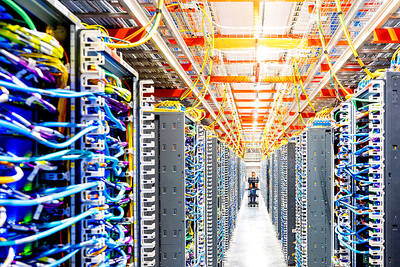
AI SPLURGE: The four major US tech companies have lost more than US$950 billion in value since releasing earnings and outlooks, while equipment makers were gaining Four of the biggest US technology companies together have forecast capital expenditures that would reach about US$650 billion this year — a flood of cash earmarked for new data centers and all the gear within them. The spending planned by Alphabet Inc, Amazon.com Inc, Meta Platforms Inc and Microsoft Corp, all in pursuit of dominance in the still-nascent market for artificial intelligence (AI) tools, is a boom without a parallel this century. Each of the companies’ estimates for this year is expected either near or surpass their budgets for the past three years combined. They would set a high-watermark for capital spending
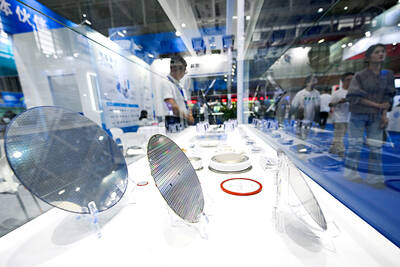
China’s top chipmaker has warned that breakaway spending on artificial intelligence (AI) chips is bringing forward years of future demand, raising the risk that some data centers could sit idle. “Companies would love to build 10 years’ worth of data center capacity within one or two years,” Semiconductor Manufacturing International Corp (SMIC, 中芯) cochief executive officer Zhao Haijun (趙海軍) said yesterday on a call with analysts. “As for what exactly these data centers will do, that hasn’t been fully thought through.” Moody’s Ratings projects that AI-related infrastructure investment would exceed US$3 trillion over the next five years, as developers pour eye-watering sums

Bank of America Corp nearly doubled its forecast for the nation’s economic growth this year, adding to a slew of upgrades even after a rip-roaring last year propelled by demand for artificial intelligence (AI). The firm lifted its projection to 8 percent from 4.5 percent on “relentless global demand” for the hardware that Taiwanese companies make, according to a note dated yesterday by analysts including Xiaoqing Pi (皮曉青). Taiwan’s GDP expanded 8.63 percent last year, the fastest pace since 2010. The increase “reflects our sustained optimism over Taiwan’s technology driven expansion and is reinforced by several recent developments,” including a more stable currency,

COLLABORATION: Taiwan and the US could jointly find solutions to weaknesses in supply chain resilience for critical materials, focusing on mining and initial refinement Taiwan is likely to purchase rare earths from the US in the future, and is also in talks with Australia and Canada to strengthen global rare earth supply chain security, Minister of Economic Affairs Kung Ming-hsin (龔明鑫) said yesterday. Taiwan and the US last month concluded the sixth Economic Prosperity Partnership Dialogue, during which both sides signed a joint statement endorsing the principles of the Pax Silica Declaration, pledging to deepen cooperation in areas including critical minerals. At the time, Kung said the two sides would establish working groups to advance cooperation in areas including artificial intelligence, digital infrastructure, critical materials and


 RSS
RSS