


The TAIEX yesterday climbed 100.41 points, or 1.1 percent, to close at 9,253.5 on the last trading day of the year, driven by the Executive Yuan’s plan to cut transaction taxes on day trading by half in a bid to boost stock market turnover, analysts said.
Taiwan Stock Exchange (TWSE) turnover stood at NT$56.44 billion (US$1.75 billion), increasing by 6.97 percent from the previous day’s NT$52.76 billion, as foreign investors, proprietary traders and mutual funds bought a net NT$6.44 billion worth of Taiwanese shares.
“We expect the overall turnover to increase next year with contribution from the anticipated expansion of day trading,” Taiwan Stock Exchange senior executive and vice president Chien Lih-chung (簡立忠) told a news conference.
Chien said the TWSE will initiate new measures next month, such as allowing individual investors to purchase a fixed volume of shares or exchange-traded funds (ETFs) on a fixed-term basis to lend support to the local bourse.
The stock exchange is to convene five investment forums next month and encourage more than 100 government-managed institutions to invest more in ETFs, he said, adding that the funds would be available for trade in exchange for US dollars in the first half of next year.
The TWSE plans to invite nine well-performing companies every quarter next year to update investors on their business performance and outlook, he added.
Outside Taiwan, the TWSE plans to host forums in Southeast Asian countries next year to encourage more overseas Taiwanese companies to list on the Taiwan Stock Exchange, Chien said.
The expectation that the tax cut will encourage more investors to return to the trading floor stirred up buying in the financial sector, particularly by securities firms, which could rake in greater profits from the higher trading volume.
However, Hua Nan Securities Co (華南永昌證券) chairman David Chu (儲祥生) was quoted by the Central News Agency as saying that he is not too optimistic that the overall market turnover could grow by between 10 and 20 percent as a result of the tax cut, as day trading accounted for only 10 percent of total trading.
The real challenge is to improve the fundamentals, bolster corporate earnings and build a better relationship between Taiwan and China, Chu said.
Without a sizeable turnover on the local bourse, the tax reduction on day trading will be adverse to individual investors, as foreign institutional players already dominate local trading, Chinese-language monthly Wealth Magazine executive director Hsieh Chin-ho (謝金河) said.
Hsieh was quoted by the Chinese-language Apple Daily as saying that the government should treat foreign and domestic investors fairly in terms of dividend taxation.
The TAIEX this year surged as much as 10.98 percent, or 915.44 points, from a year earlier, the largest annual increase in the past seven years, TWSE data showed.
Total market value of listed firms expanded to NT$27.24 trillion this year, NT$2.74 trillion, or 11.18 percent, higher from last year’s NT$24.5 trillion, but the market’s annual turnover continued declining for the third consecutive year to NT$18.9 trillion, the lowest since 2002.
The average daily turnover was NT$77.518 billion this year, with the lowest turnover registered on June 4 at NT$30.206 billion, the TWSE data showed.

SECOND-RATE: Models distilled from US products do not perform the same as the original and undo measures that ensure the systems are neutral, the US’ cable said The US Department of State has ordered a global push to bring attention to what it said are widespread efforts by Chinese companies, including artificial intelligence (AI) start-up DeepSeek (深度求索), to steal intellectual property from US AI labs, according to a diplomatic cable. The cable, dated Friday and sent to diplomatic and consular posts around the world, instructs diplomatic staff to speak to their foreign counterparts about “concerns over adversaries’ extraction and distillation of US AI models.” Distillation is the process of training smaller AI models using output from larger, more expensive ones to lower the costs of training a powerful new
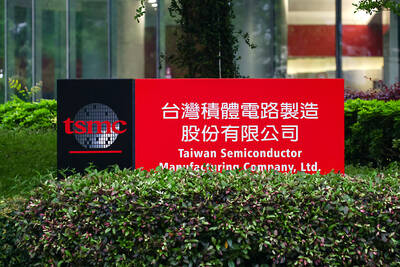
Shares of Taiwan Semiconductor Manufacturing Co (TSMC, 台積電) have repeatedly hit new highs, but an equity analyst said the stock’s valuation remains within a reasonable range and any pullback would likely be technical. The contract chipmaker’s historical price-to-earnings (P/E) ratio has ranged between 20 and 30, Cathay Futures Consultant Co (國泰證期) analyst Tsai Ming-han (蔡明翰) told Central News Agency. With market consensus projecting that TSMC would post earnings per share of about NT$100 (US$3.17) this year, supported by strong global demand for artificial intelligence (AI) applications, and the stock currently trading at a P/E ratio of below 25, Tsai said the valuation
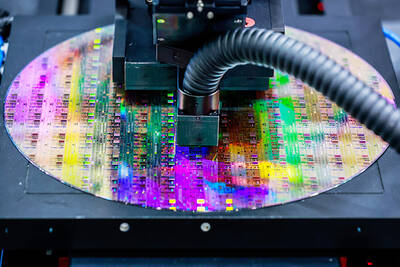
The artificial intelligence (AI) boom has triggered a seismic reshuffling of global equity markets, with Taiwan and South Korea muscling past European nations one by one. With its stock market now valued at nearly US$4.3 trillion, Taiwan surpassed the UK, Europe’s biggest market, earlier this month, data compiled by Bloomberg showed. South Korea is about US$140 billion away from doing the same. The tech-heavy Asian markets have shot past Germany and France in the past seven months. The shift is largely down to massive gains in shares of three companies that provide essential hardware for AI: Taiwan Semiconductor Manufacturing Co (TSMC, 台積電),
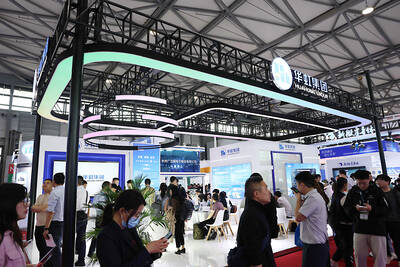
The US Department of Commerce last week ordered multiple chip equipment companies to halt shipments of certain tools to China’s second-largest chipmaker, Hua Hong Semiconductor Ltd (華虹半導體), its latest action to slow the country’s development of advanced chips, two people familiar with the matter said. The department sent letters to at least a handful of companies informing them of restrictions on tools and other materials destined for two Hua Hong facilities US officials believe make China’s most sophisticated chips, the people said. Top US chip equipment companies Lam Research Corp, Applied Materials Inc and KLA Corp, each of which has significant


 RSS
RSS