


Two multinational tech companies previously questioned over labor and workforce conditions have won a new global award for turning the spotlight onto their own supply chains to eradicate modern day slavery from their operations.
The inaugural Thomson Reuters Foundation Stop Slavery Award was conferred on US technology company Hewlett Packard Enterprise Co and NXP Semiconductors NV, which is the world’s largest chip supplier to the automotive industry.
The award, designed by Turner Prize-winning sculptor Anish Kapoor, aims to recognize businesses that submit their labor practices to scrutiny and excel in efforts to investigate human rights abuses and clean up their supply chain.
The winners were chosen from a shortlist of 10 companies employing thousands of people in sectors ranging from electronics to retail to mining and included Apple, Tesco PLC and global seafood producer Thai Union Group PCL.
“As some of the biggest companies in the world, we have a particular responsibility to eradicate forced labor from our supply chains,” Hewlett Packard Enterprise chief executive officer Meg Whitman said in a video message as the award was announced late on Wednesday at Trust Women, an annual trafficking and women’s rights conference.
The award to Hewlett Packard Enterprise, for transparency and response to challenge, recognized the company’s commitment to seek expert input to scrutinize its supply chains and to share this information.
In 2011, Hewlett Packard, which has a workforce of about 315,000, recognized a growing risk for forced labor among foreign migrant workers, particularly in Southeast Asia, so hosted a series of anti-trafficking workshops with suppliers and labor agencies in the region.
Organizers of the award said it was interesting that all of the shortlisted companies had received media attention highlighting modern slavery risks related to their business operations or supply chains.
The shortlist was selected after companies completed a detailed questionnaire, designed in partnership with human rights specialists at multinational law firm Baker & McKenzie, giving significant detail of their operations.
The criteria were developed using a combination of existing standards, including the UK Modern Slavery Act and the California Transparency in Supply Chains Act, as well as other global best practice standards.
An independent specialist assessed the company submissions on the strength of anti-trafficking policies already in place as well as their ability to identify and respond to problems.
Judges chose Netherlands-based NXP Semiconductors, which employs 45,000 people in 35 nations, to win the award for policy and implementation.
NXP’s chief executive officer Richard Clemmer said the company’s anti-slavery work began five years ago when a customer helped uncover evidence that recruitment companies were charging fees or holding families hostage for money to secure jobs at NXP.
“These were issues different to what the term ‘slavery’ usually means to people but we were able to eradicate it,” he told reporters.
The company established an accountability system which requires its board of directors and chief executive officer to sign off on all human trafficking policies and activities and this is backed up by global training protocols.
It also identifies vulnerable worker populations and conducts targeted training. This year, they retrained more than 300 suppliers in Malaysia.
“This is the way we ensure we are good global citizens and that anyone we do business with follows the same high standards that we do,” Clemmer said. “We have a complete team that goes out to audit and train procurement organizations to establish the right principles and processes with suppliers. We train so that working conditions are safe and healthy.”
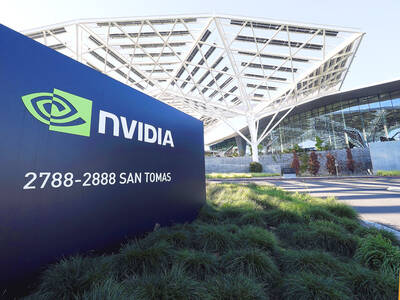
CHIP RACE: Three years of overbroad export controls drove foreign competitors to pursue their own AI chips, and ‘cost US taxpayers billions of dollars,’ Nvidia said China has figured out the US strategy for allowing it to buy Nvidia Corp’s H200s and is rejecting the artificial intelligence (AI) chip in favor of domestically developed semiconductors, White House AI adviser David Sacks said, citing news reports. US President Donald Trump on Monday said that he would allow shipments of Nvidia’s H200 chips to China, part of an administration effort backed by Sacks to challenge Chinese tech champions such as Huawei Technologies Co (華為) by bringing US competition to their home market. On Friday, Sacks signaled that he was uncertain about whether that approach would work. “They’re rejecting our chips,” Sacks

NATIONAL SECURITY: Intel’s testing of ACM tools despite US government control ‘highlights egregious gaps in US technology protection policies,’ a former official said Chipmaker Intel Corp has tested chipmaking tools this year from a toolmaker with deep roots in China and two overseas units that were targeted by US sanctions, according to two sources with direct knowledge of the matter. Intel, which fended off calls for its CEO’s resignation from US President Donald Trump in August over his alleged ties to China, got the tools from ACM Research Inc, a Fremont, California-based producer of chipmaking equipment. Two of ACM’s units, based in Shanghai and South Korea, were among a number of firms barred last year from receiving US technology over claims they have
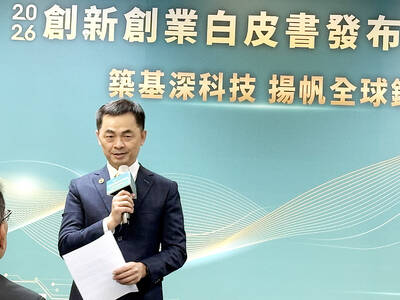
BARRIERS: Gudeng’s chairman said it was unlikely that the US could replicate Taiwan’s science parks in Arizona, given its strict immigration policies and cultural differences Gudeng Precision Industrial Co (家登), which supplies wafer pods to the world’s major semiconductor firms, yesterday said it is in no rush to set up production in the US due to high costs. The company supplies its customers through a warehouse in Arizona jointly operated by TSS Holdings Ltd (德鑫控股), a joint holding of Gudeng and 17 Taiwanese firms in the semiconductor supply chain, including specialty plastic compounds producer Nytex Composites Co (耐特) and automated material handling system supplier Symtek Automation Asia Co (迅得). While the company has long been exploring the feasibility of setting up production in the US to address

OPTION: Uber said it could provide higher pay for batch trips, if incentives for batching is not removed entirely, as the latter would force it to pass on the costs to consumers Uber Technologies Inc yesterday warned that proposed restrictions on batching orders and minimum wages could prompt a NT$20 delivery fee increase in Taiwan, as lower efficiency would drive up costs. Uber CEO Dara Khosrowshahi made the remarks yesterday during his visit to Taiwan. He is on a multileg trip to the region, which includes stops in South Korea and Japan. His visit coincided the release last month of the Ministry of Labor’s draft bill on the delivery sector, which aims to safeguard delivery workers’ rights and improve their welfare. The ministry set the minimum pay for local food delivery drivers at


 RSS
RSS