


After fueling the 20th century automobile culture that reshaped cities and defined modern life, gasoline has had its day.
The International Energy Agency (IEA) forecasts that global gasoline consumption has all but peaked, as more efficient cars and the advent of electric vehicles from new players, such as Tesla Motors Inc, halt demand growth in the next 25 years. That shift is to have profound consequences for the oil-refining industry, because gasoline accounts for one in four barrels consumed worldwide.
“Electric cars are happening,” IEA executive director Fatih Birol said in an interview in London, adding that their number would rise from little more than 1 million last year to more than 150 million by 2040.
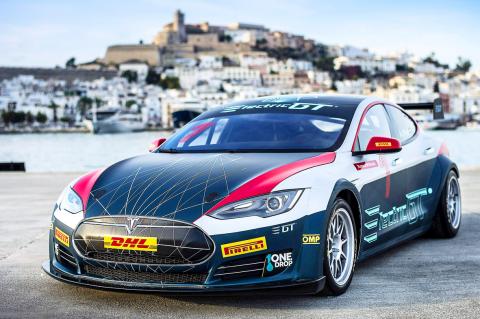
Photo: EPA
The cresting of gasoline demand shows how rapidly the oil landscape is changing, casting a shadow over an industry that commonly forecasts decades of growth ahead. Royal Dutch Shell PLC, the world’s second-biggest energy company by market value, shocked rivals this month when a senior executive said overall oil demand could peak in as little as five years.
The IEA does not share Shell’s pessimism. While the agency anticipates a gasoline peak, it still forecasts overall oil demand growing for several decades because of higher consumption of diesel, fuel oil and jet fuel by the shipping, trucking, aviation and petrochemical industries.
For Philip Verleger, president of the consultant PKVerleger LLC in Colorado and a veteran oil market analyst, the IEA’s outlook is one of the more optimistic outcomes for the global industry.
“Refiners across the globe can only hope that this forecast turns out to be right — because all the indications are today that consumption is going to begin dropping not in 2030, but probably in 2020,” Verleger said. “It’s the best news a dying patient can hope to get.”
The projections are part of the analysis the Paris-based IEA did for its World Energy Outlook 2016 flagship report.
The agency forecast that gasoline demand will drop to 22.8 million barrels a day by 2020 from 23 million barrels a day last year. By 2030, consumption is to rebound slightly, reaching a peak of 23.1 million barrels a day, before falling again toward 2040.
The forecast is more pessimistic than the one released a year ago, when the IEA saw robust demand growth from now until 2030.
Gasoline has been the world’s choice to power automobiles. From the 1950s onward, when Henry Ford’s dream that every middle-class American could own a car became reality, gas stations sprung up next to drive-through restaurants and strip malls and transformed the landscape of the US and economies across the globe.
However, now, car companies — most obviously Tesla, but also incumbents such as General Motors Co, BMW AG and Nissan Motor Co — are putting their money, and reputations, behind electric vehicles. With technology improving — especially for batteries — prices are falling. Tax breaks, particularly in China, are helping sales.
Global gasoline demand grew by about 20 percent between 1990 and last year, despite competition from diesel in Europe, where the fuel benefited from tax breaks.
In the next 25 years, gasoline consumption would drop 0.2 percent, according to the new IEA calculations.
While the number of passenger vehicles would double to 2 billion by 2040, “the amount of oil we use for cars will be lower than today,” Birol said.


Taiwan’s foreign exchange reserves fell below the US$600 billion mark at the end of last month, with the central bank reporting a total of US$596.89 billion — a decline of US$8.6 billion from February — ending a three-month streak of increases. The central bank attributed the drop to a combination of factors such as outflows by foreign institutional investors, currency fluctuations and its own market interventions. “The large-scale outflows disrupted the balance of supply and demand in the foreign exchange market, prompting the central bank to intervene repeatedly by selling US dollars to stabilize the local currency,” Department of Foreign

Intel Corp is joining Elon Musk’s long-shot effort to develop semiconductors for Tesla Inc, Space Exploration Technologies Corp and xAI, marking a surprising twist in the chipmaker’s comeback bid. Intel would help the Terafab project “refactor” the technology in a chip factory, the company said on Tuesday in a post on X, Musk’s social media platform. That is a stage in the development process that typically helps make chips more powerful or reliable. The chipmaker’s shares jumped 4.2 percent to US$52.91 in New York trading on Tuesday. The Terafab project is a grand plan by Musk to eventually manufacture his own chips for

Taiwan Power Co (Taipower, 台電) yesterday said it plans to resume operations at two coal-fired power generators for three months to boost security of electricity supply as liquefied natural gas (LNG) supply risks are running high due to the Middle East conflict. The two coal-fired power generators are at Mailiao Power Plant in Yunlin County’s Mailiao Township (麥寮). The plant, operated by Formosa Plastics Group (台塑集團), supplied electricity to Taipower’s power grid until the end of last year. Taipower’s decision came about one month after Minister of Economic Affairs Kung Ming-hsin (龔明鑫) on March 10 said that the nation had no imminent

Some robotaxi passengers were left stranded in the middle of fast-moving traffic in a major Chinese city after their driverless vehicles stopped running, according to police and media reports on Wednesday. A preliminary investigation indicates more than 100 robotaxis came to a halt because of a “system malfunction,” police in the city of Wuhan said in a statement, without elaborating. No injuries were reported. One passenger told Chinese media that their robotaxi stopped after turning a corner. An instruction on a screen read: “Driving system malfunction. Staff are expected to arrive in 5 minutes.” After no one showed up, the passenger pushed


 RSS
RSS