


Global funds sold about US$11 billion of equities and bonds in Asia’s emerging markets after the victory of US president-elect Donald Trump, as expectations for his economic policies sent US Treasury yields higher and sparked the US dollar’s strongest rally in eight years.
India suffered the biggest outflows between Nov. 9 and Friday last week, followed by Thailand, according to calculations by Bloomberg using official data.
The capital flight trims the year-to-date inflow into Taiwan, India, Indonesia, the Philippines, South Korea and Thailand to about US$55 billion.
“Fund outflows from emerging markets will probably continue for a while and then investors will see if Trump will carry out some policies he has mentioned before the election, such as fiscal stimulus and protectionist-type trade policies,” Masakatsu Fukaya, an emerging markets trader with Mizuho Bank Ltd in Tokyo, said in a phone interview. “Many of his policies may lead to a stronger [US] dollar and are negative on the emerging markets.”
The current wave of fund outflows is unlikely to match that of the so-called Taper Tantrum, when then-US Federal Reserve chairman Ben Bernanke’s signal to reduce monetary stimulus sent a shock wave through global markets, according to BlackRock Inc.
There are more positive factors now — including macro improvements in the region and narrowing of current-account deficits in Indonesia and India, the company said.
“You can continue to see some more outflows, but I don’t think it’s anywhere similar in terms of the overall scope of what we’ve observed in the Taper Tantrum,” said Neeraj Seth, Singapore-based head of Asian credit at BlackRock. “If you look at the Asian economies at that point, a number were on a very weak footing. Since that Taper Tantrum, you’ve seen a very significant move in terms of macro stability that you see in Asia.”
Bloomberg’s US dollar index climbed the most since 2008 in the past two weeks amid speculation that Trump’s reflationary policies would trigger higher interest rates.
By contrast, South Korea’s won has dropped 3.5 percent since the US election, Indonesia’s rupiah has weakened 2.7 percent and the Philippine peso has fallen 2.6 percent.
Trump said in a video that he would issue notification of intent to withdraw from the Trans-Pacific Partnership trade deal on his first day in office. He has vowed to spend US$1 trillion to rebuild and improve the US’ crumbling infrastructure.
Fund outflows:
Taiwan: Global funds were net sellers of US$2.75 billion in stocks from Nov. 9 to Friday. No comparable data are available for bonds.
India: Foreign investors were net sellers of US$1.5 billion in bonds and US$1.4 billion in equities from Nov. 9 to Thursday.
Thailand: Global funds were net sellers of 80.5 billion baht (US$2.3 billion) in bonds and US$534.3 million in stocks from Nov. 9 to Friday.
Indonesia: Overseas investors sold a net total of 13.9 trillion rupiah (US$1 billion) in local debt from Nov. 9 to Wednesday and US$444.2 million in equities from Nov. 9 to Friday.
South Korea: Global funds were net sellers of 30 million won (US$25,500) in listed bonds from Nov. 9 to Thursday and US$949.1 million won in equities from Nov. 9 to Friday.
Philippines: Investors were net sellers of US$170.6 million in stocks from Nov. 9 to Friday. No comparable data are available for bonds.

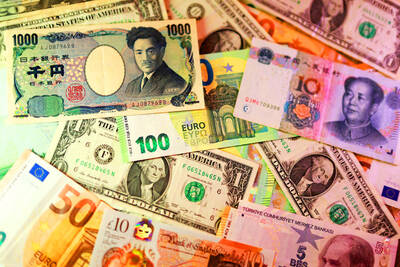
Taiwan’s foreign exchange reserves fell below the US$600 billion mark at the end of last month, with the central bank reporting a total of US$596.89 billion — a decline of US$8.6 billion from February — ending a three-month streak of increases. The central bank attributed the drop to a combination of factors such as outflows by foreign institutional investors, currency fluctuations and its own market interventions. “The large-scale outflows disrupted the balance of supply and demand in the foreign exchange market, prompting the central bank to intervene repeatedly by selling US dollars to stabilize the local currency,” Department of Foreign

Intel Corp is joining Elon Musk’s long-shot effort to develop semiconductors for Tesla Inc, Space Exploration Technologies Corp and xAI, marking a surprising twist in the chipmaker’s comeback bid. Intel would help the Terafab project “refactor” the technology in a chip factory, the company said on Tuesday in a post on X, Musk’s social media platform. That is a stage in the development process that typically helps make chips more powerful or reliable. The chipmaker’s shares jumped 4.2 percent to US$52.91 in New York trading on Tuesday. The Terafab project is a grand plan by Musk to eventually manufacture his own chips for
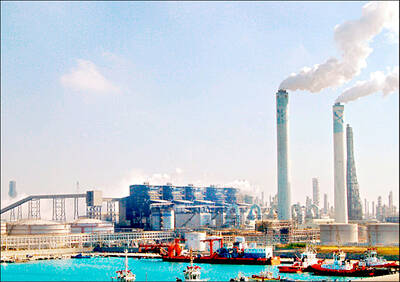
Taiwan Power Co (Taipower, 台電) yesterday said it plans to resume operations at two coal-fired power generators for three months to boost security of electricity supply as liquefied natural gas (LNG) supply risks are running high due to the Middle East conflict. The two coal-fired power generators are at Mailiao Power Plant in Yunlin County’s Mailiao Township (麥寮). The plant, operated by Formosa Plastics Group (台塑集團), supplied electricity to Taipower’s power grid until the end of last year. Taipower’s decision came about one month after Minister of Economic Affairs Kung Ming-hsin (龔明鑫) on March 10 said that the nation had no imminent

Some robotaxi passengers were left stranded in the middle of fast-moving traffic in a major Chinese city after their driverless vehicles stopped running, according to police and media reports on Wednesday. A preliminary investigation indicates more than 100 robotaxis came to a halt because of a “system malfunction,” police in the city of Wuhan said in a statement, without elaborating. No injuries were reported. One passenger told Chinese media that their robotaxi stopped after turning a corner. An instruction on a screen read: “Driving system malfunction. Staff are expected to arrive in 5 minutes.” After no one showed up, the passenger pushed


 RSS
RSS