


Australian mining magnate Gina Rinehart yesterday increased her joint offer with a Chinese company for one of the world’s biggest cattle estates, to fend off a rival bid by an all-Australian consortium.
Rinehart’s Hancock Prospecting Pty and Chinese property developer Shanghai CRED Real Estate Stock Co (上海中房置業) raised their offer from A$365 million to A$386.5 million (US$279 million to US$295 million) for Australia’s biggest private landowner — cattle firm S. Kidman & Co — days after four wealthy grazier families launched their own A$386 million bid.
The local families had argued their proposal was better as it did not need approval from Australia’s Foreign Investment Review Board (FIRB).
While the Kidman sale has attracted keen interest from Chinese firms wanting to secure the sprawling pastoral empire, the Australian government has previously rejected two Chinese-led bids, citing the national interest.
The Rinehart-led bid was supported by Kidman’s board, which “unanimously recommended” it to their shareholders in the absence of a superior proposal.
“Under the Hancock [joint venture] offer the core Kidman business will remain intact and the Kidman staff and legacy will be looked after,” Kidman chairman John Crosby said in a statement.
Rinehart, Australia’s richest woman, also pledged to buy Kidman fully if the Australian-Chinese joint offer — in which Hancock acquires 67 percent of Kidman and Shanghai CRED 33 percent — was knocked back by Canberra or Beijing.
“I stand behind the bid and should FIRB or PRC [People’s Republic of China] approvals not be achieved, then Hancock will proceed with the acquisition on a 100 percent basis,” Rinehart said in a statement. “I hope this provides shareholders with significant comfort and that when they consider the offer they can do so in the knowledge that there is no FIRB or PRC execution risk, and further that we have the money to invest to properly maintain the stations and their hard-working staff.”
Shanghai CRED was part of a Chinese consortium involved in the previous offers. The Chinese stake in the new joint bid, if approved, would be significantly smaller. The first Chinese-led bid was rejected in November last year.
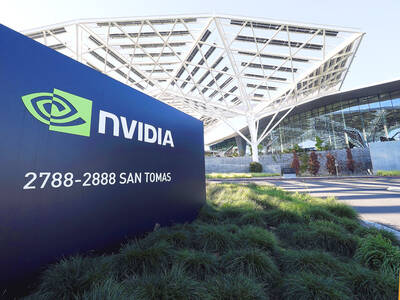
CHIP RACE: Three years of overbroad export controls drove foreign competitors to pursue their own AI chips, and ‘cost US taxpayers billions of dollars,’ Nvidia said China has figured out the US strategy for allowing it to buy Nvidia Corp’s H200s and is rejecting the artificial intelligence (AI) chip in favor of domestically developed semiconductors, White House AI adviser David Sacks said, citing news reports. US President Donald Trump on Monday said that he would allow shipments of Nvidia’s H200 chips to China, part of an administration effort backed by Sacks to challenge Chinese tech champions such as Huawei Technologies Co (華為) by bringing US competition to their home market. On Friday, Sacks signaled that he was uncertain about whether that approach would work. “They’re rejecting our chips,” Sacks

It is challenging to build infrastructure in much of Europe. Constrained budgets and polarized politics tend to undermine long-term projects, forcing officials to react to emergencies rather than plan for the future. Not in Austria. Today, the country is to officially open its Koralmbahn tunnel, the 5.9 billion euro (US$6.9 billion) centerpiece of a groundbreaking new railway that will eventually run from Poland’s Baltic coast to the Adriatic Sea, transforming travel within Austria and positioning the Alpine nation at the forefront of logistics in Europe. “It is Austria’s biggest socio-economic experiment in over a century,” said Eric Kirschner, an economist at Graz-based Joanneum

BUBBLE? Only a handful of companies are seeing rapid revenue growth and higher valuations, and it is not enough to call the AI trend a transformation, an analyst said Artificial intelligence (AI) is entering a more challenging phase next year as companies move beyond experimentation and begin demanding clear financial returns from a technology that has delivered big gains to only a small group of early adopters, PricewaterhouseCoopers (PwC) Taiwan said yesterday. Most organizations have been able to justify AI investments through cost recovery or modest efficiency gains, but few have achieved meaningful revenue growth or long-term competitive advantage, the consultancy said in its 2026 AI Business Predictions report. This growing performance gap is forcing executives to reconsider how AI is deployed across their organizations, it said. “Many companies
Taiwan’s long-term economic competitiveness will hinge not only on national champions like Taiwan Semiconductor Manufacturing Co. (TSMC, 台積電) but also on the widespread adoption of artificial intelligence (AI) and other emerging technologies, a US-based scholar has said. At a lecture in Taipei on Tuesday, Jeffrey Ding, assistant professor of political science at the George Washington University and author of "Technology and the Rise of Great Powers," argued that historical experience shows that general-purpose technologies (GPTs) — such as electricity, computers and now AI — shape long-term economic advantages through their diffusion across the broader economy. "What really matters is not who pioneers


 RSS
RSS