


The rising costs of coking coal might force China Steel Corp (CSC, 中鋼) to raise domestic product prices for December contracts despite it reducing prices for October and November contracts by 1.3 percent per tonne.
“Coking coal price would definitely affect China Steel’s production costs because the material is widely used in steelmaking processes,” CSC vice president Liu Jih-gang (劉季剛) said by telephone on Thursday.
The nation’s only integrated steelmaker is to announce its price adjustments for December shipments by the end of next month.
Iron ore and coking coal are key steelmaking ingredients. While prices of iron ore have remained weak this year, coking coal has surged in the past month because of a short supply of coal due to devastating floods in China’s major production regions.
“The issue of undersupply of coking coal is a short-term phenomenon,” Liu said. “But some steel mills and their downstream customers have started building up inventories in anticipation of a coal shortage in the future.”
The price of coking coal rose above US$210 a tonne in the past week, compared with about US$90 a tonne at the beginning of last month, according to Metal Bulletin’s premium coking coal index.
Liu said coking coal prices might not return to normal levels anytime soon.
“Some of our downstream clients are planning to raise prices of their end products as they anticipate material costs continuing to grow,” he said.
China Steel also factors in downstream companies’ global competitiveness and a global glut in steel when setting its prices, Liu said.
“For example, if demand for some products is still weak, we tend to absorb the [material] costs to help downstream companies retain their price competitiveness,” Liu said.
China’s plan to cut coal and steel production capacity to meet its supply-side reform targets is another key factor in China Steel’s pricing decisions, Liu said.
Beijing has pledged to shake up its state-owned enterprises to eliminate excess capacity and curb pollution.
Shanghai Baosteel Group Corp (寶鋼集團) and Wuhan Iron & Steel Group Corp (武漢鋼鐵) on Tuesday agreed to merge their listed units, which would create a new entity — and the world’s second-biggest producer by capacity behind ArcelorMittal SA.
“If the supply-side reforms really help digest inventories and relieve the severe oversupply in China, steel prices in the global market would be more stable in the future,” Liu said.

In Italy’s storied gold-making hubs, jewelers are reworking their designs to trim gold content as they race to blunt the effect of record prices and appeal to shoppers watching their budgets. Gold prices hit a record high on Thursday, surging near US$5,600 an ounce, more than double a year ago as geopolitical concerns and jitters over trade pushed investors toward the safe-haven asset. The rally is putting undue pressure on small artisans as they face mounting demands from customers, including international brands, to produce cheaper items, from signature pieces to wedding rings, according to interviews with four independent jewelers in Italy’s main

Japanese Prime Minister Sanae Takaichi has talked up the benefits of a weaker yen in a campaign speech, adopting a tone at odds with her finance ministry, which has refused to rule out any options to counter excessive foreign exchange volatility. Takaichi later softened her stance, saying she did not have a preference for the yen’s direction. “People say the weak yen is bad right now, but for export industries, it’s a major opportunity,” Takaichi said on Saturday at a rally for Liberal Democratic Party candidate Daishiro Yamagiwa in Kanagawa Prefecture ahead of a snap election on Sunday. “Whether it’s selling food or

CONCERNS: Tech companies investing in AI businesses that purchase their products have raised questions among investors that they are artificially propping up demand Nvidia Corp chief executive officer Jensen Huang (黃仁勳) on Saturday said that the company would be participating in OpenAI’s latest funding round, describing it as potentially “the largest investment we’ve ever made.” “We will invest a great deal of money,” Huang told reporters while visiting Taipei. “I believe in OpenAI. The work that they do is incredible. They’re one of the most consequential companies of our time.” Huang did not say exactly how much Nvidia might contribute, but described the investment as “huge.” “Let Sam announce how much he’s going to raise — it’s for him to decide,” Huang said, referring to OpenAI
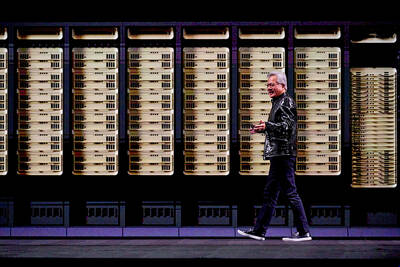
The global server market is expected to grow 12.8 percent annually this year, with artificial intelligence (AI) servers projected to account for 16.5 percent, driven by continued investment in AI infrastructure by major cloud service providers (CSPs), market researcher TrendForce Corp (集邦科技) said yesterday. Global AI server shipments this year are expected to increase 28 percent year-on-year to more than 2.7 million units, driven by sustained demand from CSPs and government sovereign cloud projects, TrendForce analyst Frank Kung (龔明德) told the Taipei Times. Demand for GPU-based AI servers, including Nvidia Corp’s GB and Vera Rubin rack systems, is expected to remain high,


 RSS
RSS