


Business travelers have declined 20 percent over the past decade as major trade fairs increasingly lose importance on the world stage, a trend that could persist and pose a challenge to hotels targeting them, hotel operators said yesterday.
“The government has failed to take note of the continued decline in business travelers, while seeking to help attract tourists from Southeast Asia,” Leofoo Tourism Group (六福旅遊集團) chief operating officer Lulu Chuang (莊豐如) told a forum in Taipei yesterday.
Taipei hotels used to run at full occupancy rates during Computex, one of the world’s largest computer and technology trade shows held in Taipei annually, but turnout proved disappointing this year because China organized a consumer electronics show at the same time, Chuang said.
The saturated market for electronics contributed to the decline in participating firms and visitors because Taiwan is home to the world’s major electronics suppliers, computer brands and peripheral vendors, she said.
Chuang said her company no longer expects Computex and the nation’s other trade shows to fill its hotels and entertainment facilities.
Leofoo Group operates the Westin Taipei (台北威斯汀六福皇宮), the Courtyard by Marriott Taipei (六福萬怡), the Leofoo Hotel (六福客棧), the Leofoo Resort (六福莊), the Leofoo Village Theme Park (六福村), the Leofoo Water Park (六福水樂園) and other recreational facilities.
Innovation and creativity offer no remedy to the decline in business travelers, which has more to do with the nation’s industrial policy, Chuang said.
The government has yet to respond to the issue, while urging local firms to diversify their markets and product lines to cope with growing competition from China and cooling ties across the Taiwan Strait, the hotelier said.
The tourism industry needs to learn more about the government’s “new southbound policy” so that it can better respond to the policy, she said.
Taipei Marriott Hotel (台北萬豪酒店) general manager Mark Liu (劉恆昌) noted the importance of trade shows, meetings, conventions and other events for hospitality providers.
Foreign travelers do not fly to Taiwan to stay at hotels, they come to conduct business or for leisure, Liu said.
“The government should help create business or leisure needs to make up for the dimming importance of local trade shows, not just the drop in Chinese tourists,” Liu said.
New Year’s Eve is a successful example of this as many foreign travelers fill Taipei’s hotels over the New Year holiday, thanks to the fireworks display at Taipei 101 and other attractions, Liu said.
Gloria Hotel Group (華泰大飯店集團) chief executive John Chen (陳炯福) said the government and the tourism industry should work together to make foreign travelers stay longer and boost tourism revenue rather than focus on the number of tourists.
“More important is making visiting Taiwan a unique and unforgettable experience so that foreigners will want to visit again and again,” Chen said.
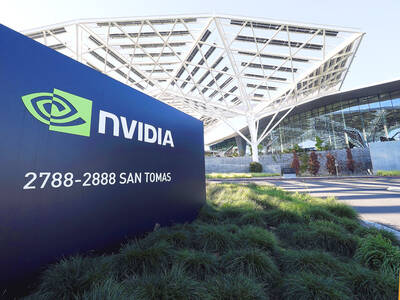
CHIP RACE: Three years of overbroad export controls drove foreign competitors to pursue their own AI chips, and ‘cost US taxpayers billions of dollars,’ Nvidia said China has figured out the US strategy for allowing it to buy Nvidia Corp’s H200s and is rejecting the artificial intelligence (AI) chip in favor of domestically developed semiconductors, White House AI adviser David Sacks said, citing news reports. US President Donald Trump on Monday said that he would allow shipments of Nvidia’s H200 chips to China, part of an administration effort backed by Sacks to challenge Chinese tech champions such as Huawei Technologies Co (華為) by bringing US competition to their home market. On Friday, Sacks signaled that he was uncertain about whether that approach would work. “They’re rejecting our chips,” Sacks

NATIONAL SECURITY: Intel’s testing of ACM tools despite US government control ‘highlights egregious gaps in US technology protection policies,’ a former official said Chipmaker Intel Corp has tested chipmaking tools this year from a toolmaker with deep roots in China and two overseas units that were targeted by US sanctions, according to two sources with direct knowledge of the matter. Intel, which fended off calls for its CEO’s resignation from US President Donald Trump in August over his alleged ties to China, got the tools from ACM Research Inc, a Fremont, California-based producer of chipmaking equipment. Two of ACM’s units, based in Shanghai and South Korea, were among a number of firms barred last year from receiving US technology over claims they have
BARRIERS: Gudeng’s chairman said it was unlikely that the US could replicate Taiwan’s science parks in Arizona, given its strict immigration policies and cultural differences Gudeng Precision Industrial Co (家登), which supplies wafer pods to the world’s major semiconductor firms, yesterday said it is in no rush to set up production in the US due to high costs. The company supplies its customers through a warehouse in Arizona jointly operated by TSS Holdings Ltd (德鑫控股), a joint holding of Gudeng and 17 Taiwanese firms in the semiconductor supply chain, including specialty plastic compounds producer Nytex Composites Co (耐特) and automated material handling system supplier Symtek Automation Asia Co (迅得). While the company has long been exploring the feasibility of setting up production in the US to address

OPTION: Uber said it could provide higher pay for batch trips, if incentives for batching is not removed entirely, as the latter would force it to pass on the costs to consumers Uber Technologies Inc yesterday warned that proposed restrictions on batching orders and minimum wages could prompt a NT$20 delivery fee increase in Taiwan, as lower efficiency would drive up costs. Uber CEO Dara Khosrowshahi made the remarks yesterday during his visit to Taiwan. He is on a multileg trip to the region, which includes stops in South Korea and Japan. His visit coincided the release last month of the Ministry of Labor’s draft bill on the delivery sector, which aims to safeguard delivery workers’ rights and improve their welfare. The ministry set the minimum pay for local food delivery drivers at


 RSS
RSS