


Google parent Alphabet Inc and French drugmaker Sanofi plan to invest about US$500 million in a joint venture to tackle diabetes amid forecasts for the number of people with the disease to surge.
Sanofi is betting the partnership with Alphabet’s Verily Life Sciences LLC will spur advancements in the way diabetes is monitored and treated and help it navigate an increasingly competitive market.
The venture, Onduo, plans to combine devices, software and medicine, according to a statement yesterday from Sanofi and Verily, previously known as Google Life Sciences.
“The beauty of the joint venture in a way is that we don’t rely on the typical 10-year development cycle of a pharmaceutical asset,” Stefan Oelrich, senior vice president and head of the global diabetes franchise at Sanofi, said in an interview. “We start to innovate today.”
Sanofi expects increased competition in the diabetes market to remain as cheaper copies of biotech drugs known as biosimilars are rolled out. It plans to distinguish itself from rivals with programs like the Verily venture, unveiled last year, Oelrich said.
Sanofi is investing US$248 million in cash and Verily is committing an “equivalent” amount, he said.
“With more market entrants and as the space gets more crowded, it will be more difficult to maintain your stance from a contracting and commercial standpoint,” Oelrich said. “There’s increased competition on price. I think it’s here to stay.”
The drugmaker has been reshaping its diabetes portfolio after cutting its three-year sales forecast for the business last year because of a slump in demand for its best-selling medicine, Lantus.
Sanofi is relying on new treatments including its Toujeo insulin to help make up for the Lantus revenue shortfall.
The company plans to step up efforts to convince purchasers that its drugs are better than rivals’ treatments, Oelrich said.
Lantus last month was replaced on CVS Health Corp’s 2017 list of covered drugs by Eli Lilly & Co’s Basaglar, a cheaper version of the insulin that is scheduled to be sold in the US starting in December.
Given Sanofi’s reliance on Lantus, it will be hard for the company to escape near-term pressure as such biosimilars are introduced, according to a Sept. 7 report from Berenberg Bank analysts in London.
Sanofi is carrying out “the biggest real-world evidence” program ever for Toujeo to highlight to payers the differences between the treatments, Oelrich said.
“It’s our job to make sure that we have a convincing value story behind that because not all these products are the same,” he said.
The results of the program, which involve more than 4,500 patients in the US and Europe through three studies, will assess the efficacy of the once-a-day insulin, with results expected next year.
The Sanofi and Verily venture will focus on developing ways to improve medication management and habits for patients and will be led by Joshua Riff as chief executive officer. The company will take advantage of Verily’s experience in miniaturized electronics, analytics and consumer software, according to the statement.

CHIP RACE: Three years of overbroad export controls drove foreign competitors to pursue their own AI chips, and ‘cost US taxpayers billions of dollars,’ Nvidia said China has figured out the US strategy for allowing it to buy Nvidia Corp’s H200s and is rejecting the artificial intelligence (AI) chip in favor of domestically developed semiconductors, White House AI adviser David Sacks said, citing news reports. US President Donald Trump on Monday said that he would allow shipments of Nvidia’s H200 chips to China, part of an administration effort backed by Sacks to challenge Chinese tech champions such as Huawei Technologies Co (華為) by bringing US competition to their home market. On Friday, Sacks signaled that he was uncertain about whether that approach would work. “They’re rejecting our chips,” Sacks
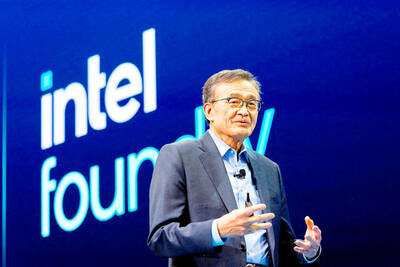
NATIONAL SECURITY: Intel’s testing of ACM tools despite US government control ‘highlights egregious gaps in US technology protection policies,’ a former official said Chipmaker Intel Corp has tested chipmaking tools this year from a toolmaker with deep roots in China and two overseas units that were targeted by US sanctions, according to two sources with direct knowledge of the matter. Intel, which fended off calls for its CEO’s resignation from US President Donald Trump in August over his alleged ties to China, got the tools from ACM Research Inc, a Fremont, California-based producer of chipmaking equipment. Two of ACM’s units, based in Shanghai and South Korea, were among a number of firms barred last year from receiving US technology over claims they have
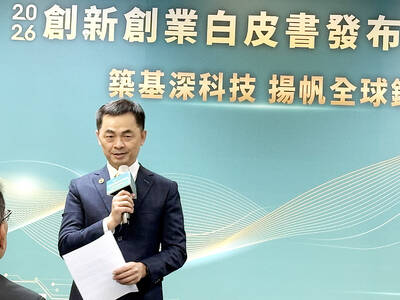
BARRIERS: Gudeng’s chairman said it was unlikely that the US could replicate Taiwan’s science parks in Arizona, given its strict immigration policies and cultural differences Gudeng Precision Industrial Co (家登), which supplies wafer pods to the world’s major semiconductor firms, yesterday said it is in no rush to set up production in the US due to high costs. The company supplies its customers through a warehouse in Arizona jointly operated by TSS Holdings Ltd (德鑫控股), a joint holding of Gudeng and 17 Taiwanese firms in the semiconductor supply chain, including specialty plastic compounds producer Nytex Composites Co (耐特) and automated material handling system supplier Symtek Automation Asia Co (迅得). While the company has long been exploring the feasibility of setting up production in the US to address
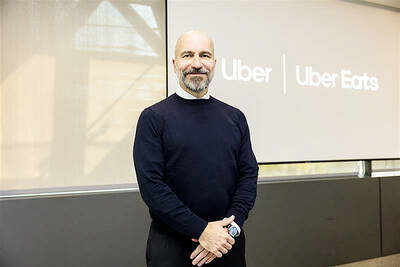
OPTION: Uber said it could provide higher pay for batch trips, if incentives for batching is not removed entirely, as the latter would force it to pass on the costs to consumers Uber Technologies Inc yesterday warned that proposed restrictions on batching orders and minimum wages could prompt a NT$20 delivery fee increase in Taiwan, as lower efficiency would drive up costs. Uber CEO Dara Khosrowshahi made the remarks yesterday during his visit to Taiwan. He is on a multileg trip to the region, which includes stops in South Korea and Japan. His visit coincided the release last month of the Ministry of Labor’s draft bill on the delivery sector, which aims to safeguard delivery workers’ rights and improve their welfare. The ministry set the minimum pay for local food delivery drivers at


 RSS
RSS