


TELECOMS
CHT figures beat estimates
Chunghwa Telecom Co (CHT, 中華電信) yesterday said continued efforts to streamline its operations and expense controls have enabled it to beat its earlier estimates for second-quarter operating income, net income and earnings per share. The nation’s largest telecommunications carrier said its net income in the April-to-June quarter was NT$11.06 billion (US$346.11 million), down 0.7 percent year-on-year, with earnings per share of NT$1.43. Operating income fell 2.4 percent to NT$12.88 billion and revenue fell 1.3 percent to NT$56.2 billion over the same period. Chairman Rick Tsai (蔡力行) said the company’s mobile Internet revenue rose by 6.6 percent annually in the second quarter and its 4G subscriber base expanded to 5.7 million as of the end of last month.
CHIPMAKERS
Macronix reduces losses
Macronix International Co (旺宏電子), which supplies memory chips for Japanese video game console maker Nintendo Co, yesterday posted a net loss of NT$691 million in the second quarter, compared with losses of NT$891 million in the previous quarter. The company’s gross margin fell from 15 percent to 14 percent, while revenue rose 2 percent to NT$5.18 billion over the same period. In the April-to-June quarter, NAND flash memory contributed 10 percent to Macronix’s overall revenue, NOR flash memory accounted for 66 percent of its revenue, while ROM products comprised 11 percent and its foundry business provided 13 percent.
PHARMACEUTICALS
Lotus gains US approval
Lotus Pharmaceutical Co (美時化學製藥), which makes and distributes oral and injection medicine, on Tuesday announced that its abbreviated new drug application for a generic version of calcium acetate capsules in 667mg doses has been approved by the US Food and Drug Administration. The drug is used to reduce blood phosphate levels in people on dialysis with end-stage kidney disease. The company did not elaborate. Lotus Pharma’s aggregate sales in the first half rose 15.3 percent annually to NT$3.03 billion.
LIGHTING
Coretronic income falls
Coretronic Corp (中強光電), a manufacturer of LCD backlight modules, on Wednesday reported earnings per share of NT$0.54 for the second quarter, as net income decreased 8 percent annually to NT$233 million. Last quarter’s profit was lower than first quarter’s net income of NT$322 million. Coretronic, which also produces visual-solution products and projectors, said revenue in the second quarter declined 20 percent year-on-year and 2 percent quarter-on-quarter to NT$13.572 billion, affected by seasonally low demand. In the first half of this year, the company reported earnings per share of NT$1.13, up slightly from a year earlier.
SOFTWARE
Microsoft appoint official
Microsoft Corp yesterday appointed Naoyuki Isogai, former chief of staff of corporate strategy at Microsoft Japan, to serve as marketing and operations general manager of Microsoft Taiwan. Naoyuki told a media gathering in Taipei that he worked at Microsoft Japan for more than 18 years and it is his first time to run a business outside Japan. Naoyuki is to be responsible for devising business strategies, investment planning and driving marketing plans to achieve high growth in Taiwan’s market, the US company said in a statement.
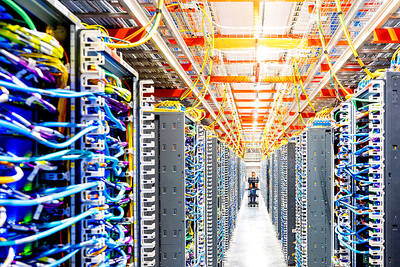
AI SPLURGE: The four major US tech companies have lost more than US$950 billion in value since releasing earnings and outlooks, while equipment makers were gaining Four of the biggest US technology companies together have forecast capital expenditures that would reach about US$650 billion this year — a flood of cash earmarked for new data centers and all the gear within them. The spending planned by Alphabet Inc, Amazon.com Inc, Meta Platforms Inc and Microsoft Corp, all in pursuit of dominance in the still-nascent market for artificial intelligence (AI) tools, is a boom without a parallel this century. Each of the companies’ estimates for this year is expected either near or surpass their budgets for the past three years combined. They would set a high-watermark for capital spending
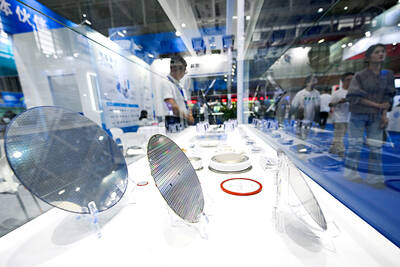
China’s top chipmaker has warned that breakaway spending on artificial intelligence (AI) chips is bringing forward years of future demand, raising the risk that some data centers could sit idle. “Companies would love to build 10 years’ worth of data center capacity within one or two years,” Semiconductor Manufacturing International Corp (SMIC, 中芯) cochief executive officer Zhao Haijun (趙海軍) said yesterday on a call with analysts. “As for what exactly these data centers will do, that hasn’t been fully thought through.” Moody’s Ratings projects that AI-related infrastructure investment would exceed US$3 trillion over the next five years, as developers pour eye-watering sums

Bank of America Corp nearly doubled its forecast for the nation’s economic growth this year, adding to a slew of upgrades even after a rip-roaring last year propelled by demand for artificial intelligence (AI). The firm lifted its projection to 8 percent from 4.5 percent on “relentless global demand” for the hardware that Taiwanese companies make, according to a note dated yesterday by analysts including Xiaoqing Pi (皮曉青). Taiwan’s GDP expanded 8.63 percent last year, the fastest pace since 2010. The increase “reflects our sustained optimism over Taiwan’s technology driven expansion and is reinforced by several recent developments,” including a more stable currency,

COLLABORATION: Taiwan and the US could jointly find solutions to weaknesses in supply chain resilience for critical materials, focusing on mining and initial refinement Taiwan is likely to purchase rare earths from the US in the future, and is also in talks with Australia and Canada to strengthen global rare earth supply chain security, Minister of Economic Affairs Kung Ming-hsin (龔明鑫) said yesterday. Taiwan and the US last month concluded the sixth Economic Prosperity Partnership Dialogue, during which both sides signed a joint statement endorsing the principles of the Pax Silica Declaration, pledging to deepen cooperation in areas including critical minerals. At the time, Kung said the two sides would establish working groups to advance cooperation in areas including artificial intelligence, digital infrastructure, critical materials and


 RSS
RSS