


The buyers of CTBC Financial Holding Co’s (中信金控) former headquarters and the adjoining Novel Hall yesterday unveiled plans to build a mixed-use landmark called Taipei Sky Tower at the site to house upscale hotels, flagship stores and a theater.
Next to Taipei 101 in the city’s prime Xinyi District (信義), the Taipei Sky Tower represents a bold and innovative investment by private equity fund Riant Capital Ltd (子樂投資), with help from a local partner, Grand River Development Ltd (碩和開發).
“Taipei Sky Tower aims to be the local version of New York’s Fifth Avenue, refining luxury and efficiency in the retail and hospitality industry,” Riant Capital chairman Aaron Chan (詹偉立) told a media briefing.
Riant Capital and Grand River acquired the site last year for NT$15.12 billion (US$471.6 million), unfazed by restrictions and controversy that delayed the sale for two years.
Novel Hall had been the focal point of a preservation drive by prominent Taiwanese artists, cultural experts and politicians.
The Taipei City Government in 2013 declared the theater a cultural heritage, requiring the buyer to build a performance venue of equal size and capacity.
In addition, CTBC Financial is to retain a 5 percent holding, giving it office space in the district.
The string of requirements did not scare away Chan but allowed him more time to plan the acquisition and redevelopment that are expected to cost US$1.1 billion, the largest real-estate transaction led by an private equity fund in Taiwan and the largest single investment currently managed by Riant Capital.
With more than 50 floors above ground, the skyscraper is to have a retail podium, a luxury hotel, a lifestyle hotel and a state-of-the-art performance hall, Chan said, adding that his team is in the process of selecting partners from internationally renowned architects, hotel operators and luxury brands.
While many have voiced concern about a hotel glut in Taiwan following the change in government in May, Chan said there is still healthy demand for luxury lodging facilities in Taipei, especially in the central business district.
Chan has closed several real-estate deals in recent years that generated hefty profits for investors. He did so by remodeling properties to boost their values and rent rates, so they are more attractive to buyers.
Chan said he intends to duplicate this model with the Taipei Sky Tower project, turning it into a city icon that domestic life insurance companies and foreign funds would like to take over after it proves profitable upon completion in 2020.
Christopher Chang (張良吉), chairman of Continental Development Corp (CDC, 大陸建設) and affiliate of Grand River Development that owns a 10-percent stake in the planned tower, said his company will take charge of the construction work.
The tower is to have 500 hotel rooms managed by two international brands, while potential partners include Four Seasons, Ritz Carton, St Regis and Hotel Indigo, he said.
“We will allow tenants the greatest independence and flexibility possible to ensure smooth operations,” he said.
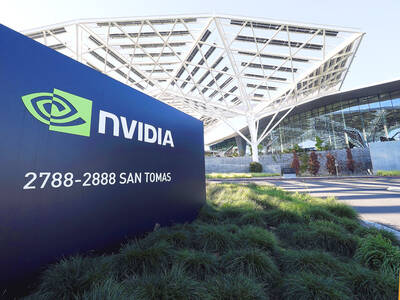
CHIP RACE: Three years of overbroad export controls drove foreign competitors to pursue their own AI chips, and ‘cost US taxpayers billions of dollars,’ Nvidia said China has figured out the US strategy for allowing it to buy Nvidia Corp’s H200s and is rejecting the artificial intelligence (AI) chip in favor of domestically developed semiconductors, White House AI adviser David Sacks said, citing news reports. US President Donald Trump on Monday said that he would allow shipments of Nvidia’s H200 chips to China, part of an administration effort backed by Sacks to challenge Chinese tech champions such as Huawei Technologies Co (華為) by bringing US competition to their home market. On Friday, Sacks signaled that he was uncertain about whether that approach would work. “They’re rejecting our chips,” Sacks
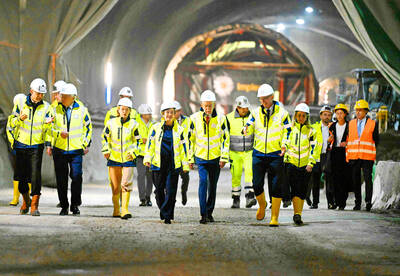
It is challenging to build infrastructure in much of Europe. Constrained budgets and polarized politics tend to undermine long-term projects, forcing officials to react to emergencies rather than plan for the future. Not in Austria. Today, the country is to officially open its Koralmbahn tunnel, the 5.9 billion euro (US$6.9 billion) centerpiece of a groundbreaking new railway that will eventually run from Poland’s Baltic coast to the Adriatic Sea, transforming travel within Austria and positioning the Alpine nation at the forefront of logistics in Europe. “It is Austria’s biggest socio-economic experiment in over a century,” said Eric Kirschner, an economist at Graz-based Joanneum

BUBBLE? Only a handful of companies are seeing rapid revenue growth and higher valuations, and it is not enough to call the AI trend a transformation, an analyst said Artificial intelligence (AI) is entering a more challenging phase next year as companies move beyond experimentation and begin demanding clear financial returns from a technology that has delivered big gains to only a small group of early adopters, PricewaterhouseCoopers (PwC) Taiwan said yesterday. Most organizations have been able to justify AI investments through cost recovery or modest efficiency gains, but few have achieved meaningful revenue growth or long-term competitive advantage, the consultancy said in its 2026 AI Business Predictions report. This growing performance gap is forcing executives to reconsider how AI is deployed across their organizations, it said. “Many companies
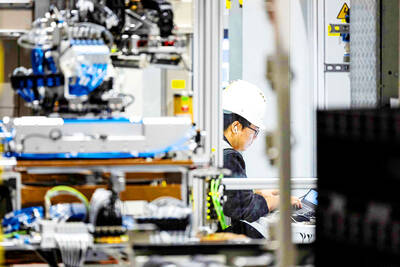
France is developing domestic production of electric vehicle (EV) batteries with an eye on industrial independence, but Asian experts are proving key in launching operations. In the Verkor factory outside the northern city of Dunkirk, which was inaugurated on Thursday, foreign specialists, notably from South Korea and Malaysia, are training the local staff. Verkor is the third battery gigafactory to open in northern France in a region that has become known as “Battery Valley.” At the Automotive Energy Supply Corp (AESC) factory near the city of Douai, where production has been under way for several months, Chinese engineers and technicians supervise French recruits. “They


 RSS
RSS