


Advertising agencies are for the first time turning to Instagram more frequently than Twitter for social media ad campaigns, a survey released on Thursday showed, a further indication of weakness in an ad sales operation that has been one of the few bright spots for Twitter.
The survey, from a unit of Comcast called Strata, came the same week Twitter Inc said its head of product, who took over the team in September lat year, was leaving.
The research firm eMarketer said earlier this month that Snapchat was on pace to surpass Twitter in US active users, highlighting the threat Twitter faces from faster-growing competitors.

Photo: AP
Amid Twitter’s ongoing struggles with stagnant user growth, management turmoil and a tumbling stock price, the advertising operations under chief operating office Adam Bain had been a relative oasis of stability. Bain, who joined the company in 2010, helped build Twitter from scratch to more than US$1 billion revenue in just over three years.
However, cracks in the ad business began to emerge in the company’s first-quarter earnings report, in which it missed its numbers due to weaker-than-expected spending by big advertisers and provided a weak revenue forecast.
The stock has fallen 15 percent since the April earnings announcement and closed on Wednesday at US$14.60 — far below its US$26 IPO price in November of 2013.
The Strata survey asked 83 advertising agencies which social platform their clients preferred for social media campaigns.
Sixty-three percent of advertisers said they were most likely to use photo-sharing app Instagram, compared with 56 percent who said they would use social network Twitter. Facebook dominated, with 96 percent of advertisers saying they were likely to use it.
Twitter rejected the survey results, pointing to a study by Advertiser Perceptions last year that showed 37 percent of advertisers intended to buy ads on Twitter, compared with 28 percent on Instagram, which is owned by Facebook.
The same study showed that 46 percent were considering buying ads on Twitter compared with 41 percent on Instagram.
“The data presented in this survey couldn’t be farther from the truth,” a Twitter spokesperson said. “We have close relationships with our agency clients and continue to hear that Twitter offers the most powerful creative canvas.”
Still, the survey shows the growing power of Instagram, which has the benefit of using Facebook’s advertising technology and has been rolling out features that make it more useful for sharing news and activity updates that are the bread and butter of Twitter.
Instagram has more than 200,000 advertisers compared with Twitter’s 130,000.
“We’re seeing almost all of our clients shifting if not all of their budgets, then most of their budgets from Twitter to Instagram,” said Chris Gilbert, senior social strategist at digital agency Kettle, which works mostly with fashion brands. “Marketers typically want to be where the audience is.”
Some ad agencies said their clients are shifting more of their budgets to Instagram because it has more users — more than 400 million compared with 310 million on Twitter — and because Facebook’s ad technology allows them to target highly specific audiences.
“We’ve had more emphasis on Instagram for the last year,” said Jason Peterson, chief creative officer at ad agency Havas Worldwide North America.
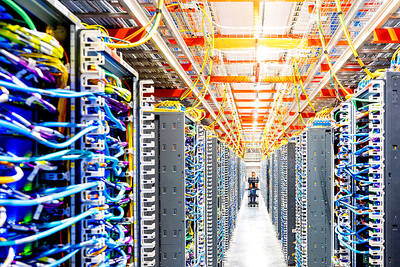
AI SPLURGE: The four major US tech companies have lost more than US$950 billion in value since releasing earnings and outlooks, while equipment makers were gaining Four of the biggest US technology companies together have forecast capital expenditures that would reach about US$650 billion this year — a flood of cash earmarked for new data centers and all the gear within them. The spending planned by Alphabet Inc, Amazon.com Inc, Meta Platforms Inc and Microsoft Corp, all in pursuit of dominance in the still-nascent market for artificial intelligence (AI) tools, is a boom without a parallel this century. Each of the companies’ estimates for this year is expected either near or surpass their budgets for the past three years combined. They would set a high-watermark for capital spending

China’s top chipmaker has warned that breakaway spending on artificial intelligence (AI) chips is bringing forward years of future demand, raising the risk that some data centers could sit idle. “Companies would love to build 10 years’ worth of data center capacity within one or two years,” Semiconductor Manufacturing International Corp (SMIC, 中芯) cochief executive officer Zhao Haijun (趙海軍) said yesterday on a call with analysts. “As for what exactly these data centers will do, that hasn’t been fully thought through.” Moody’s Ratings projects that AI-related infrastructure investment would exceed US$3 trillion over the next five years, as developers pour eye-watering sums

Bank of America Corp nearly doubled its forecast for the nation’s economic growth this year, adding to a slew of upgrades even after a rip-roaring last year propelled by demand for artificial intelligence (AI). The firm lifted its projection to 8 percent from 4.5 percent on “relentless global demand” for the hardware that Taiwanese companies make, according to a note dated yesterday by analysts including Xiaoqing Pi (皮曉青). Taiwan’s GDP expanded 8.63 percent last year, the fastest pace since 2010. The increase “reflects our sustained optimism over Taiwan’s technology driven expansion and is reinforced by several recent developments,” including a more stable currency,

COLLABORATION: Taiwan and the US could jointly find solutions to weaknesses in supply chain resilience for critical materials, focusing on mining and initial refinement Taiwan is likely to purchase rare earths from the US in the future, and is also in talks with Australia and Canada to strengthen global rare earth supply chain security, Minister of Economic Affairs Kung Ming-hsin (龔明鑫) said yesterday. Taiwan and the US last month concluded the sixth Economic Prosperity Partnership Dialogue, during which both sides signed a joint statement endorsing the principles of the Pax Silica Declaration, pledging to deepen cooperation in areas including critical minerals. At the time, Kung said the two sides would establish working groups to advance cooperation in areas including artificial intelligence, digital infrastructure, critical materials and


 RSS
RSS