


Saudi Arabia replaced its central bank chief and long-time oil minister as part of sweeping economic changes led by Deputy Crown Prince Mohammed bin Salman to reduce the nation’s reliance on hydrocarbons.
King Salman bin Abdulaziz Al Saud appointed Ahmed Alkholifey to head the Saudi Arabian Monetary Agency, as the central bank is known, succeeding Fahad Al Mubarak, who had been in the role since 2011.
Also out is Minister of Petroleum and Mineral Resources Ali al-Naimi, the architect of the 2014 switch in OPEC policy that has since roiled crude markets, replaced by Saudi Aramco chairman Khalid al-Falih.
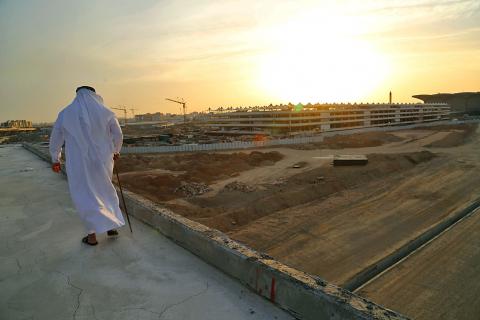
Photo: Reuters
Saudi Arabia is undergoing its biggest ever economic shakeup, led by the deputy crown prince and second in line to the throne, as it prepares for the post-oil era following the plunge in crude prices that started in 2014.
The kingdom’s energy industry, as well as its central bank, will play a “critical role in the economic transformation” plans, said Simon Kitchen, head of macro-strategy at Cairo-based investment bank EFG-Hermes.
“The deputy crown prince has now put his stamp on both institutions,” he said.
As part of Saturday’s royal decrees, the name of the oil ministry has becomes the Ministry of Energy, Industry and Mineral Resources, and will undertake tasks and responsibilities related to electricity.
Prince Mohammed’s plans, outlined in the so-called “Vision 2030” blueprint announced on April 25, include setting up the world’s biggest sovereign wealth fund, transforming Aramco into an energy and industrial conglomerate, and generating an additional US$100 billion in non-oil revenue by 2020.
One of the government’s biggest challenges, though, will be navigating the worst economic slowdown since the global financial crisis as authorities cut spending to plug a budget deficit that reached about 15 percent of GDP last year.
The economy will expand 1.5 percent this year, according to the median estimate of a Bloomberg survey, the slowest since 2009, complicating efforts to reduce what is already among the region’s highest levels of youth unemployment.
The International Institute of Finance (IIF) said in a report published on Tuesday that it expects “sharply slower growth in the next few years due to the serious fiscal consolidation.”
While Saudi banks are “well placed to weather the slump in oil prices,” they will come under pressure as borrowing costs climb because of increased government borrowing and the decline in private-sector deposits, IIF economists Giyas Gokkent and Garbis Iradian wrote in the report.
Alkholifey, deputy governor before the king promoted him to central bank chief, takes office as the government prepares to borrow more through local and global debt markets.
The central bank is also considering reducing the reserves banks are required to hold against customer deposits to release more funds for lending, the IIF said.
The central bank’s net foreign assets fell by US$115 billion last year, fueling speculation that the kingdom will abandon the dollar peg.
Along with Al Mubarak, a former Morgan Stanley banker, Alkholifey reiterated Saudi Arabia’s commitment to the policy.
“The peg will stay. A strong nominal anchor is important during a time of major economic change,” Kitchen said.
The king’s government reorganization on Saturday is the third major change since he took power in January last year. The previous two reshuffles helped propel a younger generation of the al-Saud ruling family, mainly his son Prince Mohammed, closer to the throne of the world’s top oil exporter.
The prince was named defense minister, leading the kingdom’s war effort in Yemen against rebels it says are backed by its rival Iran. He also oversees the economy and oil through the Council for Economic and Development Affairs.
The prince’s rapid rise to power and fast-paced policy changes have stunned diplomats and analysts alike.
His economic plans, which include selling shares in Aramco as well as cutting subsidies, were received with skepticism by some foreign analysts who predict he may face domestic resistance.
“Vision 2030 represents a Saudi plan for economic leadership in a world where oil is no longer dominant,” Simon Henderson, the Baker Fellow and director of the Gulf and Energy Policy Program at The Washington Institute, wrote in a report. “If it succeeds, it will also bring about much broader changes within the kingdom.”
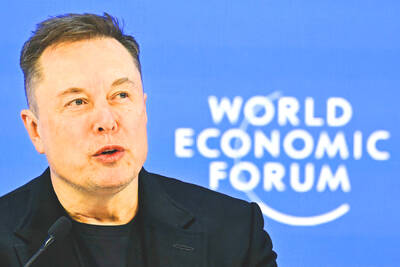
Elon Musk’s lieutenants have reached out to chip industry suppliers, including Applied Materials Inc, Tokyo Electron Ltd and Lam Research Corp, for his envisioned Terafab, early steps in an audacious and likely arduous attempt to break into the production of cutting-edge chips. Staff working for the joint venture between Tesla Inc and Space Exploration Technologies Corp (SpaceX) have sought price quotes and delivery times for an array of chipmaking gear, people familiar with the matter said. In past weeks, they’ve contacted makers of photomasks, substrates, etchers, depositors, cleaning devices, testers and other tools, according to the people, who asked not to
NO SHORTCUTS: Asked about Elon Musk’s Terafab initiative, TSMC CEO C.C. Wei said it takes two to three years to build a fab and another one to two to ramp it up Taiwan Semiconductor Manufacturing Co (TSMC, 台積電) yesterday raised its revenue growth forecast for this year to above 30 percent, up from the 25 percent it estimated three months earlier, citing extremely robust artificial intelligence (AI)-related chip demand. “Our customers and customers’ customers, who are mainly cloud service providers, continue to send us very positive signals and outlook,” TSMC chairman and CEO C.C. Wei (魏哲家) said at an earnings conference. The company also hiked its capital expenditure for this year toward the higher end of its forecast, or US$56 billion, as it aims to step up advanced chip capacity expansions, such as

Taiwan is attracting a growing number of foreign jobseekers as companies increasingly recruit overseas talent to ease labor shortages and expand global reach, recruitment platform 104 Job Bank (104人力銀行) said yesterday. More than 40,000 foreign nationals searched for jobs in Taiwan through the platform last year, a 28 percent increase from a year earlier, the company said. Malaysians accounted for the largest share of overseas jobseekers at 12.2 percent, followed by Indonesians at 11.9 percent and Vietnamese at 10.8 percent. Indonesian applicants surged more than 50 percent year-on-year, while Vietnamese jobseekers rose by more than 30 percent. Applicants from the
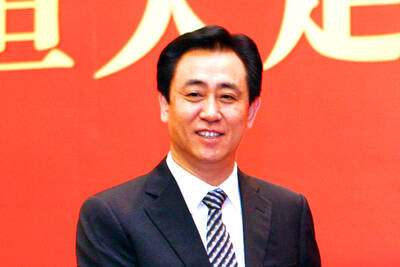
The founder of Chinese property giant Evergrande Group (恆大集團) has pleaded guilty to charges of fraud and bribery, a court said yesterday, the latest blow for what was once the country’s leading developer. Evergrande’s rise was propelled by decades of rapid urbanization and rising living standards, but in 2020, its access to credit dramatically narrowed when the government introduced curbs on excessive borrowing and speculation. The company defaulted in 2021 after struggling to repay creditors. Founder Xu Jiayin (許家印), 67, known as Hui Ka Yan in Cantonese, was reportedly held by police in 2023, with Evergrande saying he had been subjected to


 RSS
RSS