


The US Department of Commerce is set to place export restrictions on Chinese telecoms equipment maker ZTE Corp (中興) for allegedly violating US export controls on Iran, according to documents seen by Reuters.
The restrictions would make it difficult for the company to acquire US products by requiring ZTE’s suppliers to apply for an export license before shipping any US-made equipment or parts to ZTE. According to a US Department of Commerce notice that is scheduled to be published next week in the US Federal Register, the license applications generally would be denied.
The restrictions are to take effect tomorrow and apply to any company worldwide that wants to ship US-made products to ZTE in China. Those companies are not the target of the export curbs on ZTE.
“This is a significant new burden on trade with ZTE,” a senior official at the department said.
The official declined to comment on whether the US government might take further action against ZTE.
A spokesman for ZTE, based in Shenzhen, China, could not be reached for comment. The company can appeal the action.
The Commerce Department investigated ZTE for alleged export-control violations following reports by Reuters in 2012 that the company had signed contracts to ship millions of US dollars worth of hardware and software from some of the US’ best-known tech firms to Iran’s largest telecom carrier, Telecommunication Co of Iran and a unit of the consortium that controls it.
The US product makers — which included Microsoft Corp, IBM Corp, Oracle Corp and Dell Inc — have all said they were not aware of the Iranian contracts. It is not clear if any of these companies still do business with ZTE.
Washington has long banned the sale of US-made tech products to Iran. The department’s investigation focused on whether ZTE had acquired US products through front companies and then shipped them to Iran, a violation of US sanctions.
What effect the new export restrictions would have on ZTE’s current international business is not clear.
One of ZTE’s Web sites also states that several major US tech companies, including Microsoft, Intel Corp, IBM and Honeywell International Inc, are “key strategic partners of ZTE.” The terms of the partnerships are not described.
A Microsoft spokeswoman said the company had a licensing agreement with ZTE, but could not confirm if the Chinese company purchases other products, such as software. The other US companies did not respond to requests for immediate comment.
The undated internal ZTE document also describes a proposal overseen by the company’s legal department that describes ways to export US products subject to US sanctions by using shell companies to avoid getting caught.
“The biggest advantage” of one method is that it would make it “harder for the US government to trace it or investigate the real flow of the controlled commodities,” the document said.
In its planned action against ZTE, the Commerce Department cites the proposal, stating that the company “planned and organized a scheme to establish, control, and use a series of ‘detached’ companies to illicitly re-export controlled items to Iran in violation of US export control laws.” It is not clear if the alleged scheme was carried through.
Another internal ZTE document from August 2011 that discusses “US export control risks” facing the company allegedly was signed by several top ZTE officials, including its president Shi Lirong (史立榮).
The document states that ZTE “has on-going projects in all five major embargoed countries — Iran, Sudan, North Korea, Syria and Cuba. All of these projects depend on US-procured items to some extent, so export control obstacles have arisen.”
The document goes on to cite “other risks” to ZTE, including its operations in the US.
“R&D employees at the US Research Centers often travel between China and the US, carrying R&D data,” it said. “This already severely violates the law.” The document does not specify what law might have been violated.
The company “needs to take preventative measures immediately, otherwise will face the risk of being investigated anytime,” the document said.
The document also says that ZTE's Iran project “can potentially put us at risk of being put on the blacklist by the US. If on the blacklist, our company may face the risk of losing the supply chain of US products.”
ZTE is one of the world's largest telecom equipment makers with operations in 160 countries. It also is a major manufacturer of mobile handsets. Founded in 1985, its shares trade on both the Hong Kong and Shenzhen Stock Exchanges.
Besides ZTE, the export curbs would apply to two of its Chinese affiliates, ZTE Kangxun Telecommunications Ltd (中興康訊電子) and Beijing 8-Star (北京八星) and an Iranian company, ZTE Parsian.

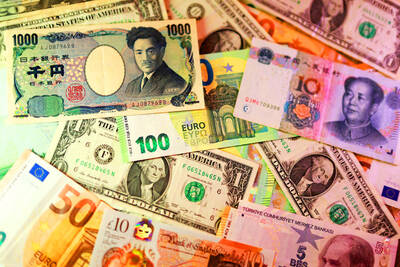
Taiwan’s foreign exchange reserves fell below the US$600 billion mark at the end of last month, with the central bank reporting a total of US$596.89 billion — a decline of US$8.6 billion from February — ending a three-month streak of increases. The central bank attributed the drop to a combination of factors such as outflows by foreign institutional investors, currency fluctuations and its own market interventions. “The large-scale outflows disrupted the balance of supply and demand in the foreign exchange market, prompting the central bank to intervene repeatedly by selling US dollars to stabilize the local currency,” Department of Foreign

Intel Corp is joining Elon Musk’s long-shot effort to develop semiconductors for Tesla Inc, Space Exploration Technologies Corp and xAI, marking a surprising twist in the chipmaker’s comeback bid. Intel would help the Terafab project “refactor” the technology in a chip factory, the company said on Tuesday in a post on X, Musk’s social media platform. That is a stage in the development process that typically helps make chips more powerful or reliable. The chipmaker’s shares jumped 4.2 percent to US$52.91 in New York trading on Tuesday. The Terafab project is a grand plan by Musk to eventually manufacture his own chips for
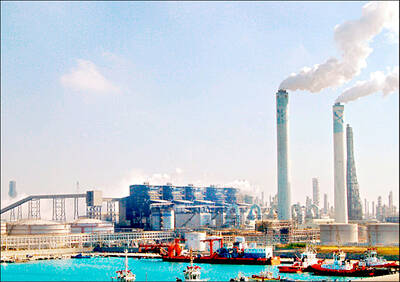
Taiwan Power Co (Taipower, 台電) yesterday said it plans to resume operations at two coal-fired power generators for three months to boost security of electricity supply as liquefied natural gas (LNG) supply risks are running high due to the Middle East conflict. The two coal-fired power generators are at Mailiao Power Plant in Yunlin County’s Mailiao Township (麥寮). The plant, operated by Formosa Plastics Group (台塑集團), supplied electricity to Taipower’s power grid until the end of last year. Taipower’s decision came about one month after Minister of Economic Affairs Kung Ming-hsin (龔明鑫) on March 10 said that the nation had no imminent

Some robotaxi passengers were left stranded in the middle of fast-moving traffic in a major Chinese city after their driverless vehicles stopped running, according to police and media reports on Wednesday. A preliminary investigation indicates more than 100 robotaxis came to a halt because of a “system malfunction,” police in the city of Wuhan said in a statement, without elaborating. No injuries were reported. One passenger told Chinese media that their robotaxi stopped after turning a corner. An instruction on a screen read: “Driving system malfunction. Staff are expected to arrive in 5 minutes.” After no one showed up, the passenger pushed


 RSS
RSS