


The National Financial Stabilization Fund (國安基金) will continue to support Taiwan’s stock market today as it tries to fend off the impact of a plunge in US and European markets last week, Vice Minister of Finance Wu Tang-chieh (吳當傑) said on Saturday.
Wu, the executive secretary and manager of the fund, did not respond to concerns over the results of Saturday’s presidential and legislative elections, which have raised fears of the possible deterioration in the cross-strait relationship.
The NT$500 billion (US$14.79 billion) fund is a mechanism set up by the government to serve as a buffer against unexpected external factors that disrupt the bourse. The fund committee has authorized the fund to buy local shares until it holds a review meeting today to decide whether the intervention should continue.
In Saturday’s elections, Democratic Progressive Party Chairperson Tsai Ing-wen (蔡英文) easily defeated Chinese Nationalist Party (KMT) presidential candidate Eric Chu (朱立倫) and People First Party (PFP) presidential candidate James Soong (宋楚瑜).
Although Tsai has previously stressed that she will maintain the “status quo” in relations with China, the DPP is known for its support of Taiwan’s sovereignty and independence, as well as its resistance to local businesses building closer ties with Chinese companies, compared with the KMT’s friendly attitude toward China.
The change in the political landscape has prompted some investors to voice concerns that the KMT’s defeat could have an adverse impact on the performance of Taiwan’s stock market during the post-election period.
Mega Securities Co (兆豐證券) analyst Huang Kuo-wei (黃國偉) said the market had already responded to the highly anticipated victory of Tsai prior to the poll, but the fact that the DPP has seized a controlling majority of seats in the Legislative Yuan will be viewed as a negative for the local stock market.
There might be heavy selling pressure after the market opens today as a result of concern among investors about Taiwan’s future relations with China, Huang said, adding that the range between 7,400 and 7,500 points is seen as the short-term bottom line for the TAIEX. On Friday, the TAIEX closed 0.25 percent higher at 7,762.01 points.
Global financial markets fell sharply on Friday amid lingering worries over further weakness in international crude oil prices. The Dow Jones Industrial Average tumbled 2.39 percent in New York trading, while the markets in Germany and France plunged 2.38 percent and 2.54 percent respectively after international crude oil prices fell below the US$30 mark per barrel.
The market is expected to be “very difficult” this year, Huang said, citing a sluggish economy at home and in Europe, possible fallout from US interest rate hikes and a continued exodus of funds from emerging markets.
Other analysts, including Richers Securities Investment Consulting Enterprises (君安投顧) analyst Wu Jin-chau (吳金潮) and Hua Nan Securities Investment Management Co (華南投顧) chairman David Chu (儲祥生), said the outlook for the local market this year depends on international oil prices and global stock markets, while Kevin Lin (林成蔭), vice president of Caizischool Co (財子學堂), forecast poor investment returns from the local equity market and a limited rise in the TAIEX for this year.
Wu said the financial stabilization fund would continue to monitor the reaction of Taiwan’s market to the global losses at the end of last week, and if shares face any unreasonable selling today, the fund would jump in to restore investors’ confidence.
The fund has made its presence felt since August last year, when Taiwan’s market was hurt by a weakening yuan and global volatility.
Financial Supervisory Commission Chairman William Tseng (曾銘宗) said the local market will only stabilize if the yuan stabilizes and the equity markets in the US and Europe stage a rebound.
Tseng said Taiwan’s stock market is expected to get support from the nation’s improving economic fundamentals, as the economy is expected to grow 2.32 percent this year after an estimated 1.06 percent increase last year.
Tseng said that he expects further interest rate hikes in the US and moves by other economies to cut rates to send ripples through non-US dollar currency markets, which is likely to increase the risks to investors in the local stock market.
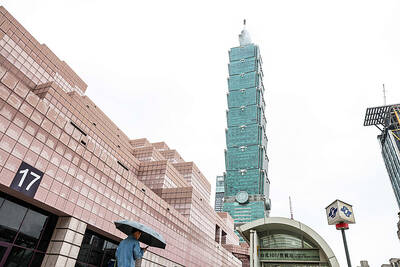
MANAGING RISKS: Taiwan has secured LNG sufficient to cover 95 percent of electricity demand for next month, UBS said, describing the government’s approach as proactive UBS Group AG has raised its forecast for Taiwan’s economic growth this year to 8 percent, up from 6.9 percent previously, and said expansion could reach as high as 8.6 percent if external energy shocks are avoided. The upgrade reflects a stronger-than-expected first-quarter performance and sustained momentum in artificial intelligence (AI)-driven exports, which UBS said are providing a firm foundation for growth despite geopolitical and energy risks. Taiwan’s GDP expanded 13.69 percent year-on-year in the first quarter, the fastest growth since the second quarter of 1987, the Directorate-General of Budget, Accounting and Statistics (DGBAS) reported on Thursday. On a seasonally

Ryanair, Transavia, Volotea and other low-cost airlines are feeling the financial pain from high jet fuel prices as a result of the Middle East war and are cutting flights. The closure of the Strait of Hormuz has taken a huge chunk of oil supplies off the market, sending the price of jet fuel soaring and triggering fears of shortages that could force airlines to cancel flights. Airlines are not waiting for a lack of supplies to react. “Travel alert: Airlines are cutting thousands of flights right now,” Travel Therapy host Karen Schaler said in an Instagram reel this past weekend.
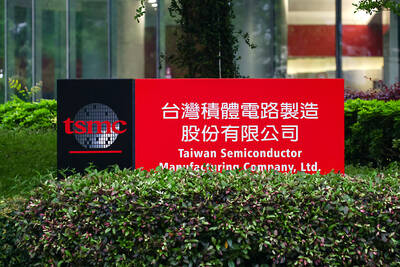
Shares of Taiwan Semiconductor Manufacturing Co (TSMC, 台積電) have repeatedly hit new highs, but an equity analyst said the stock’s valuation remains within a reasonable range and any pullback would likely be technical. The contract chipmaker’s historical price-to-earnings (P/E) ratio has ranged between 20 and 30, Cathay Futures Consultant Co (國泰證期) analyst Tsai Ming-han (蔡明翰) told Central News Agency. With market consensus projecting that TSMC would post earnings per share of about NT$100 (US$3.17) this year, supported by strong global demand for artificial intelligence (AI) applications, and the stock currently trading at a P/E ratio of below 25, Tsai said the valuation

The US Department of Commerce last week ordered multiple chip equipment companies to halt shipments of certain tools to China’s second-largest chipmaker, Hua Hong Semiconductor Ltd (華虹半導體), its latest action to slow the country’s development of advanced chips, two people familiar with the matter said. The department sent letters to at least a handful of companies informing them of restrictions on tools and other materials destined for two Hua Hong facilities US officials believe make China’s most sophisticated chips, the people said. Top US chip equipment companies Lam Research Corp, Applied Materials Inc and KLA Corp, each of which has significant


 RSS
RSS