


Nvidia Corp’s GB300 platform is expected to account for 70 to 80 percent of global artificial intelligence (AI) server rack shipments this year, while adoption of its next-generation Vera Rubin 200 platform is to gradually gain momentum after the third quarter of the year, TrendForce Corp (集邦科技) said.
Servers based on Nvidia’s GB300 chips entered mass production last quarter and they are expected to become the mainstay models for Taiwanese server manufacturers this year, Trendforce analyst Frank Kung (龔明德) said in an interview.
This year is expected to be a breakout year for AI servers based on a variety of chips, as shipments of graphics processing unit (GPU)-based rack systems — including Nvidia’s GB300 and Vera Rubin 200 platforms, as well as Advanced Micro Devices Inc’s MI400 — are set to accelerate, while cloud service providers (CSPs), such as Google Inc, Amazon Web Services and Meta Platforms Inc, are expected to step up use of application-specific integrated circuit (ASIC)-based AI infrastructure, he said.
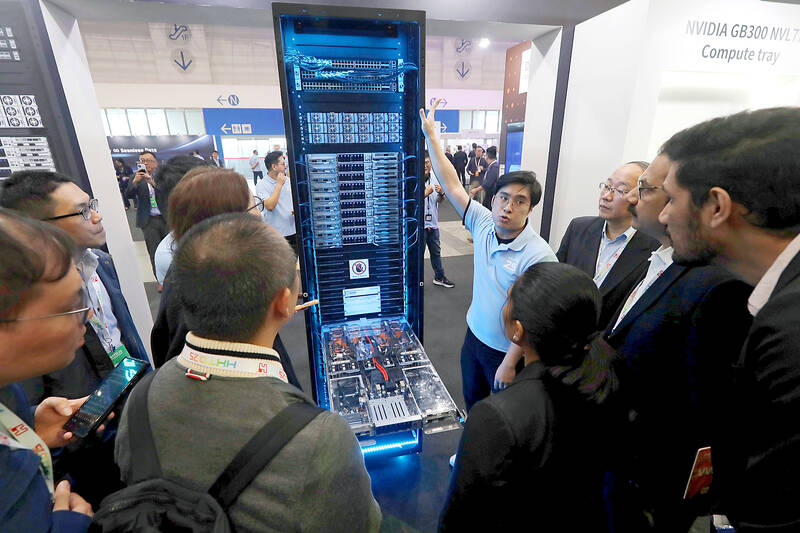
Photo: AP
As development of GPU and ASIC-based servers accelerates this year, the threshold for system integration among local server manufacturers is rising, Kung said.
Hon Hai Precision Industry Co (鴻海精密), Quanta Computer Inc (廣達) and Wistron Corp (緯創) are some of the Taiwanese server system integration suppliers for overseas tech giants.
The challenge is becoming more pronounced as major CSPs continue to develop ASICs with increasingly advanced and customized specifications, a trend that further raises technical barriers to entry for manufacturers, he said.
GB300 is one of Nvidia’s Blackwell GPU series, with modest upgrades compared with the GB200 across connectors, substrates and thermal components, while the Vera Rubin 200 platform features a significant increase in GPU power consumption, analysts said.
High power consumption in AI servers based on Nvidia chips, coupled with the CSPs’ continued upscaling of AI data centers, results in a growing need for liquid cooling solutions this year, TrendForce analyst Fiona Chiu (邱珮雯) said.
As the market’s heat dissipation solutions remain concentrated on liquid-to-air designs — which serve as a transitional phase between traditional air cooling and full liquid cooling — liquid-to-air systems are still expected to dominate AI infrastructure deployments this year, she said.
Fully liquid-to-liquid cooling solutions are expected to become more prominent next year as data center power density continues to rise, she added.
The developments would benefit Taiwanese liquid-cooling solution providers, with heat dissipation specialists such as Auras Technology Co (雙鴻科技) and Asia Vital Components Co (奇鋐科技) poised to strengthen their positions in the market, Chiu said.
Power supply solution providers such as Delta Electronics Inc (台達電) and Lite-On Technology Corp (光寶科技) are also expected to gain market share with their power supply and infrastructure-related products, she added.

Taiwan’s foreign exchange reserves fell below the US$600 billion mark at the end of last month, with the central bank reporting a total of US$596.89 billion — a decline of US$8.6 billion from February — ending a three-month streak of increases. The central bank attributed the drop to a combination of factors such as outflows by foreign institutional investors, currency fluctuations and its own market interventions. “The large-scale outflows disrupted the balance of supply and demand in the foreign exchange market, prompting the central bank to intervene repeatedly by selling US dollars to stabilize the local currency,” Department of Foreign
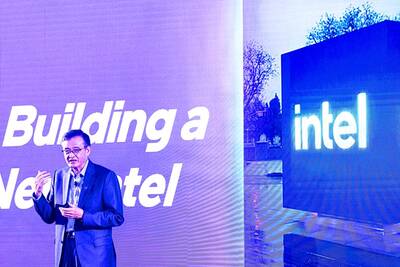
Intel Corp is joining Elon Musk’s long-shot effort to develop semiconductors for Tesla Inc, Space Exploration Technologies Corp and xAI, marking a surprising twist in the chipmaker’s comeback bid. Intel would help the Terafab project “refactor” the technology in a chip factory, the company said on Tuesday in a post on X, Musk’s social media platform. That is a stage in the development process that typically helps make chips more powerful or reliable. The chipmaker’s shares jumped 4.2 percent to US$52.91 in New York trading on Tuesday. The Terafab project is a grand plan by Musk to eventually manufacture his own chips for

ENERGY ISSUES: The TSIA urged the government to increase natural gas and helium reserves to reduce the impact of the Middle East war on semiconductor supply stability Chip testing and packaging service provider ASE Technology Holding Co (日月光投控) yesterday said it planned to invest more than NT$100 billion (US$3.15 billion) in building a new advanced chip testing facility in Kaohsiung to keep up with customer demand driven by the artificial intelligence (AI) boom. That would be included in the company’s capital expenditure budget next year, ASE said. There is also room to raise this year’s capital spending budget from a record-high US$7 billion estimated three months ago, it added. ASE would have six factories under construction this year, another record-breaking number, ASE chief operating officer Tien Wu
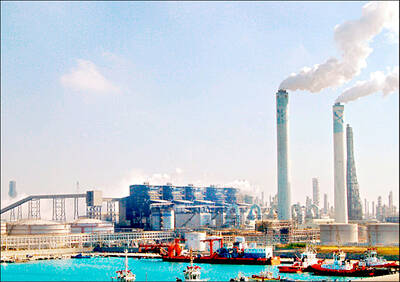
Taiwan Power Co (Taipower, 台電) yesterday said it plans to resume operations at two coal-fired power generators for three months to boost security of electricity supply as liquefied natural gas (LNG) supply risks are running high due to the Middle East conflict. The two coal-fired power generators are at Mailiao Power Plant in Yunlin County’s Mailiao Township (麥寮). The plant, operated by Formosa Plastics Group (台塑集團), supplied electricity to Taipower’s power grid until the end of last year. Taipower’s decision came about one month after Minister of Economic Affairs Kung Ming-hsin (龔明鑫) on March 10 said that the nation had no imminent


 RSS
RSS