


The Financial Supervisory Commission yesterday raised the minimum margin maintenance ratio for short sales from 90 percent to 120 percent, the second increase since August last year as global markets are once again gripped by a surge in volatility.
The measure comes into effect today.
“We urge investors to stay calm and make rational decisions in the face of drastic changes to global equity markets,” Securities and Futures Bureau Director-General Wu Yui-chun (吳裕群) told a news conference.
The TAIEX yesterday continued to slip, shedding 1.73 percent to close on 7,852.06 points, following a 1.05 percent plunge on Wednesday.
With turnover expanding to NT$116.775 billion (US$3.483 billion) yesterday from NT$98.454 billion the previous day, there is no liquidity risk on the local bourse, Wu said.
Wu said the local stock market was under pressure amid a plunge in Chinese stocks and concern over the falling yuan.
The TAIEX was beset by domestic factors as heavily weighted electronic components suppliers were hard-hit by dwindling sales prospects for Apple Inc’s products, he said.
To help investors cope with widening market fluctuation, the commission eased regulations to allow brokerages to give clients more leeway before a margin call is executed.
“Brokerages may now choose to delay margin calls or develop alternative arrangements based on their assessment of each client’s financial situation,” Wu said.
He said that in times of heightened volatility, a buffer would help prevent deepening of investment losses by averting hasty liquidation of equities or other assets.
Minister of Finance Chang Sheng-ford (張盛和) said the NT$500 billion National Financial Stabilization Fund (國安基金) remained in the market to help support share prices.
In addition, other government-led funds — such as the labor pension fund — and government-invested banks have also entered the market to help buffer against the negative effects of heavy losses in the global market, Chang said.
Only a small fraction of the financial stabilization fund has been used to pick up local shares so far, Chang said.
He declined to disclose the exact amount.
In light of the market turmoil in China, Bureau of Banking Director-General Austin Chan (詹庭禎) said that following numerous crackdowns by the commission, concern over yuan-linked target redemption forwards are expected to be fully lifted by the end of the first half of this year.
“About half of active target redemption forwards are expected to expire by the end of next month, while overall exposure to the derivative instrument is now contained at a manageable level,” Chan said.
Interest in the instrument among the public has receded markedly, Chan added.
Total target redemption forwards receded to about NT$82 billion at the end of last year, compared with NT$160 billion in May 2014 during the height of the troubled instrument’s popularity, he said.
As of the end of November, total exposure of domestic banks to Chinese stocks was tallied at NT$2.74 billion, according to banking bureau data.
Additional reporting by CNA
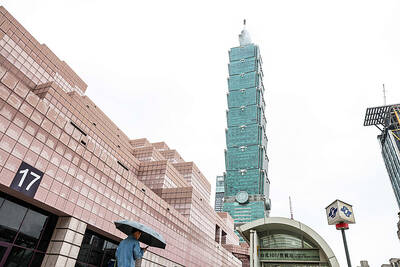
MANAGING RISKS: Taiwan has secured LNG sufficient to cover 95 percent of electricity demand for next month, UBS said, describing the government’s approach as proactive UBS Group AG has raised its forecast for Taiwan’s economic growth this year to 8 percent, up from 6.9 percent previously, and said expansion could reach as high as 8.6 percent if external energy shocks are avoided. The upgrade reflects a stronger-than-expected first-quarter performance and sustained momentum in artificial intelligence (AI)-driven exports, which UBS said are providing a firm foundation for growth despite geopolitical and energy risks. Taiwan’s GDP expanded 13.69 percent year-on-year in the first quarter, the fastest growth since the second quarter of 1987, the Directorate-General of Budget, Accounting and Statistics (DGBAS) reported on Thursday. On a seasonally
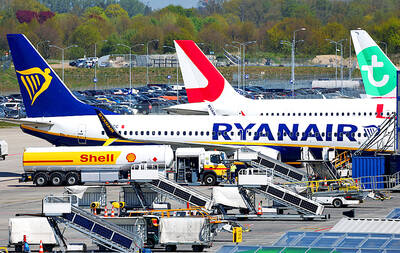
Ryanair, Transavia, Volotea and other low-cost airlines are feeling the financial pain from high jet fuel prices as a result of the Middle East war and are cutting flights. The closure of the Strait of Hormuz has taken a huge chunk of oil supplies off the market, sending the price of jet fuel soaring and triggering fears of shortages that could force airlines to cancel flights. Airlines are not waiting for a lack of supplies to react. “Travel alert: Airlines are cutting thousands of flights right now,” Travel Therapy host Karen Schaler said in an Instagram reel this past weekend.

Shares of Taiwan Semiconductor Manufacturing Co (TSMC, 台積電) have repeatedly hit new highs, but an equity analyst said the stock’s valuation remains within a reasonable range and any pullback would likely be technical. The contract chipmaker’s historical price-to-earnings (P/E) ratio has ranged between 20 and 30, Cathay Futures Consultant Co (國泰證期) analyst Tsai Ming-han (蔡明翰) told Central News Agency. With market consensus projecting that TSMC would post earnings per share of about NT$100 (US$3.17) this year, supported by strong global demand for artificial intelligence (AI) applications, and the stock currently trading at a P/E ratio of below 25, Tsai said the valuation
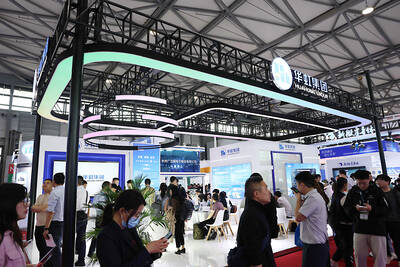
The US Department of Commerce last week ordered multiple chip equipment companies to halt shipments of certain tools to China’s second-largest chipmaker, Hua Hong Semiconductor Ltd (華虹半導體), its latest action to slow the country’s development of advanced chips, two people familiar with the matter said. The department sent letters to at least a handful of companies informing them of restrictions on tools and other materials destined for two Hua Hong facilities US officials believe make China’s most sophisticated chips, the people said. Top US chip equipment companies Lam Research Corp, Applied Materials Inc and KLA Corp, each of which has significant


 RSS
RSS