


About 930,000 people, or 4 percent of Taiwan’s population, owned wearable devices last year — mainly to collect and track useful health information — an Institute for Information Industry (資策會) survey showed.
Citing the survey’s results, the government-sponsored Institute for Information Industry’s research arm Foreseeing Innovative New Digiservices (FIND) said that compared with 2014, last year there were double the number of wearable owners and the penetration rate was 2.3 percentage points higher.
FIND said that new entrants to the workforce between 25 and 29 were the main users of wearable devices last year.
Among all wearable devices, smart wristbands were the most popular, owned by 68.3 percent of wearable device owners, followed by smart watches at 40.4 percent.
The ownership rates for other wearable devices such as smart eyeglasses and smart shoes were all below 5 percent, according to the survey.
A device’s function is the primary motivating factor behind the decision to buy such products, with up to 58.5 percent of users saying they use wearables every day and 64.8 percent of users saying their smart devices help them exercise more efficiently.
Just more than half — 54.2 percent — use them to collect and track medical information, 47.9 percent use them to remind them of daily routines and 41.1 percent use them to connect to other equipment and devices, such as smartphones, the survey found.
There was a major boom in wearable devices in the electronics industry last year, FIND said, with the launches of the Apple Watch and the rollout of new smart devices from international brands Garmin Ltd, Samsung Electronics Co Ltd, Sony Corp, and domestic brands Asustek Computer Inc (華碩), Acer Inc (宏碁) and HTC Corp (宏達電) as well as hot sales of Xiaomi inc’s (小米 ) smart wristband.
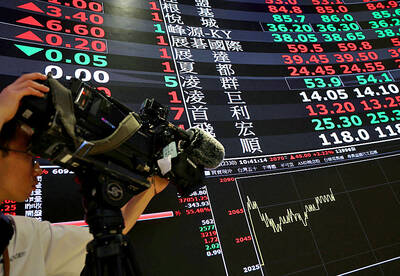
After several years flying high as Asia’s best Nvidia Corp proxy, Taiwan Semiconductor Manufacturing Co (TSMC, 台積電) is increasingly vying with other artificial intelligence (AI) stocks for investor attention. Stock traders are chasing a wider array of beneficiaries as mainstream usage of AI creates demand for hardware beyond the most-advanced chips TSMC makes for Nvidia. Subthemes from the deepening memory crunch to advances in robotics are also luring bids. At the same time, investment caps on single stocks are pushing funds to diversify, while retail investors long familiar with TSMC through its US depositary receipts are being offered a broader set of
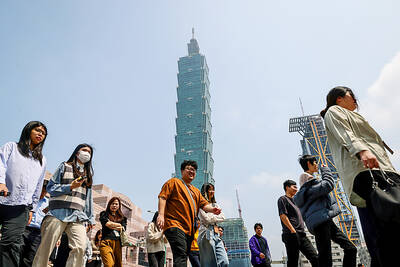
TECH RELIANCE: Growth is increasingly reflecting an unequal K-shaped distribution, where technology sectors outperform and other industries struggle, an expert said Standard Chartered Bank has significantly raised its forecast for Taiwan’s economic growth to 9.5 percent this year, up from 7.6 percent previously, citing surging artificial intelligence (AI) demand driving exports, semiconductor production and investment. The upgrade reflects a sustained AI supercycle that continues to fuel demand for advanced chips and technology infrastructure, which form the backbone of Taiwan’s exports, the bank said in a report this week. “We raise our 2026 growth forecast to reflect a much stronger-than-expected first-quarter GDP figure,” Standard Chartered senior economist for greater China and Asia Tommy Wu (胡東安) said in the report. Driven largely by a 35.3 percent
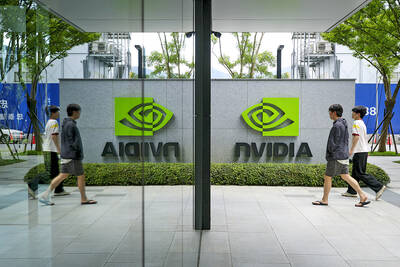
UNDER MICROSCOPE: Taiwan detained three people who allegedly conspired to buy servers in Taiwan and export them using fraudulent documentation, prosecutors said Nvidia Corp chief executive officer Jensen Huang (黃仁勳) on Saturday urged Super Micro Computer Inc to tighten up on compliance after Taiwan detained three people this week for allegedly making fraudulent declarations about artificial intelligence (AI) servers made by its US partner. The development marked the nation’s first crackdown on semiconductor smuggling, which grew after the US slapped restrictions on exports of high-end chips such as Nvidia AI accelerators to China. Nvidia is “rigorous” in explaining regulations to all of its partners, Huang told reporters after arriving in Taipei. “Ultimately Super Micro has to run their own company,” he said in response to
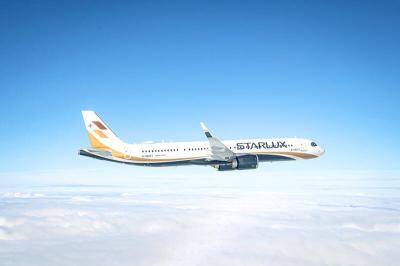
Two of Taiwan’s international carriers, Starlux Airlines Co (星宇航空) and EVA Airways Corp (長榮航空), have retained the five-star airline rating awarded by international airline review organization Skytrax. Starlux was awarded the distinction for a second consecutive year, while EVA Air received it for the 11th straight year, Skytrax said in statements released yesterday and on Thursday last week, respectively. The five-star rating is considered one of the airline industry's highest honors and is awarded following professional audits of airline product and frontline service standards, Skytrax said. The ratings are based on in-depth assessments using unified global quality standards rather than customer review scores


 RSS
RSS