


Local chip testing and packaging service provider Sigurd Microelectronics Corp (矽格) yesterday said it would launch a tender offer to fully acquire smaller rival Test-Serv Inc (誠遠科技) in a sign of continued consolidation in the nation’s semiconductor industry.
The NT$1.4 billion (US$42.42 million) deal also marks the latest merger and acquisition (M&A) activity in the chip testing and packaging sector.
Sigurd plans to buy all 80.2 million shares of Test-Serv at NT$17.5 per share, representing a 19.86 percent premium compared with the stock’s closing price of NT$14.6 yesterday.
“Sigurd believes this strategic alliance will help boost our market share, allowing the company to become the nation’s No. 1 or No. 2 player in the power management IC testing market,” Sigurd chairman Sidney Huang (黃興陽) told a media briefing.
“We also expect the combination of firms to create strong synergies in products, talent and technologies,” Huang added.
The integration would also boost the company’s competitiveness in vying for new orders in a wide range of areas, including auto-drive cars, drones, wearable devices, wireless chargers and the Internet of Things, he said.
Sigurd, which counts the nation’s biggest handset chip designer MediaTek Inc (聯發科) as one of its major clients, is headquartered in Hsinchu County’s Jhudong Township (竹東). The company mainly provides testing services for customers producing mobile phones, cars, consumer electronics and networking equipment, as well as power management IC testing services.
Sigurd plans to buy Test-Serv shares from today until Jan. 25. The acquisition would become successful after Sigurd buys more than 40 percent of Test-Serv shares.
After the transaction, Test-Serv is to be delisted from the local stock market, Sigurd said.
Sigurd plans to use its own capital to fund the merger and it does not expect the purchase to adversely affect the company’s financial status as it has NT$4 billion in cash and cash equivalents, as well as more than NT$1 billion of unused bank loans.
The company would continue to seek more M&A opportunities to accelerate the firm’s growth, Huang said.
“It is our strategy to grow organically and via M&As,” Huang said.
Sigurd is targeting companies with the potential to help it grow its market share or those that have supplementary products, he added.
Sigurd has a capitalization of NT$3.66 billion and total assets of NT$9.397 billion.
It operates four factories in Taiwan and China, with a total workforce of 1,600, according to the company’s Web site.
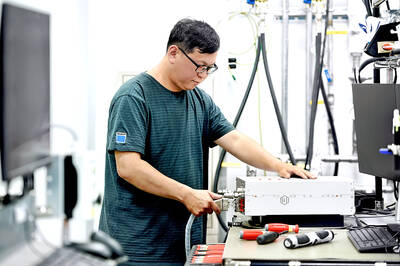
SEMICONDUCTORS: The German laser and plasma generator company will expand its local services as its specialized offerings support Taiwan’s semiconductor industries Trumpf SE + Co KG, a global leader in supplying laser technology and plasma generators used in chip production, is expanding its investments in Taiwan in an effort to deeply integrate into the global semiconductor supply chain in the pursuit of growth. The company, headquartered in Ditzingen, Germany, has invested significantly in a newly inaugurated regional technical center for plasma generators in Taoyuan, its latest expansion in Taiwan after being engaged in various industries for more than 25 years. The center, the first of its kind Trumpf built outside Germany, aims to serve customers from Taiwan, Japan, Southeast Asia and South Korea,

Gasoline and diesel prices at domestic fuel stations are to fall NT$0.2 per liter this week, down for a second consecutive week, CPC Corp, Taiwan (台灣中油) and Formosa Petrochemical Corp (台塑石化) announced yesterday. Effective today, gasoline prices at CPC and Formosa stations are to drop to NT$26.4, NT$27.9 and NT$29.9 per liter for 92, 95 and 98-octane unleaded gasoline respectively, the companies said in separate statements. The price of premium diesel is to fall to NT$24.8 per liter at CPC stations and NT$24.6 at Formosa pumps, they said. The price adjustments came even as international crude oil prices rose last week, as traders
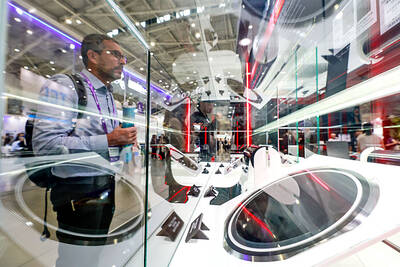
SIZE MATTERS: TSMC started phasing out 8-inch wafer production last year, while Samsung is more aggressively retiring 8-inch capacity, TrendForce said Chipmakers are expected to raise prices of 8-inch wafers by up to 20 percent this year on concern over supply constraints as major contract chipmakers Taiwan Semiconductor Manufacturing Co (TSMC, 台積電) and Samsung Electronics Co gradually retire less advanced wafer capacity, TrendForce Corp (集邦科技) said yesterday. It is the first significant across-the-board price hike since a global semiconductor correction in 2023, the Taipei-based market researcher said in a report. Global 8-inch wafer capacity slid 0.3 percent year-on-year last year, although 8-inch wafer prices still hovered at relatively stable levels throughout the year, TrendForce said. The downward trend is expected to continue this year,
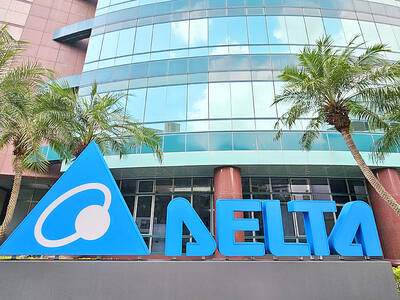
POWERING UP: PSUs for AI servers made up about 50% of Delta’s total server PSU revenue during the first three quarters of last year, the company said Power supply and electronic components maker Delta Electronics Inc (台達電) reported record-high revenue of NT$161.61 billion (US$5.11 billion) for last quarter and said it remains positive about this quarter. Last quarter’s figure was up 7.6 percent from the previous quarter and 41.51 percent higher than a year earlier, and largely in line with Yuanta Securities Investment Consulting Co’s (元大投顧) forecast of NT$160 billion. Delta’s annual revenue last year rose 31.76 percent year-on-year to NT$554.89 billion, also a record high for the company. Its strong performance reflected continued demand for high-performance power solutions and advanced liquid-cooling products used in artificial intelligence (AI) data centers,


 RSS
RSS