


An endangered lizard is only the latest threat to Australia’s largest coal project.
The Federal Court of Australia rejected the approval of Adani Enterprises Ltd’s Carmichael mine and rail project after environmental groups claimed the decision had not properly considered the impact on two vulnerable species. It should take six to eight weeks for the environment minister to reconsider the clearance, the government said yesterday.
While the original approval last year had conditions to protect species, including a lizard known as the yakka skink, the environment department failed to present certain documents, creating “a technical legal vulnerability,” Adani wrote in a separate statement.
“It’s another setback for the project,” said Matthew Boyle, an industry consultant at CRU Group in Sydney, who expects the mine’s start to be delayed to 2019, from the company’s estimate of 2017 given last year. “Carmichael will be developed, but probably not in the original time frame.”
Adani is seeking to develop the project and open up a new coal province in Queensland, even after coal prices fell by more than half in the past four years. Environmentalists concerned about the health of the Great Barrier Reef are also fighting the development.
“Adani is confident the conditions imposed on the existing approval are robust and appropriate once the technicality is addressed,” the company wrote.
Although coal is under threat globally as nations from China to Brazil make commitments to curb emissions and the administration of US President Barack Obama moves ahead with plans to cut US coal use, Boyle said demand in nations such as India for power-station coal is projected to increase.
“Indian thermal coal demand is still expected to be significant and Adani is a large player in the power-utility market,” he said. “India will require the coal.”
Still, for developers, including Adani, seeking to build new coal mines in Australia, the economic hurdles may be bigger than the environmental or political ones.
Australia’s Newcastle coal, an Asian benchmark that surged to US$136.30 a tonne in 2011, has since slumped to less than US$60.
Newcastle coal prices are forecast to average US$61 this year, US$59 next year and US$62 in 2017, Natalie Biggs, a US analyst at consulting firm Wood Mackenzie Ltd, wrote in an e-mail on Tuesday.
Power-station coal prices of more than A$100 (US$74) would be needed to make those Australian coal projects viable, about 25 percent higher than current levels, Daniel Morgan, a commodity analyst at UBS Group AG in Sydney, said by telephone.
“Prices that reflect a very well supplied coal market aren’t anywhere near where they need to be if I’m a decisionmaker trying to bring on that project,” Morgan said.
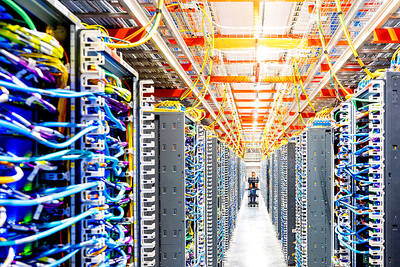
AI SPLURGE: The four major US tech companies have lost more than US$950 billion in value since releasing earnings and outlooks, while equipment makers were gaining Four of the biggest US technology companies together have forecast capital expenditures that would reach about US$650 billion this year — a flood of cash earmarked for new data centers and all the gear within them. The spending planned by Alphabet Inc, Amazon.com Inc, Meta Platforms Inc and Microsoft Corp, all in pursuit of dominance in the still-nascent market for artificial intelligence (AI) tools, is a boom without a parallel this century. Each of the companies’ estimates for this year is expected either near or surpass their budgets for the past three years combined. They would set a high-watermark for capital spending

China’s top chipmaker has warned that breakaway spending on artificial intelligence (AI) chips is bringing forward years of future demand, raising the risk that some data centers could sit idle. “Companies would love to build 10 years’ worth of data center capacity within one or two years,” Semiconductor Manufacturing International Corp (SMIC, 中芯) cochief executive officer Zhao Haijun (趙海軍) said yesterday on a call with analysts. “As for what exactly these data centers will do, that hasn’t been fully thought through.” Moody’s Ratings projects that AI-related infrastructure investment would exceed US$3 trillion over the next five years, as developers pour eye-watering sums

Bank of America Corp nearly doubled its forecast for the nation’s economic growth this year, adding to a slew of upgrades even after a rip-roaring last year propelled by demand for artificial intelligence (AI). The firm lifted its projection to 8 percent from 4.5 percent on “relentless global demand” for the hardware that Taiwanese companies make, according to a note dated yesterday by analysts including Xiaoqing Pi (皮曉青). Taiwan’s GDP expanded 8.63 percent last year, the fastest pace since 2010. The increase “reflects our sustained optimism over Taiwan’s technology driven expansion and is reinforced by several recent developments,” including a more stable currency,
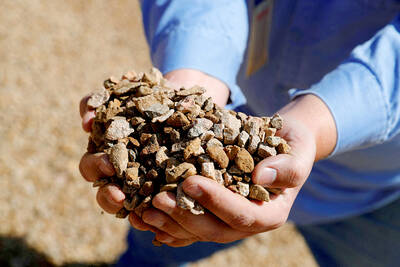
COLLABORATION: Taiwan and the US could jointly find solutions to weaknesses in supply chain resilience for critical materials, focusing on mining and initial refinement Taiwan is likely to purchase rare earths from the US in the future, and is also in talks with Australia and Canada to strengthen global rare earth supply chain security, Minister of Economic Affairs Kung Ming-hsin (龔明鑫) said yesterday. Taiwan and the US last month concluded the sixth Economic Prosperity Partnership Dialogue, during which both sides signed a joint statement endorsing the principles of the Pax Silica Declaration, pledging to deepen cooperation in areas including critical minerals. At the time, Kung said the two sides would establish working groups to advance cooperation in areas including artificial intelligence, digital infrastructure, critical materials and


 RSS
RSS