


After the legislature yesterday passed amendments to the Income Tax Act (所得稅法) to combine separate taxes on house and land sales, Minister of Finance Chang Sheng-ford (張盛和) said the new property tax should make the taxation system more reasonable and boost property sales now that policy uncertainty over the issue has dissipated.
Taiwan is the only nation in the world with separate land and house levies on property transactions, and under the previous system the government could not collect a sufficient amount of tax revenue from property transactions, Chang said.
The integrated house and land sales tax is set to take effect in January next year, Chang said, adding that the amendment would bring Taiwan into line with the rest of the world on the issue.
“I am grateful for the prompt passage of the tax plans, which would have been impossible without the support of the Cabinet, lawmakers, academics and the general public,” said Chang, who has pushed the tax reform for years.
The latest law revisions subject property transaction gains to income taxes of 45 percent if the houses are resold within one year of purchase and 35 percent for houses sold within two years of purchase.
The revised tax rates are 20 percent for houses sold within 10 years of purchase and 15 percent for those owned more than 10 years.
“The progressive tax rates are lenient on self-occupancy houses but penalize short-term trading in the hope of discouraging property speculation,” Chang said.
The Ministry of Finance (MOF) would set up task forces to draw up supporting regulations, Chang said.
The ministry also plans to train taxation staff, explain details to property brokers and agents, and update computer systems ahead of the implementation of the law on Jan. 1 next year, he said.
The government would use the extra tax revenue to subsidize long-term healthcare and home purchases for first-time buyers, he added.

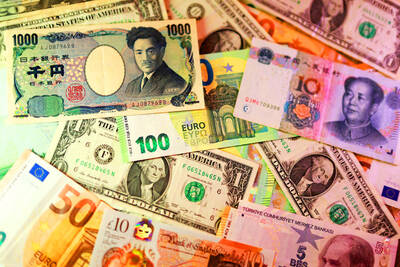
Taiwan’s foreign exchange reserves fell below the US$600 billion mark at the end of last month, with the central bank reporting a total of US$596.89 billion — a decline of US$8.6 billion from February — ending a three-month streak of increases. The central bank attributed the drop to a combination of factors such as outflows by foreign institutional investors, currency fluctuations and its own market interventions. “The large-scale outflows disrupted the balance of supply and demand in the foreign exchange market, prompting the central bank to intervene repeatedly by selling US dollars to stabilize the local currency,” Department of Foreign
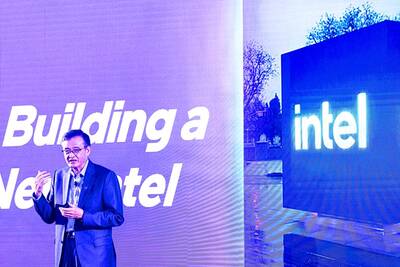
Intel Corp is joining Elon Musk’s long-shot effort to develop semiconductors for Tesla Inc, Space Exploration Technologies Corp and xAI, marking a surprising twist in the chipmaker’s comeback bid. Intel would help the Terafab project “refactor” the technology in a chip factory, the company said on Tuesday in a post on X, Musk’s social media platform. That is a stage in the development process that typically helps make chips more powerful or reliable. The chipmaker’s shares jumped 4.2 percent to US$52.91 in New York trading on Tuesday. The Terafab project is a grand plan by Musk to eventually manufacture his own chips for
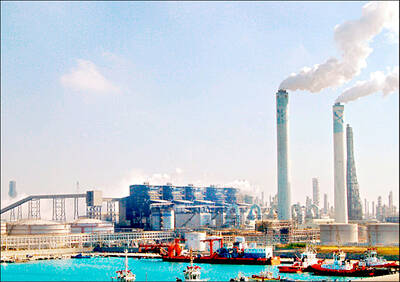
Taiwan Power Co (Taipower, 台電) yesterday said it plans to resume operations at two coal-fired power generators for three months to boost security of electricity supply as liquefied natural gas (LNG) supply risks are running high due to the Middle East conflict. The two coal-fired power generators are at Mailiao Power Plant in Yunlin County’s Mailiao Township (麥寮). The plant, operated by Formosa Plastics Group (台塑集團), supplied electricity to Taipower’s power grid until the end of last year. Taipower’s decision came about one month after Minister of Economic Affairs Kung Ming-hsin (龔明鑫) on March 10 said that the nation had no imminent
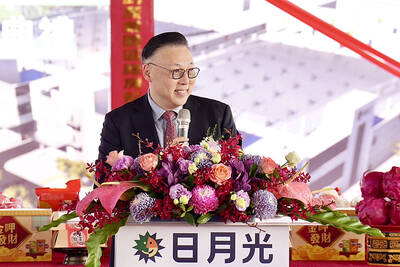
ENERGY ISSUES: The TSIA urged the government to increase natural gas and helium reserves to reduce the impact of the Middle East war on semiconductor supply stability Chip testing and packaging service provider ASE Technology Holding Co (日月光投控) yesterday said it planned to invest more than NT$100 billion (US$3.15 billion) in building a new advanced chip testing facility in Kaohsiung to keep up with customer demand driven by the artificial intelligence (AI) boom. That would be included in the company’s capital expenditure budget next year, ASE said. There is also room to raise this year’s capital spending budget from a record-high US$7 billion estimated three months ago, it added. ASE would have six factories under construction this year, another record-breaking number, ASE chief operating officer Tien Wu


 RSS
RSS