


A futures-driven sell-off caused the TAIEX to plunge 2.18 percent yesterday to 9,348.63 points, its lowest level in four-and-a-half months, following speculation that foreign institutional investors added a net 10,000 short-position contracts in the day.
Yesterday was the fourth straight losing session on the main bourse since the government relaxed the stock-trading band on Monday to 10 percent, from the previous 7 percent, in line with international trends.
Turnover expanded to NT$135.17 billion (US$4.35 billion) from the previous session’s NT$100.93 billion, according to the Taiwan Stock Exchange’s (TWSE) data.
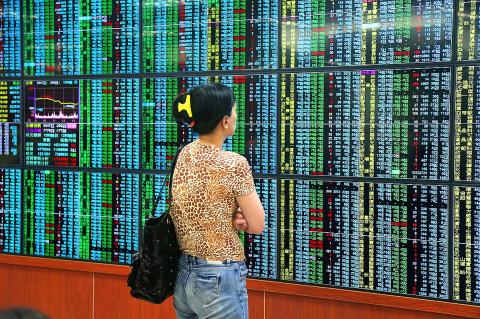
Photo: CNA
Institutional investors sold a net NT$18.78 billion of Taiwanese shares yesterday, which included net sales of NT$13.07 billion by foreign institutional investors, the TWSE data showed.
“After the local main board consolidated for about three weeks without making a breakthrough, many investors appeared impatient and unloaded their holdings instead,” Mega International Investment Services Corp (兆豐投顧) analyst Alex Huang (黃國偉) told the Central News Agency.
Huang said it was no surprise that foreign institutional investors rushed to dump their holdings in the spot market, especially large-cap high-tech stocks, to make profits in the futures market.
Shares of smartphone camera lens supplier Largan Precision Co (大立光) fell 7.24 percent to close at NT$3,205, Taiwan Semiconductor Manufacturing Co (台積電) dropped 1.4 percent to close at NT$141 and chip packaging and testing services provider Advanced Semiconductor Engineering Inc (日月光) lost 2.7 percent to NT$41.50.
UBS Securities Taiwan Ltd yesterday trimmed its target forecast for the TAIEX to 10,000 points this year, from the previous estimate of 10,600, as the economy displays signs of slowdown and investors lose some confidence.
The brokerage attributed the recent corrections in the local bourse to net selling by retail investors uneasy about political uncertainty and disappointing trade data.
After breaching the 10,000-point mark on an intraday basis in late April, the TAIEX had drifted lower by 2.7 percent for the past month, UBS Taiwan equities and research head William Dong (董成康) said.
UBS said it does not see a 12 percent contraction in exports in April as a sign of faltering external demand, saying it was caused partly by falling export prices.
However, a slowdown in emerging markets, China in particular, warrants caution given Taiwan’s heavy dependence on China, which accounts for 40 percent of exports, the brokerage said.
Shipments to China shrank 6.5 percent for the first four months of the year and was down 12.5 percent to trade partners in Southeast Asia over the same period, according to statistics provided by the Ministry of Finance.
Softening exports have led UBS to cut earnings growth forecasts among listed Taiwanese firms to 9.8 percent this year, down 2.5 percentage points from its earlier estimate, citing weak PC shipments, a slowdown in China’s handset market and an inventory adjustment for semiconductors.
However, UBS expects the market to rebound in the second half of the year, when companies are due to distribute dividend payouts and technology shipments are set to improve during the high season, Dong said.
In addition, the government might come up with market-friendly policies ahead of the presidential and legislative elections in January next year, Dong said.
Such policies could include further liberalization in the financial industry, more overseas investments and a potential increase in equity investments by government funds, he said.

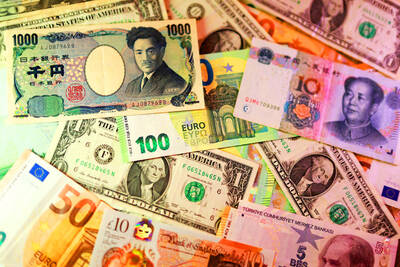
Taiwan’s foreign exchange reserves fell below the US$600 billion mark at the end of last month, with the central bank reporting a total of US$596.89 billion — a decline of US$8.6 billion from February — ending a three-month streak of increases. The central bank attributed the drop to a combination of factors such as outflows by foreign institutional investors, currency fluctuations and its own market interventions. “The large-scale outflows disrupted the balance of supply and demand in the foreign exchange market, prompting the central bank to intervene repeatedly by selling US dollars to stabilize the local currency,” Department of Foreign

Intel Corp is joining Elon Musk’s long-shot effort to develop semiconductors for Tesla Inc, Space Exploration Technologies Corp and xAI, marking a surprising twist in the chipmaker’s comeback bid. Intel would help the Terafab project “refactor” the technology in a chip factory, the company said on Tuesday in a post on X, Musk’s social media platform. That is a stage in the development process that typically helps make chips more powerful or reliable. The chipmaker’s shares jumped 4.2 percent to US$52.91 in New York trading on Tuesday. The Terafab project is a grand plan by Musk to eventually manufacture his own chips for

ENERGY ISSUES: The TSIA urged the government to increase natural gas and helium reserves to reduce the impact of the Middle East war on semiconductor supply stability Chip testing and packaging service provider ASE Technology Holding Co (日月光投控) yesterday said it planned to invest more than NT$100 billion (US$3.15 billion) in building a new advanced chip testing facility in Kaohsiung to keep up with customer demand driven by the artificial intelligence (AI) boom. That would be included in the company’s capital expenditure budget next year, ASE said. There is also room to raise this year’s capital spending budget from a record-high US$7 billion estimated three months ago, it added. ASE would have six factories under construction this year, another record-breaking number, ASE chief operating officer Tien Wu
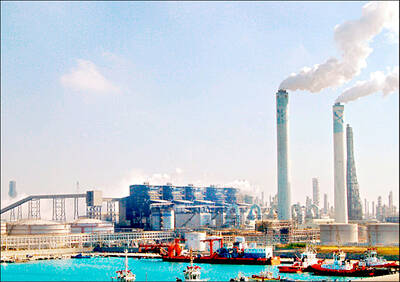
Taiwan Power Co (Taipower, 台電) yesterday said it plans to resume operations at two coal-fired power generators for three months to boost security of electricity supply as liquefied natural gas (LNG) supply risks are running high due to the Middle East conflict. The two coal-fired power generators are at Mailiao Power Plant in Yunlin County’s Mailiao Township (麥寮). The plant, operated by Formosa Plastics Group (台塑集團), supplied electricity to Taipower’s power grid until the end of last year. Taipower’s decision came about one month after Minister of Economic Affairs Kung Ming-hsin (龔明鑫) on March 10 said that the nation had no imminent


 RSS
RSS