


Just when Russians thought it could not get any worse with the ruble tumbling as fast as the oil prices on which their economy depends, the people of St Petersburg are waking up to rationing.
However, in Russian President Vladimir Putin’s hometown, the martyr city that survived a nearly 900-day siege in which thousands starved to death in World War II, it is not food and drink that is being rationed, but metro tokens.
In one of the most bizarre episodes of panic buying in a nation notorious for its hoarding instincts in times of trouble, people have been buying up to 85,000 extra metro tokens a day so they can save three rubles (US$0.05) when the price goes up on Thursday.
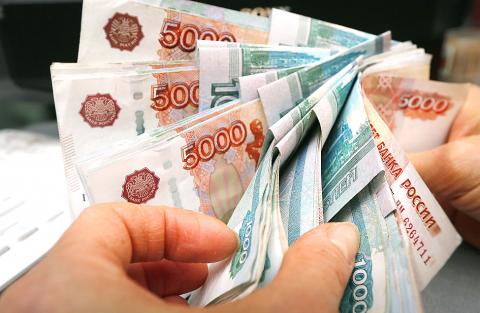
Photo: Reuters
With more than 1.8 million sold so far this month the authorities had to step in and ban cashiers from selling people more than two tokens at a time. Signs of panic buying have emerged in recent weeks with many hard-pressed households hoarding sugar and buckwheat, one of the nation’s main staples, as the ruble at one point lost one-quarter of its value in just two days.
Worried about rising inflation and the real value of their wages and savings plummeting, poorer Russians have been stockpiling goods they think are likely to hold their value.
“I get the feeling people are investing in metro tokens,” said one passenger in front of the ticket desk at Prospekt Veteranov station.
Normally only about 15,000 metro tokens per day are sold in Russia’s second city, but as the ruble crisis worsened, that increased to between 80,000 and 100,000 per day.
The price of the tokens are set to rise from 28 rubles to 31 rubles on Thursday.
Russia’s monetary crisis — the worst in Putin’s 15 years in power — was sparked by the fall in the price of oil and worsened by Western sanctions over Ukraine. The ruble has lost about 40 percent of its value against the US dollar and the euro this year.
On Friday, Russian Minister of Finance Anton Siluanov said Russia’s economy could suffer a 4 percent contraction next year and see a budget deficit of 3 percent.
Siluanov told Russian reporters that the economy would contract 4 percent with oil prices at about US$60 a barrel, adding that he expected the ruble’s exchange rate to be about 51 rubles per US dollar.
“That’s the exchange rate which according to our estimates corresponds to the balance of payments,” he said.
He added that the government would have to further cut expenses or tap into reserves, noting that the planned 10 percent spending cut was not enough.
The central bank recently said the Russian contraction could be up to 4.8 percent at current oil prices, with a recovery not expected until 2017, but that was before it hiked interest rates by more than one-third to 17 percent, which is likely to also act as a drag on the economy.
On Friday, Russian authorities also significantly scaled up rescue funds for Trust Bank, saying they would provide up to US$2.4 billion in loans to bail out the medium-sized lender, the first bank to fall victim to the crisis.
The falling ruble has prompted panic buying of foreign currency in Russia and a spike in deposit withdrawals, heaping pressure on a vulnerable banking sector whose access to international capital markets has already been restricted by Western sanctions.
Siluanov said that authorities would provide additional capital to the nations’s second-largest bank, VTB, and fellow state lender Gazprombank.
VTB could receive 250 billion rubles (US$4.91 billion) and Gazprombank 70 billion rubles to help fund investment projects, including those planned by Russian Railways, Siluanov said.
It was not clear whether this support would be in addition to the 1 trillion ruble capital boost the banking sector is set to receive as part of legislation recently approved by parliament.
Credit agency Standard & Poor’s said this week it could downgrade Russia’s rating to junk as soon as January due to a rapid deterioration in “monetary flexibility” in the nation.
“Practically this [a downgrade] may mean the increase of capital outflow from Russia, which would be necessary to replace with instruments we have,” Russian Minister of Economic Development Alexei Ulyukayev said.
Russia might repurchase corporate bond issues, especially denominated in foreign currency, if needed, he added.
The nation’s gold and foreign exchange reserves have fallen to their lowest levels since 2009 as the central bank has spent billions to prop up the currency. Last week, reserves dropped by as much as US$15.7 billion to below US$400 billion, down from over US$510 billion at the start of the year.
Additional reporting by Reuters

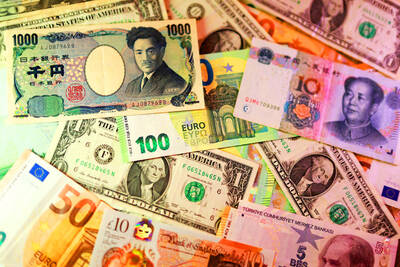
Taiwan’s foreign exchange reserves fell below the US$600 billion mark at the end of last month, with the central bank reporting a total of US$596.89 billion — a decline of US$8.6 billion from February — ending a three-month streak of increases. The central bank attributed the drop to a combination of factors such as outflows by foreign institutional investors, currency fluctuations and its own market interventions. “The large-scale outflows disrupted the balance of supply and demand in the foreign exchange market, prompting the central bank to intervene repeatedly by selling US dollars to stabilize the local currency,” Department of Foreign

Intel Corp is joining Elon Musk’s long-shot effort to develop semiconductors for Tesla Inc, Space Exploration Technologies Corp and xAI, marking a surprising twist in the chipmaker’s comeback bid. Intel would help the Terafab project “refactor” the technology in a chip factory, the company said on Tuesday in a post on X, Musk’s social media platform. That is a stage in the development process that typically helps make chips more powerful or reliable. The chipmaker’s shares jumped 4.2 percent to US$52.91 in New York trading on Tuesday. The Terafab project is a grand plan by Musk to eventually manufacture his own chips for
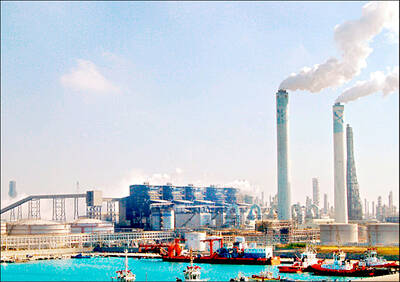
Taiwan Power Co (Taipower, 台電) yesterday said it plans to resume operations at two coal-fired power generators for three months to boost security of electricity supply as liquefied natural gas (LNG) supply risks are running high due to the Middle East conflict. The two coal-fired power generators are at Mailiao Power Plant in Yunlin County’s Mailiao Township (麥寮). The plant, operated by Formosa Plastics Group (台塑集團), supplied electricity to Taipower’s power grid until the end of last year. Taipower’s decision came about one month after Minister of Economic Affairs Kung Ming-hsin (龔明鑫) on March 10 said that the nation had no imminent

Some robotaxi passengers were left stranded in the middle of fast-moving traffic in a major Chinese city after their driverless vehicles stopped running, according to police and media reports on Wednesday. A preliminary investigation indicates more than 100 robotaxis came to a halt because of a “system malfunction,” police in the city of Wuhan said in a statement, without elaborating. No injuries were reported. One passenger told Chinese media that their robotaxi stopped after turning a corner. An instruction on a screen read: “Driving system malfunction. Staff are expected to arrive in 5 minutes.” After no one showed up, the passenger pushed


 RSS
RSS