


Sony Corp on Wednesday unveiled new mobile devices which can function as displays for PlayStation games, as it adds features to win sales in a market dominated by Apple Inc and Samsung Electronics Co.
The marquee Xperia Z3 smartphone is waterproof and comes with a battery that can stay charged for two days, Sony said on its Web site. The Tokyo-based company also announced the Z3 Compact smartphone with a 4.6-inch screen and an 8-inch tablet computer.
Chief executive officer Kazuo Hirai has been pushing his “One Sony” plan aimed at better integrating the company’s electronics and entertainment assets to revive earnings.
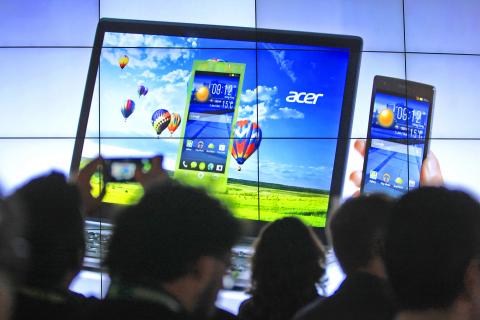
Photo: Bloomberg
The PlayStation 4 has been one of the few bright spots for Sony, outselling Microsoft Corp’s Xbox One, amid a decade of television losses and lackluster demand for Xperia smartphones, which barely crack the top 10 globally in shipments.
Sony is forecasting its sixth annual loss in seven years and Hirai cut the company’s full-year smartphone sales projection to 43 million units from an earlier forecast of 50 million.
Meanwhile, Taiwan’s Acer Inc (宏碁) and Asustek Computer Inc (華碩), as well as South Korea’s Samsung Electronics Co and other electronics companies, on Wednesday unveiled their latest product lineups ahead of the Sept. 5 through Sept. 10 IFA electronics trade show in Berlin, Germany, with an eye on the year-end holiday shopping season in the US.
Acer showcased three Iconia series tablets running on Windows and Android operating systems, and a new Liquid series smartphone, claiming it is the smallest and lightest 5-inch device on the market. It announced plans to release a 50 euro (US$66) smartphone next year.
However, the Taiwanese company insisted that the keyboard computer market was not dead and introduced two Aspire R series convertible notebooks and two Aspire Switch series two-in-one PCs.
The company is optimistic about its turnaround progress and expects its third-quarter revenues to maintain growth momentum, based on its back-to-school promotions and the worldwide release of new products scheduled for the second half of the year.
As for fellow Taiwanese manufacturer Asustek, the company took the wraps off the ZenWatch, its first smartwatch using the Android Wear operating platform. The wearable can be paired with newer Android phones to display information and monitor the wearer’s activity. The watch can be used to find a smartphone, something Samsung has done with some of its watches, as long as the phone is also made by Samsung.
ZenWatch comes at a higher-than-expected starting price of US$262, more expensive than LG Electronic Co’s G Watch priced at US$179 and Sony’s SmartWatch 2 at US$199, but cheaper than the Samsung Gear 2 which starts at US$299.
Other new products Asustek showcased included the 13.3-inch Zenbook UX305 laptop, the 11.6-inch EeeBook X205 laptop running the Windows 8.1 operating system, and the 7-inch MeMO Pad 7 Android tablet powered by an Intel Atom 64-bit quad-core processor.

DAMAGE REPORT: Global central banks are assessing war-driven inflation risks as the law of unintended consequences careens around the world, spiking oil prices Central banks from Washington to London and from Jakarta to Taipei are about to make their first assessments of economic damage after more than two weeks of conflict between the US and Iran. Decisions this week encompassing every member of the G7 and eight of the world’s 10 most-traded currency jurisdictions are likely to confirm to investors that the specter of a new inflation shock is already worrying enough to prompt heightened caution. The US Federal Reserve is widely expected to do exactly what everyone anticipated weeks ahead of its March 17-18 policy gathering: hold rates steady. The narrative surrounding that
Taiwan Semiconductor Manufacturing Co’s (TSMC, 台積電) share of the global foundry market rose to almost 70 percent last year amid booming demand for artificial intelligence (AI), market information advisory firm TrendForce Corp (集邦科技) said on Thursday. The contract chipmaker posted US$122.54 billion in revenue, up 36.1 percent from a year earlier, accounting for 69.9 percent of the global market, TrendForce said. Its share was up from 64.4 percent in 2024, it said. TSMC’s closest rival, Samsung Electronics, was a distant second, posting US$12.63 billion in sales, down 3.9 percent from a year earlier, for a 7.2 percent share of the global market. In the
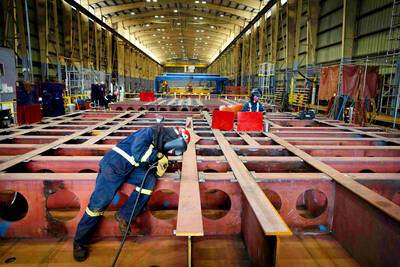
At a massive shipyard in North Vancouver, Canadian workers grind metal beams for a powerful new icebreaker crucial to cementing the country’s presence in the increasingly contested arctic. Icebreakers are specialized, expensive vessels able to navigate in the frozen far north. And “this is the crown jewel,” said Eddie Schehr, vice president of production at the Seaspan shipyard. For Canadian Prime Minister Mark Carney, who heads to Norway next Friday to observe arctic defense drills involving troops from 14 NATO states, Canada’s extreme north has emerged as a strategic priority. “Canada is and forever will be an Arctic nation,” he said ahead of
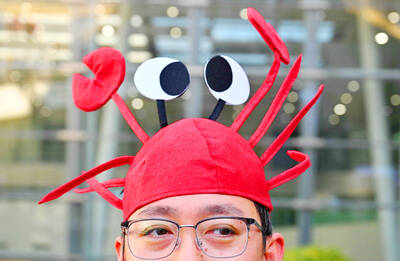
Chinese entrepreneur Frank Gao used to spend long hours running his social media accounts but now outsources the chore to artificial intelligence (AI) agent tool OpenClaw, which is taking China by storm despite official warnings over cybersecurity. OpenClaw, created in November by an Austrian coder, differs from bots such as ChatGPT because it can execute real-life tasks such as sending e-mails, organizing files or even booking flight tickets. “Since January, I’ve spent hours on the lobster every day,” Gao said in an interview, referring to OpenClaw’s red crustacean mascot. “We’re family.” After downloading OpenClaw, users connect it to artificial intelligence models of their


 RSS
RSS