


Near-unscratchable screens that are expected to be one of the biggest selling points of the iPhone 6 when Apple Inc unveils the latest model in Sept. are to go into large-scale production this month.
To create industrial quantities of man-made sapphire, the material already used to cover the fingerprint-sensing home button and camera lens on its phones, Apple has a US$578m deal with manufacturer GT Advanced Technologies Inc, which has built a plant powered by renewable energy in Mesa, Arizona.
The iPhone 6 is set to make its first public appearance on Sept. 9. Until now Apple has relied on toughened glass which can be easily shattered and marked. However, screens already demonstrated by GT can withstand scratches from concrete. Its thin sapphire layers are flexible, potentially improving resistance to knocks and falls.
Apple is said to be preparing two new iPhone models, both of which are to have larger screens than their predecessors. The biggest is to measure 5.5 inches corner to corner, while the smaller iPhone is to have a 4.7-inch screen.
The Wall Street Journal reported that Apple has ordered an initial batch of between 70 million and 80 million handsets, its biggest first run production, to be sent out from factory gates in time for Christmas and the New Year.
GT chief executive Thomas Gutierrez told investors on a call this month: “The build-out of our Arizona facility, which has involved taking a 1.4 million square foot [130,000 m2] facility from a shell to a functional structure and the installation of over 1 million square feet of sapphire growth and fabrication equipment, is nearly complete and we are commencing the transition to volume production.”
Meanwhile, Taiwan’s Hon Hai Precision Industry Co (鴻海精密) is expected to record significant sequential revenue growth in the second half of the year, as it ramps up production of the iPhone 6, head of Taiwan research at Morgan Stanley Jasmine Lu (呂智穎) said.
“Even if the iPhone is delayed, as the market is speculating, we think the strong production cycle will last into the first half of 2015, given the lack of robust competition,” Lu wrote in a note to clients, dated Thursday last week.
Lu forecast a 5 percent increase in Hon Hai’s revenue for this quarter and a 55 percent jump for next quarter, with earnings per share of NT$2.41 and NT$3.75, respectively.
Additional reporting by CNA
Shares of contract chipmaker Taiwan Semiconductor Manufacturing Co (TSMC, 台積電) came under pressure yesterday after a report that Apple Inc is looking to shift some orders from the Taiwanese company to Intel Corp. TSMC shares fell NT$55, or 2.4 percent, to close at NT$2,235 on the local main board, Taiwan Stock Exchange data showed. Despite the losses, TSMC is expected to continue to benefit from sound fundamentals, as it maintains a lead over its peers in high-end process development, analysts said. “The selling was a knee-jerk reaction to an Intel-Apple report over the weekend,” Mega International Investment Services Corp (兆豐國際投顧) analyst Alex Huang
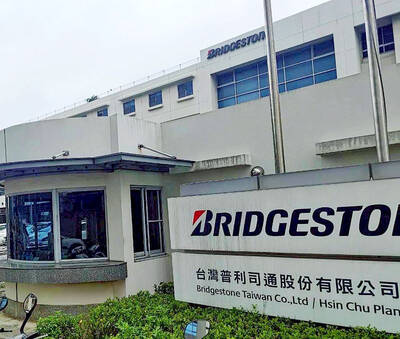
TRANSITION: With the closure, the company would reorganize its Taiwanese unit to a sales and service-focused model, Bridgestone said Bridgestone Corp yesterday announced it would cease manufacturing operations at its tire plant in Hsinchu County’s Hukou Township (湖口), affecting more than 500 workers. Bridgestone Taiwan Co (台灣普利司通) said in a statement that the decision was based on the Tokyo-based tire maker’s adjustments to its global operational strategy and long-term market development considerations. The Taiwanese unit would be reorganized as part of the closure, effective yesterday, and all related production activities would be concluded, the statement said. Under the plan, Bridgestone would continue to deepen its presence in the Taiwanese market, while transitioning to a sales and service-focused business model, it added. The Hsinchu
Taiwan Semiconductor Manufacturing Co (TSMC, 台積電) has approved a capital budget of US$31.28 billion for production expansion to meet long-term development needs during the artificial intelligence (AI) boom. The company’s board meeting yesterday approved the capital appropriation plan for purposes such as the installation of advanced technology capacity and fab construction, the world’s largest contract chipmaker said in a statement. At an earnings conference last month, TSMC forecast that its capital expenditure for this year would be at the higher end of the US$52 billion to US$56 billion range it forecast in January in response to robust demand for 5G, AI and
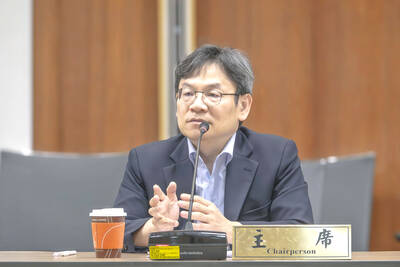
Taiwan Semiconductor Manufacturing Co’s (TSMC, 台積電) investment project in Arizona has progressed better than expected, but it still faces challenges such as water and labor shortages, National Development Council (NDC) Minister Yeh Chun-hsien (葉俊顯) said yesterday. Speaking with reporters after visiting TSMC’s Arizona hub and attending the SelectUSA Investment Summit in Maryland last week, Yeh said TSMC’s Arizona site turned a profit of NT$16.14 billion (US$514 million) last year in its first full year of mass production. “TSMC told me it was surprised by the smooth trial run of the first fab, which has left the company optimistic about the project’s outlook,”


 RSS
RSS