


France is stepping up cargo checks on trucks carrying fruit over the border from Spain in what is increasingly looking like a “peach war” between the EU neighbors.
In the past two weeks, 150 trucks have been stopped and 10 infractions recorded, the French Ministry of Agriculture, Food and Forestry on Monday said on receiving French fruit growers who have complained of what they see as unfair “dumping” of produce in their home market.
France’s operation to make sure the trucks “respect the rules for the sale of fruit and vegetables” will continue in the coming weeks, Minister of Agriculture, Food and Forestry Stephane Le Foll said after the meeting.
He added that the European Commission had been asked by France, Spain, Greece and Italy to consider putting in place “exceptional market-managing measures” in the sector.
The French fruit-growers’ anger is boiling over amid fears that their industry is on the verge of disappearing entirely because of diving prices. Farmland across France given over to growing peaches and nectarines has halved in size over the past decade.
Luc Barbier, head of the French fruitgrowers’ federation FNPF, said that the conflict between French and Spanish producers has never been so bad.
The Spanish counterparts are practicing “trade dumping to kill the French market in order to be the only suppliers,” he said, calling for stepped-up border checks to verify the origin, quality and price of fruit cargos.
The head of the broader FNSEA farmers’ federation, Xavier Beulin, said the problem went beyond peaches and nectarines. He said the dispute also impacted farmers selling tomatoes, melons, cucumbers and strawberries.
“The core problem is the cost disparity with Spain which means we can’t be competitive,” he said.
However, Spain’s FEPEX federation of fruitgrowers and exporter, denied the French accusations.
“The fruit crisis is affecting all European producers,” it said, slamming recent attacks on Spanish trucks.
FEPEX also called on the EU to take urgent steps to support the fruit market, underlining the importance of the fruit sector to Spain’s economy.
Last year, Spain exported 910,000 tonnes of fruit with stones (peaches and the like), bringing in nearly 1 billion euros (US$1.3 billion).

CHIP RACE: Three years of overbroad export controls drove foreign competitors to pursue their own AI chips, and ‘cost US taxpayers billions of dollars,’ Nvidia said China has figured out the US strategy for allowing it to buy Nvidia Corp’s H200s and is rejecting the artificial intelligence (AI) chip in favor of domestically developed semiconductors, White House AI adviser David Sacks said, citing news reports. US President Donald Trump on Monday said that he would allow shipments of Nvidia’s H200 chips to China, part of an administration effort backed by Sacks to challenge Chinese tech champions such as Huawei Technologies Co (華為) by bringing US competition to their home market. On Friday, Sacks signaled that he was uncertain about whether that approach would work. “They’re rejecting our chips,” Sacks

NATIONAL SECURITY: Intel’s testing of ACM tools despite US government control ‘highlights egregious gaps in US technology protection policies,’ a former official said Chipmaker Intel Corp has tested chipmaking tools this year from a toolmaker with deep roots in China and two overseas units that were targeted by US sanctions, according to two sources with direct knowledge of the matter. Intel, which fended off calls for its CEO’s resignation from US President Donald Trump in August over his alleged ties to China, got the tools from ACM Research Inc, a Fremont, California-based producer of chipmaking equipment. Two of ACM’s units, based in Shanghai and South Korea, were among a number of firms barred last year from receiving US technology over claims they have

It is challenging to build infrastructure in much of Europe. Constrained budgets and polarized politics tend to undermine long-term projects, forcing officials to react to emergencies rather than plan for the future. Not in Austria. Today, the country is to officially open its Koralmbahn tunnel, the 5.9 billion euro (US$6.9 billion) centerpiece of a groundbreaking new railway that will eventually run from Poland’s Baltic coast to the Adriatic Sea, transforming travel within Austria and positioning the Alpine nation at the forefront of logistics in Europe. “It is Austria’s biggest socio-economic experiment in over a century,” said Eric Kirschner, an economist at Graz-based Joanneum
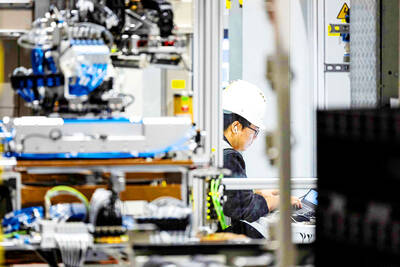
France is developing domestic production of electric vehicle (EV) batteries with an eye on industrial independence, but Asian experts are proving key in launching operations. In the Verkor factory outside the northern city of Dunkirk, which was inaugurated on Thursday, foreign specialists, notably from South Korea and Malaysia, are training the local staff. Verkor is the third battery gigafactory to open in northern France in a region that has become known as “Battery Valley.” At the Automotive Energy Supply Corp (AESC) factory near the city of Douai, where production has been under way for several months, Chinese engineers and technicians supervise French recruits. “They


 RSS
RSS