


Innolux Corp (群創光電), the nation’s largest LCD panel maker, became the world’s top supplier of automotive LCD panels last year, overtaking Japan Display Inc, market researcher NPD DisplaySearch said yesterday.
Last year, Innolux garnered 23 percent of the automotive LCD market, followed by Japan Display’s 21 percent and Sharp Corp’s 18 percent, according to NPD DisplaySearch’s tally.
“Until last year, Japanese makers led the automotive TFT LCD market because of the quality and reliability of their automotive display products,” NPD DisplaySearch analyst Hiroshi Hayase said in the report.
Innolux said in March that LCD panels for vehicles accounted for 3 to 5 percent of its total revenue.
“However, increased demand for standardization of automotive TFT LCD panels from multiple suppliers, along with the desire to lower costs, helped TFT LCD panel manufacturers in Taiwan and [South] Korea increase automotive display shipments after 2011,” Hayase said.
Hayase attributed Innolux’s rapid growth to the company’s fast expansion into China’s aftermarket, where navigation systems and other automobile displays are installed after a car is sold.
Another Taiwanese firm, AU Optronics Corp (AUO, 友達光電), grabbed an 11 percent share, ranked No. 5 behind LG Display Co’s 13 percent, the tally showed. AUO last month told investors that it expects shipments of its automotive displays to grow 30 percent annually this year.
“Like the more mature PC and TV panels, the automotive TFT LCD panel has evolved from a customized item to a commodity that is easier to mass produce, and Taiwan TFT LCD makers now have the edge in pricing and production capacity,” Hayase said.
Global automotive TFT LCD shipments have nearly tripled over the past five years and the demand is expected to exceed 100 million units by 2017, driven by the growing popularity of electric and hybrid vehicles and on-screen navigation systems, the research firm said.


Taiwan’s foreign exchange reserves fell below the US$600 billion mark at the end of last month, with the central bank reporting a total of US$596.89 billion — a decline of US$8.6 billion from February — ending a three-month streak of increases. The central bank attributed the drop to a combination of factors such as outflows by foreign institutional investors, currency fluctuations and its own market interventions. “The large-scale outflows disrupted the balance of supply and demand in the foreign exchange market, prompting the central bank to intervene repeatedly by selling US dollars to stabilize the local currency,” Department of Foreign

Intel Corp is joining Elon Musk’s long-shot effort to develop semiconductors for Tesla Inc, Space Exploration Technologies Corp and xAI, marking a surprising twist in the chipmaker’s comeback bid. Intel would help the Terafab project “refactor” the technology in a chip factory, the company said on Tuesday in a post on X, Musk’s social media platform. That is a stage in the development process that typically helps make chips more powerful or reliable. The chipmaker’s shares jumped 4.2 percent to US$52.91 in New York trading on Tuesday. The Terafab project is a grand plan by Musk to eventually manufacture his own chips for
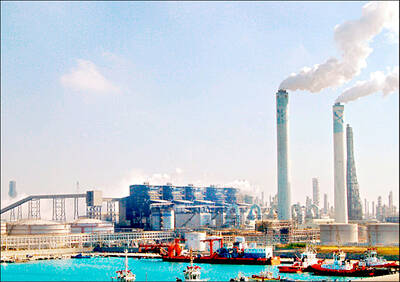
Taiwan Power Co (Taipower, 台電) yesterday said it plans to resume operations at two coal-fired power generators for three months to boost security of electricity supply as liquefied natural gas (LNG) supply risks are running high due to the Middle East conflict. The two coal-fired power generators are at Mailiao Power Plant in Yunlin County’s Mailiao Township (麥寮). The plant, operated by Formosa Plastics Group (台塑集團), supplied electricity to Taipower’s power grid until the end of last year. Taipower’s decision came about one month after Minister of Economic Affairs Kung Ming-hsin (龔明鑫) on March 10 said that the nation had no imminent
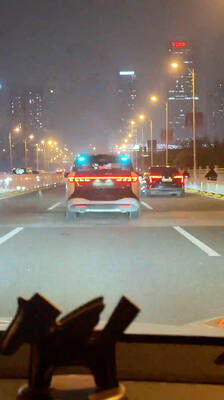
Some robotaxi passengers were left stranded in the middle of fast-moving traffic in a major Chinese city after their driverless vehicles stopped running, according to police and media reports on Wednesday. A preliminary investigation indicates more than 100 robotaxis came to a halt because of a “system malfunction,” police in the city of Wuhan said in a statement, without elaborating. No injuries were reported. One passenger told Chinese media that their robotaxi stopped after turning a corner. An instruction on a screen read: “Driving system malfunction. Staff are expected to arrive in 5 minutes.” After no one showed up, the passenger pushed


 RSS
RSS