


Apple Inc wowed investors this week while a disappointing outlook from Amazon.com Inc revived anxiety about the overall tech sector as the busiest week of first-quarter earnings season concluded.
Deep losses on Friday pushed the market into the red for the week, with the tech-rich NASDAQ Composite Index suffering the biggest losses, shedding 19.96 points (0.49 percent) to close on 4,075.56, while the Dow Jones Industrial Average declined 47.14 (0.29 percent) to 16,361.46 points and the broad-based S&P 500 slipped 1.45 (0.08 percent) to end at 1,863.40.
Broad selling pressure, which had receded slightly for about a week-and-a-half, came back with a vengeance on Friday after Amazon delivered a skimpy outlook for profit margins and projected second-quarter operating losses as high as US$455 million.
Analysts also cited rising concerns about Ukraine as a major drag on the market.
Marblehead Asset Management director Mace Blicksilver said that the week’s performance of so-called “glamor” stocks like Facebook Inc and Netflix Inc suggests that “this buyer’s strike is still going on.”
Netflix initially surged after the online streaming company reported that revenues breached US$1 billion and that it planned a bump in subscription prices. Facebook also got a quick lift after announcing that profits tripled to US$642 million on strong gains in mobile users and mobile advertising.
Nevertheless, both stocks ended the week with declines.
“What you see today is a continuation of the trend of the high-growth stocks struggling,” Kenjol Capital Management portfolio manager David Levy said.
Despite the weak Amazon report and a handful of other earnings disappointments, the bulk of first-quarter reports so far have bested expectations. Of the 203 companies that reported through Thursday, 138 beat expectations, 45 missed projections and 20 were on target, according to S&P Capital IQ.
Industrial heavyweight Caterpillar Inc, which has had disappointing results in recent quarters, raised its profit forecasts as improved performance in the energy, transportation and construction sectors that offset continued weakness in mining.
Fellow Dow member Boeing Co also pleased Wall Street by raising its annual profit outlook due to strong demand for new jetliners. Perhaps the biggest standout of the week was Apple, which surged nearly 9 percent in the two days after releasing its report on Wednesday.
In addition to reporting profits that beat expectations by a wide margin, the maker of the iPhone unveiled a dividend increase, a ramp-up in stock buybacks and a seven-for-one stock split.
However, analysts cautioned that Apple still faces pressure to launch another blockbuster product.
“We are ready,” Forrester analyst Frank Gillett said. “It is time for Apple to show us something from their labs; from behind their closed doors.”
Other strong reports came from American Airlines Inc, Comcast Corp, Dow Chemical Co, Lockheed Martin, Microsoft Corp and Travelers Companies. The disappointments included Ford Motor Co and United Airlines Inc.
Besides earnings, investors kept an eye on increasingly fraught tensions between Russia and Ukraine that continue to reverberate with governments around the world.
What investors fear the most about the East-West standoff over Ukraine is the unknown, BMO Global Asset Management market strategist Brent Schutte said.
“You can never say for sure what’s going to occur or if it spirals out of control,” he said.
Earnings will continue to play a central role in markets next week with reports from several prominent companies, including ExxonMobil Corp, Merck & Co Inc, Time Warner Inc and Twitter Inc.
Investors are also set to digest a much heavier week of economic data, with major releases set to include the first estimate of the US’ GDP and the monthly jobs report for this month.
The US Federal Reserve will also be back in the headlines with Wednesday’s conclusion of a two-day meeting of the committee that sets its monetary policy.
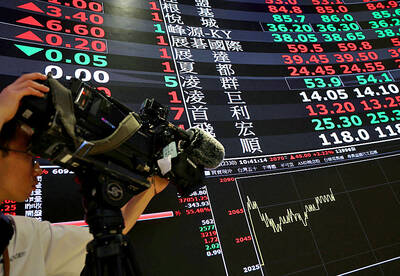
After several years flying high as Asia’s best Nvidia Corp proxy, Taiwan Semiconductor Manufacturing Co (TSMC, 台積電) is increasingly vying with other artificial intelligence (AI) stocks for investor attention. Stock traders are chasing a wider array of beneficiaries as mainstream usage of AI creates demand for hardware beyond the most-advanced chips TSMC makes for Nvidia. Subthemes from the deepening memory crunch to advances in robotics are also luring bids. At the same time, investment caps on single stocks are pushing funds to diversify, while retail investors long familiar with TSMC through its US depositary receipts are being offered a broader set of
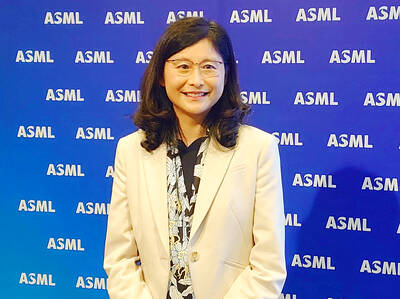
Netherlands-based semiconductor equipment supplier ASML Holding NV yesterday said that it is planning to hire an additional 1,000 people in Taiwan this year in response to growing demand from clients. ASML had previously planned to recruit 600 people this year, but that the plan has been adjusted upward, ASML vice president and ASML Taiwan general manager Grace Wang (汪佳慧) told reporters. ASML has a workforce of more than 4,500 in Taiwan, accounting for about 10 percent of its global total, Wang said. This year’s recruitment campaign would focus on adding people in the customer support, manufacturing and supply chain domains to assist ASML
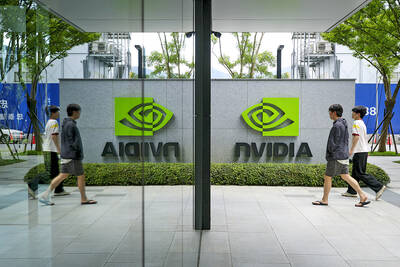
UNDER MICROSCOPE: Taiwan detained three people who allegedly conspired to buy servers in Taiwan and export them using fraudulent documentation, prosecutors said Nvidia Corp chief executive officer Jensen Huang (黃仁勳) on Saturday urged Super Micro Computer Inc to tighten up on compliance after Taiwan detained three people this week for allegedly making fraudulent declarations about artificial intelligence (AI) servers made by its US partner. The development marked the nation’s first crackdown on semiconductor smuggling, which grew after the US slapped restrictions on exports of high-end chips such as Nvidia AI accelerators to China. Nvidia is “rigorous” in explaining regulations to all of its partners, Huang told reporters after arriving in Taipei. “Ultimately Super Micro has to run their own company,” he said in response to

Nvidia Corp yesterday announced that CEO Jensen Huang (黃仁勳) would attend an employee meeting in Taipei tomorrow to celebrate the launch of the company’s Taiwan headquarters project. Huang would attend a gathering at the site of Nvidia’s planned headquarters in Beitou Shilin Technology Park (北投士林科技園區), the company said in a statement. After arriving in Taiwan on Saturday last week, Huang told reporters that he plans to meet with Quanta Computer Inc (廣達) chairman Barry Lam (林百里) and Taiwan Semiconductor Manufacturing Co (TSMC, 台積電) chairman C.C. Wei (魏哲家), and would attend the groundbreaking ceremony for Nvidia’s Taiwan headquarters tomorrow. Nvidia has not yet applied


 RSS
RSS