


While growth and recovery are back as buzzwords in European budgets for next year, rigor and austerity still remain hard at work in several countries.
Eurozone finance ministries had until Tuesday last week to send the European Commission in Brussels their draft budgets for next year and show that they respect the new rules known as the “Two Pack.”
One of the reforms in response to the eurozone debt crisis, is greatly increased policing of EU rules to contain public deficits to 3 percent of GDP.
The public deficit covers the budgets of governments, welfare programs and local authorities.
And for the first time, the European Commission can demand that a government change its budget if it appears lax or unrealistic.
The term “Two Pack” refers to this right to police budgets, and also to strengthened supervision of countries in trouble or at risk of being so.
They form part of a “Six Pack” of new measures which tighten penalties for all 28 EU members if they breach budget rules, and an obligation for 25 of them to balance budgets in the medium term.
The measures, together with a new framework to strengthen banks, caused great controversy because they imply dilution of sovereignty and re-ignited debate about the need for a common economic policy, and a so-called transfer union in which rich countries would automatically support the weaker.
However, despite the new EU budget powers, the governments have made a point of insisting that the commission had not dictated their choices, and they put the emphasis on supporting growth.
Germany, the eurozone’s biggest economy, came top of the class of 17, presenting a balanced budget, and raising the possibility of a small structural surplus at federal state level.
Italian Prime Minister Enrico Letta, whose government recently survived an abortive attempt to topple it, expressed satisfaction at meeting the deadline in time, albeit at the last minute.
Letta emphasized that his budget for next year was the first for some time which “does not begin with cuts by the scissors or new taxes to satisfy Brussels.”
Italy is to ease taxation on workers and employers by 27.3 billion euros (US$37.3 billion) over three years, and to finance investment.
Belgium has submitted a budget showing a deficit of 2.15 percent of GDP, owing to cuts in expenditure and extra tax on biofuels.
However, France will not cross the 3 percent line before 2015. The government has made much of its “sovereignty” and of going for “growth and jobs,” but has also stressed it will cut public expenditure by 15 billion euros.
However, for members rescued by the IMF and the EU, budget rigor is still the guiding factor.
Portugal, still struggling hard to meet rescue conditions, is to cut its public deficit by 3.9 billion euros.
However, the government has also set in motion a progressive reduction of corporate taxation, lowering the rate from 25 percent this year to 17 percent to 19 percent in 2016.
Ireland, with growth on the horizon, hopes to emerge from its rescue program next year. The government has outlined the seventh austerity budget in a row to reduce the deficit by a further 2.5 billion euros.
However, it is holding to its markedly low, and controversial, corporate tax rate of 12.5 percent.
Spanish Budget Minister Cristobal Montoro has painted the budget in the colors of “economic recovery.”
However, in reality, the country which has received eurozone help for its banks, is squeezing the budget harder to reduce the public deficit to 5.8 percent of GDP next year. Spending by ministries is being cut by 4.7 percent, and pensioners will also suffer.
The Netherlands, for long regarded as virtuous, has also laid out measures to strengthen its finances to the extent of 6 billion euros.
“Overall, the budgets are rigorous, but less aggressively so,” BNP Paribas bank economist Dominique Barbet said.
Bond portfolio manager Remi Lelu De Brach at Quilvest Gestion said: “The budgets have more room for growth.”
However, they said that budgetary measures will not be enough to ensure recovery.
“What we really have to achieve is growth driven by exports,” Barbet said.
The real problem was not the budgets, but an over-valued euro, he said.
“All the others are worried about their currencies, so that they are not over-valued. Everyone except us,” he said.
At Berenberg Bank, senior economist Christian Schulz said “the gradual fading of austerity will be one of the drivers of growth for the eurozone.”
The single currency area overall “is already in better shape” than Britain, the US and Japan.
The zone had “a projected fiscal deficit of 2.5 percent of GDP next year” as estimated by the IMF, and a debt-GDP ratio of 96.1 percent although this had to fall to 60 percent over 20 years under the new rules, he said.
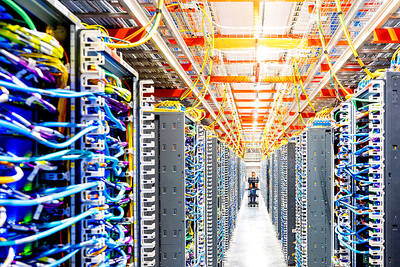
AI SPLURGE: The four major US tech companies have lost more than US$950 billion in value since releasing earnings and outlooks, while equipment makers were gaining Four of the biggest US technology companies together have forecast capital expenditures that would reach about US$650 billion this year — a flood of cash earmarked for new data centers and all the gear within them. The spending planned by Alphabet Inc, Amazon.com Inc, Meta Platforms Inc and Microsoft Corp, all in pursuit of dominance in the still-nascent market for artificial intelligence (AI) tools, is a boom without a parallel this century. Each of the companies’ estimates for this year is expected either near or surpass their budgets for the past three years combined. They would set a high-watermark for capital spending

China’s top chipmaker has warned that breakaway spending on artificial intelligence (AI) chips is bringing forward years of future demand, raising the risk that some data centers could sit idle. “Companies would love to build 10 years’ worth of data center capacity within one or two years,” Semiconductor Manufacturing International Corp (SMIC, 中芯) cochief executive officer Zhao Haijun (趙海軍) said yesterday on a call with analysts. “As for what exactly these data centers will do, that hasn’t been fully thought through.” Moody’s Ratings projects that AI-related infrastructure investment would exceed US$3 trillion over the next five years, as developers pour eye-watering sums

Bank of America Corp nearly doubled its forecast for the nation’s economic growth this year, adding to a slew of upgrades even after a rip-roaring last year propelled by demand for artificial intelligence (AI). The firm lifted its projection to 8 percent from 4.5 percent on “relentless global demand” for the hardware that Taiwanese companies make, according to a note dated yesterday by analysts including Xiaoqing Pi (皮曉青). Taiwan’s GDP expanded 8.63 percent last year, the fastest pace since 2010. The increase “reflects our sustained optimism over Taiwan’s technology driven expansion and is reinforced by several recent developments,” including a more stable currency,

COLLABORATION: Taiwan and the US could jointly find solutions to weaknesses in supply chain resilience for critical materials, focusing on mining and initial refinement Taiwan is likely to purchase rare earths from the US in the future, and is also in talks with Australia and Canada to strengthen global rare earth supply chain security, Minister of Economic Affairs Kung Ming-hsin (龔明鑫) said yesterday. Taiwan and the US last month concluded the sixth Economic Prosperity Partnership Dialogue, during which both sides signed a joint statement endorsing the principles of the Pax Silica Declaration, pledging to deepen cooperation in areas including critical minerals. At the time, Kung said the two sides would establish working groups to advance cooperation in areas including artificial intelligence, digital infrastructure, critical materials and


 RSS
RSS