


Minister Without Portfolio Kuan Chung-ming (管中閔) yesterday said he would proceed with the free economic zone plan and work to attract more Taiwanese businesses based overseas to invest in Taiwan, when he takes the helm of the Council for Economic Planning and Development (CEPD).
Asked whether he would include a financial center in the proposed free economic zone, Kuan said he would give it thorough consideration after assuming his new appointment.
The Executive Yuan on Sunday night announced Kuan’s appointment to take charge of the government’s top economic planning job, replacing CEPD Minister Yiin Chii-ming (尹啟銘).
Yesterday, the 56-year-old did not wish to elaborate on his new role.
“I will come up with more concrete ideas once I take office,” he said.
Kuan has been a staunch supporter of including a finance center into the free economic zone and of liberating financial regulations in the area.
He said at an investment forum on Dec. 19 last year that the planned zone should include a center for service industries and provide medical cosmetic services, financial services, tourism and exhibitions.
“The very idea of the free economic zone is to provide services that cannot be offered in Taiwan under current economic regulations,” Kuan said at the forum.
However, his opinions did not gain support from the council or the Financial Supervisory Commission.
Last month, Yiin said it could be difficult to relax financial regulations in one area while keeping the same regulations elsewhere, because money can easily flow from one sector to another.
The commission simply said there would be difficulties in implementing such ideas.
Kuan also holds different views than the Council of Labor Affairs on some issues.
In September last year he said he supported businesses calling for excluding foreign workers from the cap on minimum monthly wages in the free economic zone as well as for larger foreign worker quotas.
Kuan also voiced his opposition to a minimum wage increase last year. His opposition led the Cabinet to revoke the decision and prompted then-Council of Labor Affairs minister Jennifer Wang (王如玄) to tender her resignation.
Chung-Hua Institution for Economic Research (中華經濟研究院) president Wu Chung-shu (吳中書) yesterday supported Kuan’s appointment as the new CEPD head, citing his coordination and communication capabilities.
“Minister Kuan showed an extraordinary leadership when he conducted research in the [Academia Sinica’s] Institute of Economics,” Wu said.
Wu said he expected Kuan would effectively help raise Taiwan’s economic momentum in the coming year and put the nation’s economic structure onto the right track.
Even so, Kuan still faces many challenges, including the government’s pension reform plans, cross-strait trade issues with China and trade talks with the US.
Under Yiin, the CEPD late last year set a goal of 3.8 percent economic growth for this year and an average of 4.5 percent growth over the next four years, with the inflation rate to stay below 2 percent annually over the next four years.
As for unemployment, the council said in December last year that the government was aiming to reduce the jobless rate next year to below 4.1 percent and to 3.9 percent by 2016.
Additional reporting by Amy Su
Shares of contract chipmaker Taiwan Semiconductor Manufacturing Co (TSMC, 台積電) came under pressure yesterday after a report that Apple Inc is looking to shift some orders from the Taiwanese company to Intel Corp. TSMC shares fell NT$55, or 2.4 percent, to close at NT$2,235 on the local main board, Taiwan Stock Exchange data showed. Despite the losses, TSMC is expected to continue to benefit from sound fundamentals, as it maintains a lead over its peers in high-end process development, analysts said. “The selling was a knee-jerk reaction to an Intel-Apple report over the weekend,” Mega International Investment Services Corp (兆豐國際投顧) analyst Alex Huang
TRANSITION: With the closure, the company would reorganize its Taiwanese unit to a sales and service-focused model, Bridgestone said Bridgestone Corp yesterday announced it would cease manufacturing operations at its tire plant in Hsinchu County’s Hukou Township (湖口), affecting more than 500 workers. Bridgestone Taiwan Co (台灣普利司通) said in a statement that the decision was based on the Tokyo-based tire maker’s adjustments to its global operational strategy and long-term market development considerations. The Taiwanese unit would be reorganized as part of the closure, effective yesterday, and all related production activities would be concluded, the statement said. Under the plan, Bridgestone would continue to deepen its presence in the Taiwanese market, while transitioning to a sales and service-focused business model, it added. The Hsinchu

Taiwan Semiconductor Manufacturing Co (TSMC, 台積電) has approved a capital budget of US$31.28 billion for production expansion to meet long-term development needs during the artificial intelligence (AI) boom. The company’s board meeting yesterday approved the capital appropriation plan for purposes such as the installation of advanced technology capacity and fab construction, the world’s largest contract chipmaker said in a statement. At an earnings conference last month, TSMC forecast that its capital expenditure for this year would be at the higher end of the US$52 billion to US$56 billion range it forecast in January in response to robust demand for 5G, AI and
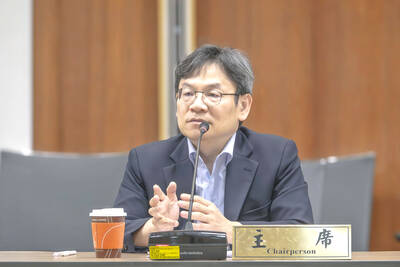
Taiwan Semiconductor Manufacturing Co’s (TSMC, 台積電) investment project in Arizona has progressed better than expected, but it still faces challenges such as water and labor shortages, National Development Council (NDC) Minister Yeh Chun-hsien (葉俊顯) said yesterday. Speaking with reporters after visiting TSMC’s Arizona hub and attending the SelectUSA Investment Summit in Maryland last week, Yeh said TSMC’s Arizona site turned a profit of NT$16.14 billion (US$514 million) last year in its first full year of mass production. “TSMC told me it was surprised by the smooth trial run of the first fab, which has left the company optimistic about the project’s outlook,”


 RSS
RSS