


Steady economic sentiment and stronger seasonal demand ahead of the Lunar New Year led the nation’s official purchasing managers’ index (PMI) to report faster-than-expected expansion last month, a report by the Chung-Hua Institution for Economic Research (CIER, 中華經濟研究院) said yesterday.
The composite PMI jumped to 57.7 last month from 51.3 in December last year, rising above the 50-point threshold for the second month in a row, the Taipei-based think tank said in its monthly report.
A PMI reading above 50 indicates expansion, while a reading below 50 signifies a contraction.
“Following the US’ ‘fiscal cliff’ issue easing, as well as Japan’s moves [to stimulate its economy], Taiwan’s PMI may show a rising trend ahead,” CIER president Wu Chung-shu (吳中書) told a press conference.
However, the faster-than-expected acceleration of the PMI last month mainly reflected stronger seasonal demand from customers prior to the Lunar New Year holiday, Wu added.
The CIER’s PMI — a leading indicator of the nation’s economic outlook over the next three to six months — consists of five sub-indices: new orders, production, employment, inventories and supplier deliveries.
The five sub-indices all showed an upward trend and rose above the 50-point threshold.
The new orders sub-index and production sub-index surged to 66.6 points and 62.6 points respectively last month from 54.8 in December last year, the third consecutive month that both stayed above the 50-point threshold.
Meanwhile, the employment sub-index climbed to 54.8 last month, up 1.5 points from a month earlier, marking its highest level since June last year, the report said.
The supplier deliveries sub-index stood at 51.5 points last month, terminating a run of contractions over the past six months, while the inventories sub-index rose by 5.2 points from the previous month to 53 points, the report said.
The composite PMI reading for Taiwan’s six major industries — the chemical, bio-technology and medical sector, the basic raw material sector, the transportation sector, the electrical and mechanical sector, the food and textiles industry, and the electronic and optical industry — all stood above 50 points last month for the first time since June last year, statistics showed.
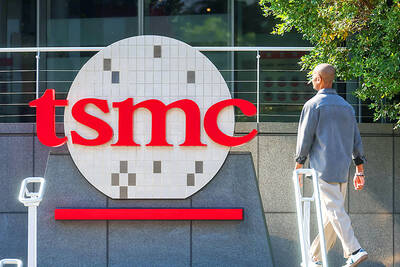
Shares of contract chipmaker Taiwan Semiconductor Manufacturing Co (TSMC, 台積電) came under pressure yesterday after a report that Apple Inc is looking to shift some orders from the Taiwanese company to Intel Corp. TSMC shares fell NT$55, or 2.4 percent, to close at NT$2,235 on the local main board, Taiwan Stock Exchange data showed. Despite the losses, TSMC is expected to continue to benefit from sound fundamentals, as it maintains a lead over its peers in high-end process development, analysts said. “The selling was a knee-jerk reaction to an Intel-Apple report over the weekend,” Mega International Investment Services Corp (兆豐國際投顧) analyst Alex Huang
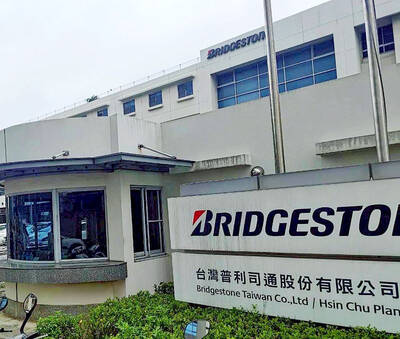
TRANSITION: With the closure, the company would reorganize its Taiwanese unit to a sales and service-focused model, Bridgestone said Bridgestone Corp yesterday announced it would cease manufacturing operations at its tire plant in Hsinchu County’s Hukou Township (湖口), affecting more than 500 workers. Bridgestone Taiwan Co (台灣普利司通) said in a statement that the decision was based on the Tokyo-based tire maker’s adjustments to its global operational strategy and long-term market development considerations. The Taiwanese unit would be reorganized as part of the closure, effective yesterday, and all related production activities would be concluded, the statement said. Under the plan, Bridgestone would continue to deepen its presence in the Taiwanese market, while transitioning to a sales and service-focused business model, it added. The Hsinchu
Taiwan Semiconductor Manufacturing Co (TSMC, 台積電) has approved a capital budget of US$31.28 billion for production expansion to meet long-term development needs during the artificial intelligence (AI) boom. The company’s board meeting yesterday approved the capital appropriation plan for purposes such as the installation of advanced technology capacity and fab construction, the world’s largest contract chipmaker said in a statement. At an earnings conference last month, TSMC forecast that its capital expenditure for this year would be at the higher end of the US$52 billion to US$56 billion range it forecast in January in response to robust demand for 5G, AI and
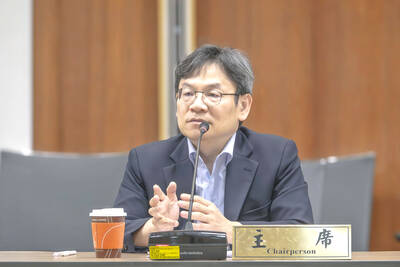
Taiwan Semiconductor Manufacturing Co’s (TSMC, 台積電) investment project in Arizona has progressed better than expected, but it still faces challenges such as water and labor shortages, National Development Council (NDC) Minister Yeh Chun-hsien (葉俊顯) said yesterday. Speaking with reporters after visiting TSMC’s Arizona hub and attending the SelectUSA Investment Summit in Maryland last week, Yeh said TSMC’s Arizona site turned a profit of NT$16.14 billion (US$514 million) last year in its first full year of mass production. “TSMC told me it was surprised by the smooth trial run of the first fab, which has left the company optimistic about the project’s outlook,”


 RSS
RSS