


Top soccer-boot maker Adidas probably shouldn’t be worrying just yet, but a rare venture that marries South Korean money with North Korean labor in the Chinese city of Dandong aims to make its mark on the world soccer scene.
At a temporary factory in a village on the edge of a bustling city that serves as a bridge between China and impoverished, isolated North Korea, 20 North Koreans hand sew soccer boots and dream of taking on the world.
The factory, overseen by managers sporting badges showing North Korea’s founder, Kim Il-sung, have sold almost 10,000 pairs of boots at US$100 a piece since it started full-scale operations in July, half of them to South Korea.

Photo: Reuters
North Korea itself gets 100 pairs of boots a month from the factory as its share of payment, rather than being paid in cash.
“Boots can be made by machines, but hand-sewn ones can be made to match individual preferences and they’re more comfortable,” said Chung Nam-chul, a veteran shoemaker.
“We play soccer in our boots to test them and pick good ones,” Chung said, as he nailed down soles on a pair he was working on.

Photo: Reuters
The visit by a Reuters news team was supervised by North Korean managers attached to the factory where workers sew under the slogan “Our Technology. Best Quality Soccer Boots.”
Chung and his fellow workers from the North Korean capital, Pyongyang, are members of the April 25 Sports Club, one of the most successful North Korean soccer league teams, which is run by the Korean People’s Army, the North’s armed forces.
As in the old days in communist eastern Europe, soccer teams in North Korea tend to be part of the state apparatus with businesses attached to them.

Photo: Reuters
The workers at the Dandong factory are the tip of an iceberg of an estimated 60,000 to 70,000 North Koreans working overseas in a bid to earn much-needed hard currency for the state, which has been heavily sanctioned for its nuclear program.
A South Korean official at the factory said workers got to keep all of the US$200 a month they were paid.
Many of the North Korean workers in Russia, China and the Middle East are paid in vouchers rather than cash that go straight into the coffers of the North Korean state, according to refugee groups in South Korea.
The North and South remain technically at war after the 1950 to 1953 Korean War ended in an armistice. Apart from an economic zone on the border between the two countries, cooperation between the two Koreas is rare.
In comparison with the grinding poverty of most people in North Korea — where the UN says a third of children are malnourished — the workers in Dandong appear well-off.
The two-story green-colored factory has dorms, a cafeteria and a recreation room. Workers have their own chef, who sometimes makes grilled pork belly for after-work parties, where they sing songs about the reunification of the two Koreas.
Those in Dandong are also close to home, unlike their compatriots laboring in lumber camps in Siberia or construction sites in the Middle East.
“We can see our television channels, and we also sing our songs about our Marshal, our Marshal Kim Jong-un,” seamstress Kwon Ok-kyung said, referring to the North Korean leader who took power last year after the death of his father.
Kwon works eight hours a day, five days a week at her sewing machine. Workers are allowed to meet their families in a North Korean city across a border river once a month and take bags of gifts home.
“In the beginning, when I didn’t know anything about sewing, it was hard, but now it isn’t hard anymore ... There’s no problem now,” she said.
One of the supervisors of the visit stopped Kwon talking when she was asked how it felt to be sent abroad to work.
Because of the risk of defections, North Korean workers sent abroad are generally loyal to the regime and the ruling family. Their families back home act as guarantees that they will come back, according to defectors in the South.
Far from being slave laborers, many of the tens of thousands of North Koreans working abroad seek those jobs as a way of earning hard currency, defectors say.
The boot factory was originally built in Pyongyang on land provided by the North Korean government. However, most economic ties were cut after the South accused the North of sinking one of its naval vessels in 2010.
The factory moved to Dandong with a US$415,000 cash injection from the South Korean city of Incheon, whose soccer team wears its boots.
With the North’s economy in tatters and imports outstripping exports by US$3.3 billion, according to 2010 data from the IMF, North Korea has been forced into China’s arms, exporting much of its mineral wealth to its big, now-prosperous neighbor.
North Korea’s official ideology is based on economic self-reliance, but in reality it has been unable to feed its people for decades and its plants and equipment lie idle because of a lack of electricity.
The small boot factory will not make much of a difference to the North Korean economy, but that doesn’t stop its workers from dreaming big.
“It would be really good if Messi came here and wore our shoes,” said Oh Sung-dong, one of the North Korean managers.
Argentine soccer star Lionel Messi plays for Barcelona and is sponsored by German giant Adidas whose boots he wears.
“When thousands of workers produce our soccer boots in Pyongyang, they can dominate the world,” said Joo Chul-soo, an official from North Korea’s National Economic Cooperation Federation.

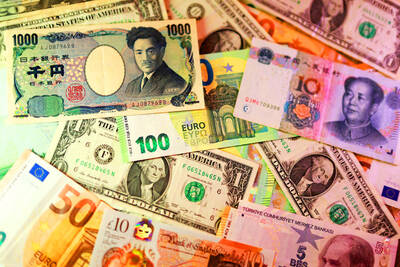
Taiwan’s foreign exchange reserves fell below the US$600 billion mark at the end of last month, with the central bank reporting a total of US$596.89 billion — a decline of US$8.6 billion from February — ending a three-month streak of increases. The central bank attributed the drop to a combination of factors such as outflows by foreign institutional investors, currency fluctuations and its own market interventions. “The large-scale outflows disrupted the balance of supply and demand in the foreign exchange market, prompting the central bank to intervene repeatedly by selling US dollars to stabilize the local currency,” Department of Foreign

Intel Corp is joining Elon Musk’s long-shot effort to develop semiconductors for Tesla Inc, Space Exploration Technologies Corp and xAI, marking a surprising twist in the chipmaker’s comeback bid. Intel would help the Terafab project “refactor” the technology in a chip factory, the company said on Tuesday in a post on X, Musk’s social media platform. That is a stage in the development process that typically helps make chips more powerful or reliable. The chipmaker’s shares jumped 4.2 percent to US$52.91 in New York trading on Tuesday. The Terafab project is a grand plan by Musk to eventually manufacture his own chips for
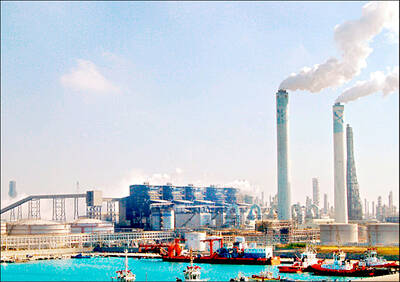
Taiwan Power Co (Taipower, 台電) yesterday said it plans to resume operations at two coal-fired power generators for three months to boost security of electricity supply as liquefied natural gas (LNG) supply risks are running high due to the Middle East conflict. The two coal-fired power generators are at Mailiao Power Plant in Yunlin County’s Mailiao Township (麥寮). The plant, operated by Formosa Plastics Group (台塑集團), supplied electricity to Taipower’s power grid until the end of last year. Taipower’s decision came about one month after Minister of Economic Affairs Kung Ming-hsin (龔明鑫) on March 10 said that the nation had no imminent
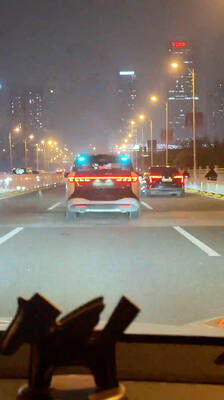
Some robotaxi passengers were left stranded in the middle of fast-moving traffic in a major Chinese city after their driverless vehicles stopped running, according to police and media reports on Wednesday. A preliminary investigation indicates more than 100 robotaxis came to a halt because of a “system malfunction,” police in the city of Wuhan said in a statement, without elaborating. No injuries were reported. One passenger told Chinese media that their robotaxi stopped after turning a corner. An instruction on a screen read: “Driving system malfunction. Staff are expected to arrive in 5 minutes.” After no one showed up, the passenger pushed


 RSS
RSS