


Motorola Mobility Holdings Inc (MMI) said Apple Inc filed a complaint with the EU’s competition authority accusing it of violating a pledge to license industry--standard patents on fair terms.
Motorola Mobility said in a regulatory filing that it was notified of the complaint on Saturday by the European Commission. Motorola Mobility spokeswoman Jennifer Erickson said the company was willing to negotiate a patent license with Apple.
Apple and Motorola Mobility have sued each other in the US and Europe over technology used in smartphones, a market that researcher IDC said grew 55 percent last year. Motorola Mobility won two out of three rulings in lawsuits it filed against Apple in a German court, and in one case forced Apple to remove older iPhone and iPad models from its online store in Germany.
Companies often collaborate on standards that are used to make products work together, with participants pledging to fairly license any patents on the standards they help create. Apple contends Motorola Mobility is violating that commitment. Motorola Mobility, which has said it has been in licensing talks with Apple since 2007, denied the charge.
“MMI has a long-standing practice of licensing our patents on fair, reasonable and non--discriminatory terms and we offered those to Apple,” Erickson said.
German courts have become the focal point of litigation between the two companies, with each seeking orders that would limit sales of the others’ products.
On Friday, a court in Munich said Motorola Mobility’s mobile phones infringe an Apple patent for a method of unlocking touch screens.
Google Inc, which is buying Illinois-based Motorola Mobility for US$12.5 billion, pledged to continue the company’s licensing practices. Regulators in Europe and the US granted approval to the purchase while expressing some reservation about how industry-standard patents are handled.
Apple and Microsoft Corp have said they would not seek a court order to block use of technology covered by industry-standard patents, even as they pursue infringement claims over non-essential patents against Motorola Mobility.
Google said it would seek a royalty fee of no more than 2.25 percent of the net cost of devices using its patents and would try to resolve any disputes through negotiation before asking courts to block use of the Motorola Mobility technology.
“We are aware of the increasingly strategic use of patents in the sector and are vigilant,” the European Commissioner for Competition Joaquin Almunia said last Monday. “We can avoid a continuation of this patent war.”

DAMAGE REPORT: Global central banks are assessing war-driven inflation risks as the law of unintended consequences careens around the world, spiking oil prices Central banks from Washington to London and from Jakarta to Taipei are about to make their first assessments of economic damage after more than two weeks of conflict between the US and Iran. Decisions this week encompassing every member of the G7 and eight of the world’s 10 most-traded currency jurisdictions are likely to confirm to investors that the specter of a new inflation shock is already worrying enough to prompt heightened caution. The US Federal Reserve is widely expected to do exactly what everyone anticipated weeks ahead of its March 17-18 policy gathering: hold rates steady. The narrative surrounding that
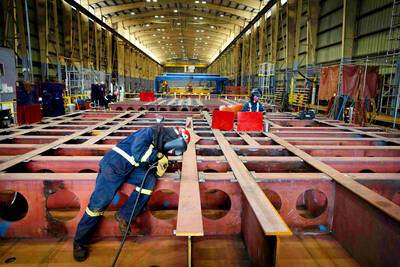
At a massive shipyard in North Vancouver, Canadian workers grind metal beams for a powerful new icebreaker crucial to cementing the country’s presence in the increasingly contested arctic. Icebreakers are specialized, expensive vessels able to navigate in the frozen far north. And “this is the crown jewel,” said Eddie Schehr, vice president of production at the Seaspan shipyard. For Canadian Prime Minister Mark Carney, who heads to Norway next Friday to observe arctic defense drills involving troops from 14 NATO states, Canada’s extreme north has emerged as a strategic priority. “Canada is and forever will be an Arctic nation,” he said ahead of

Chinese entrepreneur Frank Gao used to spend long hours running his social media accounts but now outsources the chore to artificial intelligence (AI) agent tool OpenClaw, which is taking China by storm despite official warnings over cybersecurity. OpenClaw, created in November by an Austrian coder, differs from bots such as ChatGPT because it can execute real-life tasks such as sending e-mails, organizing files or even booking flight tickets. “Since January, I’ve spent hours on the lobster every day,” Gao said in an interview, referring to OpenClaw’s red crustacean mascot. “We’re family.” After downloading OpenClaw, users connect it to artificial intelligence models of their
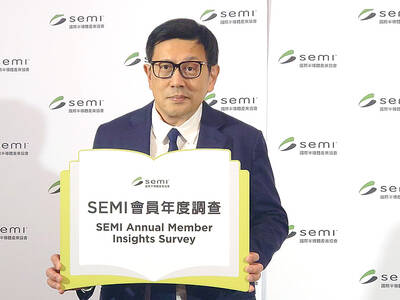
PRICE HIKES: The war in the Middle East would not significantly disrupt supply in the short term, but semiconductor companies are facing price surges for materials Taiwan’s semiconductor companies are not facing imminent supply disruptions of essential chemicals or raw materials due to the war in the Middle East, but surges in material costs loom large, industry association SEMI Taiwan said yesterday. The association’s comments came amid growing concerns that supplies of helium and other key raw materials used in semiconductor production could become a choke point after Qatar shut down its liquefied natural gas (LNG) production and helium output earlier this month due to the conflict. Qatar is the second-largest LNG supplier in the world and accounts for about 33 percent of global helium output. Helium is


 RSS
RSS