


Asian stocks swung between gains and losses, heading for a weekly drop, on speculation European policy makers will struggle to reach a resolution on how to fight the region’s debt crisis.
Fanuc Corp, a Japanese manufacturer of industrial robots that gets 75 percent of its sales abroad, rose 2.4 percent after an index of manufacturing in Philadelphia unexpectedly increased.
Hynix Semiconductor Inc, the world’s second-largest maker of computer memory chips, rose 10 percent in Seoul after a research company said Apple Inc used the company’s NAND-flash chips in the iPhone for the first time.
Mitsui & Co led losses in Japanese traders as commodity prices headed for the first weekly loss in three weeks.
The MSCI Asia Pacific Index rose 0.2 percent to 115.40 at 7:34pm in Tokyo on Friday after falling as much as 0.3 percent. About half of the stocks on the benchmark gauge rose ahead of a European debt summit this weekend. The measure has dropped 1.3 percent this week.
“It looks like European leaders are making progress, but there’s still a long way to go,” said Stephen Halmarick, Sydney-based head of investment markets research at Colonial First State Global Asset Management, which oversees about US$150 billion. “The market remains very vulnerable.”
Fanuc gained 2.4 percent to ¥12,170. Mitsubishi Electric Corp, which makes 25 percent of revenue from factory automation equipment, rose ¥2.7 percent to 712.
The TAIEX added 10.19 points on Friday, or 0.14 percent, to 7,254.51, paring its weekly decline to 1.4 percent.
Japan’s Nikkei 225 Stock Average closed little changed after rising as much as 0.2 percent. Australia’s S&P/ASX 200 lost 0.1 percent.
Hong Kong’s Hang Seng Index added 0.2 percent, erasing losses of as much as 0.3 percent.
South Korea’s KOSPI climbed 1.8 percent on speculation that the nation’s earnings will withstand a slowdown in the global economy.
Samsung Electronics Co, the world’s second- biggest handset maker, rose 1.1 percent to 917,000 won on a Wall Street Journal report that its smartphone shipments beat Apple Inc’s in the last quarter.
Hynix Semiconductor rose 10 percent to 23,200 won in Seoul after research company IHS iSuppli said Apple used the company’s NAND-flash chips in the iPhone for the first time.
LG Display Co, the world’s second-largest maker of liquid-crystal displays, jumped 7.8 percent to 24,250 won after analysts from LIG Investment & Securities Co and Hyundai Securities Co said losses will narrow in the current quarter.
The MSCI Asia Pacific Index declined 16 percent this year through Friday amid concern that Europe’s debt crisis will damage the banking system and US growth is sputtering. That compares with slides of 3.4 percent by the S&P 500 and 16 percent by the STOXX Europe 600 Index. Stocks in the Asian benchmark are valued at 11.7 times estimated earnings on average, compared with 12.2 times for the S&P 500 and 10 times for the STOXX 600.
Japanese trading companies fell after the Thomson Reuters/Jefferies CRB Index of raw materials fell 1 percent on Friday, set for a 3 percent weekly loss. Mitsui & Co dropped 3.3 percent to ¥1,057, while Mitsubishi Corp slid 2.5 percent to ¥1,478, while Itochu Corp lost 1.8 percent to ¥731.
In other markets on Friday:
Indian shares fell 0.89 percent, or 151.25 points from Thursday, to 16,785.84.
India’s top property firm DLF fell 2.66 percent to 225.05 rupees, while leading vehicle maker Tata Motors dropped 2.81 percent to 177.95.
Manila ended 0.10 percent, or 3.97 points, off from Thursday at 4,166.60
Megaworld gained 3.2 percent to 1.92 pesos, Ayala Land was off 0.1 percent at 15.88 pesos and Energy Development shed 1.4 percent to 5.65 pesos.
Wellington closed 0.26 percent, or 8.61 points, lower from Thursday at 3,281.16.
Taiwan Semiconductor Manufacturing Co (TSMC, 台積電) has approved a capital budget of US$31.28 billion for production expansion to meet long-term development needs during the artificial intelligence (AI) boom. The company’s board meeting yesterday approved the capital appropriation plan for purposes such as the installation of advanced technology capacity and fab construction, the world’s largest contract chipmaker said in a statement. At an earnings conference last month, TSMC forecast that its capital expenditure for this year would be at the higher end of the US$52 billion to US$56 billion range it forecast in January in response to robust demand for 5G, AI and
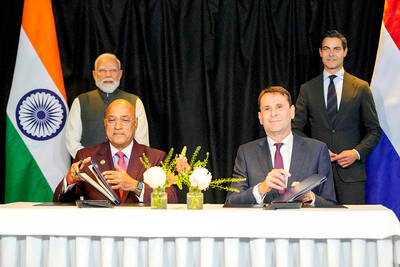
NEW MARKET: The partnership opens up India to the Dutch company, which already has a strong hold in the semiconductor market of South Korea, Taiwan and China ASML Holding NV entered into a partnership agreement with Tata Electronics Pvt Ltd aimed at ramping up India’s goal to develop domestic chip-manufacturing capabilities. The Dutch company’s technology would help power Tata Electronics’ planned 300 millimeter (mm) semiconductor foundry in Gujarat, according to a joint statement from the two companies on Saturday. The signing of a memorandum of understanding coincides with a visit by Indian Prime Minister Narendra Modi to the Netherlands, which is looking to deepen bilateral relations with New Delhi. ASML, whose top customers include Taiwan Semiconductor Manufacturing Co (台積電) and Samsung Electronics Co, makes lithography machines that can print
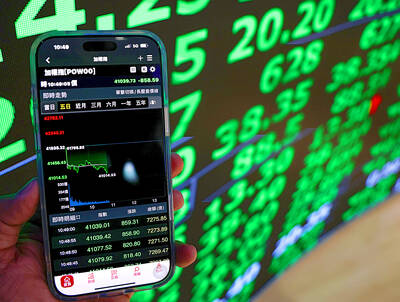
PORTFOLIO REBALANCING: The adjustments in three global equity indices reflect rising investor appetite for semiconductor and artificial intelligence-related stocks Taiwan’s weighting in major global equity indices compiled by MSCI Inc is to rise modestly following the latest quarterly review, underscoring the market’s expanding role in emerging-market portfolios, as global investors continue to favor the nation’s technology sector. Taiwan’s weighting in the MSCI Emerging Markets Index is to increase by 0.30 percentage points to 23.76 percent, after the changes take effect at the close of the May 29 session. Its weighting in the MSCI All-Country Asia ex-Japan Index is to rise 0.37 percentage points to 27.16 percent, while that in the MSCI All Country World Index is to edge up slightly to
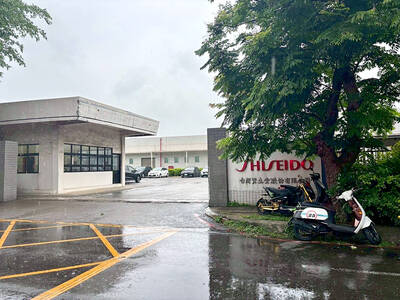
The Hsinchu County Government’s Labor Affairs Department yesterday said that it has received a plan from cosmetics brand Taiwan Shiseido Co (台灣資生堂) detailing mass layoffs at its plant in Hukou Township (湖口). While the labor authorities did not disclose the number of employees to be laid off, Japanese news media earlier in the day reported that the closure of the company’s factory in Hukou would result in 170 employees losing their jobs. Shiseido followed the law by reporting its layoff plan, the department said, adding that authorities would closely monitor negotiations between the management and affected employees and step in if any


 RSS
RSS