


Japan’s industrial output rose less than expected in July, deepening concerns that a rebound from the March 11 earthquake and tsunami is easing as the yen remains strong and global demand slows.
In the fourth straight monthly gain, industrial production rose 0.6 percent in July, but missed expectations of a 1.5 percent increase. Production rose by a revised 3.8 percent in June.
The report comes amid fears that the US economy is slipping and growth in Europe could be affected by the eurozone debt crisis, clouding the outlook for Japan’s exporters.
The slowing rebound illustrates the urgency with which new Japanese Prime Minister Yoshihiko Noda must move to navigate the economy out of three straight quarters of contraction as external risks increase, analysts said.
“The impact of a global economic slowdown, coupled with the yen’s rise, is believed to be putting the brake on a key recovery in exports and curbing a recovery in manufacturing activity,” said Naoki Murakami, chief economist at Monex brokerage.
“Japanese companies expected a V-shaped recovery in the second half of fiscal 2011, but judging from current activity it could be difficult,” he added.
Producers polled by the government said production in the world’s third-largest economy was expected to increase by 2.8 percent last month, but decrease by 2.4 percent this month.
Last week, Japan announced a package including a US$100 billion measure to help companies grapple with the strength of the yen, after the currency soared to fresh post-World War II highs against the US dollar.
It was ¥76.61 against the greenback yesterday, after hitting a postwar high of ¥75.95 earlier this month.
While the auto sector has mobilized to overcome production slowdowns in the wake of the earthquake and tsunami, the prospects for Japan’s electronics firms are clouded, said Hideki Matsumura, an analyst at Japan Research Institute.
“The auto sector is expected to recover steadily in the second half due to domestic demand, but prospects for electronics firms are not so clear due to negative factors, including a strong yen and concerns about the global economy,” he said.
However, he added: “We think this slowdown indicates production has entered into a minor adjustment period before full recovery.”
South Korea said yesterday its industrial output grew in July at the slowest pace for 10 months.
Statistics Korea said production in mining and manufacturing expanded 3.8 percent compared with the previous year, the slowest rate since September last year when it rose 2.9 percent.
It was the 25th straight month of expansion, but the figure fell sharply from June’s revised 6.5 percent growth. Output declined 0.4 percent month-on-month.
“The on-month contraction seems to have been partly caused by a slump in the construction sector,” said Yoon Jong-won, director general of the finance ministry’s economic policy bureau. “The July numbers provide a somewhat mixed picture, with some improving and some others worsening. Uncertainty seems to be mounting.”
Production of vehicles rose 12 percent year-on-year thanks to higher demand from home and abroad, while semiconductors and their components saw a 8.4 percent rise, but construction projects completed in July dropped 13.2 percent from a year earlier.
South Korea’s export-dominated economy faces heightened uncertainty amid the eurozone debt crisis and the economic slowdown in the US.
“Although economic downside risks are expanding from the global fiscal crisis, [our economy] will continue its steady recovery given the current export and domestic demand conditions,” South Korean Finance Minister Bahk Jae-wan told an economic policy coordination meeting.
Bahk said the July output figure is attributable to one-off factors such as summer vacations, heavy rain and smaller government spending on infrastructure.

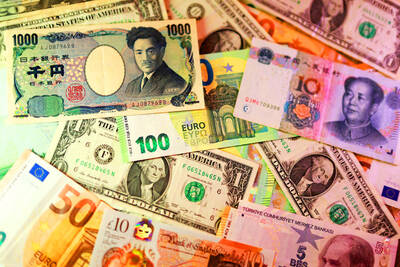
Taiwan’s foreign exchange reserves fell below the US$600 billion mark at the end of last month, with the central bank reporting a total of US$596.89 billion — a decline of US$8.6 billion from February — ending a three-month streak of increases. The central bank attributed the drop to a combination of factors such as outflows by foreign institutional investors, currency fluctuations and its own market interventions. “The large-scale outflows disrupted the balance of supply and demand in the foreign exchange market, prompting the central bank to intervene repeatedly by selling US dollars to stabilize the local currency,” Department of Foreign

Intel Corp is joining Elon Musk’s long-shot effort to develop semiconductors for Tesla Inc, Space Exploration Technologies Corp and xAI, marking a surprising twist in the chipmaker’s comeback bid. Intel would help the Terafab project “refactor” the technology in a chip factory, the company said on Tuesday in a post on X, Musk’s social media platform. That is a stage in the development process that typically helps make chips more powerful or reliable. The chipmaker’s shares jumped 4.2 percent to US$52.91 in New York trading on Tuesday. The Terafab project is a grand plan by Musk to eventually manufacture his own chips for
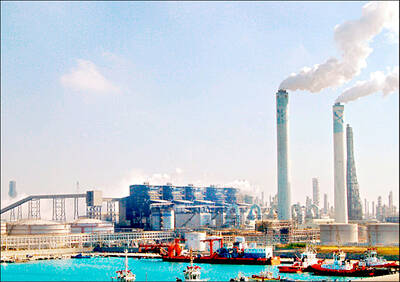
Taiwan Power Co (Taipower, 台電) yesterday said it plans to resume operations at two coal-fired power generators for three months to boost security of electricity supply as liquefied natural gas (LNG) supply risks are running high due to the Middle East conflict. The two coal-fired power generators are at Mailiao Power Plant in Yunlin County’s Mailiao Township (麥寮). The plant, operated by Formosa Plastics Group (台塑集團), supplied electricity to Taipower’s power grid until the end of last year. Taipower’s decision came about one month after Minister of Economic Affairs Kung Ming-hsin (龔明鑫) on March 10 said that the nation had no imminent
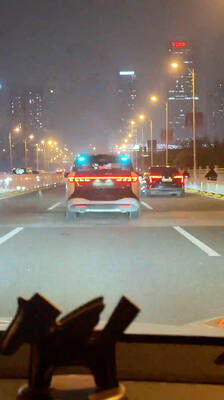
Some robotaxi passengers were left stranded in the middle of fast-moving traffic in a major Chinese city after their driverless vehicles stopped running, according to police and media reports on Wednesday. A preliminary investigation indicates more than 100 robotaxis came to a halt because of a “system malfunction,” police in the city of Wuhan said in a statement, without elaborating. No injuries were reported. One passenger told Chinese media that their robotaxi stopped after turning a corner. An instruction on a screen read: “Driving system malfunction. Staff are expected to arrive in 5 minutes.” After no one showed up, the passenger pushed


 RSS
RSS