


The strategy of production line diversification has benefited Taiwan’s dynamic random access memory (DRAM) chipmakers, helping them to ride out recent market volatility, when the industry saw falling product prices and shrinking profit margins, analysts said on Sunday.
In the boom year of 2006, four of Taiwan’s four major DRAM companies — Powerchip Technology Corp (力晶科技), Nanya Technology Corp (南亞科技), Inotera Memories Inc (華亞科技) and ProMOS Technologies Inc (茂德科技) — posted up to NT$34.7 billion (US$1.08 billion) in combined net profits in the fourth quarter of that year.
However, because of excessive investment and production gluts in the global DRAM industry following the period of prosperity, memory chipmakers suffered a plummet in product prices amid fierce competition, with the four companies recording NT$61.3 billion in net losses in the fourth quarter of 2008.
Analysts said the downturn prompted the global memory chip business to scale back production, while Taiwanese memory chipmakers diversified to avoid excessive competition and remain in business.
Winbond Electronics Corp (華邦電子) has been cited by analysts as an example of the success of the local DRAM sector’s efforts in product diversification.
The analysts said Winbond has cut standard DRAM production to less than 30 percent, while boosting its specialty DRAM chips to 36 percent.
Standard DRAM chips are used in desktop computers, notebook computers and netbook computers, while specialty DRAM chips are used in consumer electronics and communications products.
Winbond has set up an in-house design center to tailor specialty DRAM chips to its customers. The design center is believed to have helped the company reduce production costs by cutting spending on outsourcing design work.
Winbond said in a statement that the company had been able to customize its products and their quality had given it an upper hand in pricing negotiations.
The analysts said that since the beginning of this year, global demand for specialty DRAM chips has been boosted by growing demand for digital TVs, set-top boxes and cellphones, with the market outlook for for the consumer electronics sector looking upbeat.
In addition to Winbond, ProMOS has decided to use at least 50 percent of its capacity to make DRAM chips for consumer electronics and mobile products, working with Japan-based chipmaker Elpida Memory Inc, the analysts said.
Powerchip and ProMOS have began production of NAND flash memory chips. NAND flash memory chips are used in data storage products.
While Powerchip’s 70 nanometer produced NAND flash chips have already hit the market, ProMOS has joined a government-funded alliance called the Taiwan Memory Co (台灣創新記憶體) to develop NAND flash technology.

AI TALENT: No financial details were released about the deal, in which top Groq executives, including its CEO, would join Nvidia to help advance the technology Nvidia Corp has agreed to a licensing deal with artificial intelligence (AI) start-up Groq, furthering its investments in companies connected to the AI boom and gaining the right to add a new type of technology to its products. The world’s largest publicly traded company has paid for the right to use Groq’s technology and is to integrate its chip design into future products. Some of the start-up’s executives are leaving to join Nvidia to help with that effort, the companies said. Groq would continue as an independent company with a new chief executive, it said on Wednesday in a post on its Web

RESPONSE: The Japanese Ministry of Finance might have to intervene in the currency markets should the yen keep weakening toward the 160 level against the US dollar Japan’s chief currency official yesterday sent a warning on recent foreign exchange moves, after the yen weakened against the US dollar following Friday last week’s Bank of Japan (BOJ) decision. “We’re seeing one-directional, sudden moves especially after last week’s monetary policy meeting, so I’m deeply concerned,” Japanese Vice Finance Minister for International Affairs Atsushi Mimura told reporters. “We’d like to take appropriate responses against excessive moves.” The central bank on Friday raised its benchmark interest rate to the highest in 30 years, but Bank of Japan Governor Kazuo Ueda chose to keep his options open rather than bolster the yen,

Even as the US is embarked on a bitter rivalry with China over the deployment of artificial intelligence (AI), Chinese technology is quietly making inroads into the US market. Despite considerable geopolitical tensions, Chinese open-source AI models are winning over a growing number of programmers and companies in the US. These are different from the closed generative AI models that have become household names — ChatGPT-maker OpenAI or Google’s Gemini — whose inner workings are fiercely protected. In contrast, “open” models offered by many Chinese rivals, from Alibaba (阿里巴巴) to DeepSeek (深度求索), allow programmers to customize parts of the software to suit their
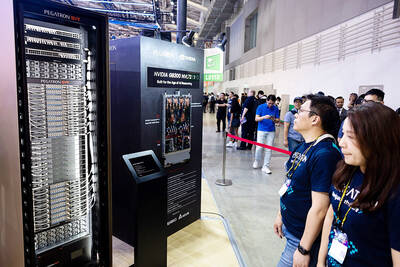
Global server shipments are expected to surge to 15 million units next year, from 4 million units this year, with artificial intelligence (AI) servers accounting for about 30 percent, driven by massive capital spending by major cloud service providers, the Market Intelligence and Consulting Institute (MIC) said on Thursday last week. Major cloud service providers — including Google’s parent company Alphabet Inc, Microsoft Corp, Amazon.com Inc and Meta Platforms Inc — are projected to budget US$450 million for capital expenditure next year, up from US$400 million this year, MIC ICT [information and communications technology] Industry Research Center director Edward Lin


 RSS
RSS