


Direct flights between Taipei’s Songshan Airport and Shanghai’s Hongqiao Airport, which begin today, could increase demand for office space in the Dunbei (敦北) and Dunnan (敦南) commercial areas in the near future, Sinyi Realty Co (信義房屋) said in a statement.
Sinyi, the nation’s biggest real-estate brokerage, said inquiries about office space in the neighborhood of Songshan Airport have recently increased, mostly from local trade companies looking for 70-ping (231.5m²) to 80-ping offices.
Direct flights between the two cities will boost property investment by local companies in the short term, with domestic enterprises considering moving their headquarters to the Dunbei area, the realtor said.
“It will take about half a year before we will learn whether Chinese enterprises will start to set up their offices in areas surrounding Songshan Airport [following the new direct air links],” Ko Hung-an (柯宏安), deputy head of Sinyi’s Global Asset Management Inc, said in the statement.
“In particular, when the Beijing-Shanghai high-speed railway connects with Hongqiao Airport, the transportation network will be further expanded,” Ko said, adding that if Chinese tourists were to be allowed to travel independently to Taiwan in the future, the commercial area near Songshan Airport would benefit further.
Ko said business opportunities created by the new air links would not only boost demand for office space in the Dunbei and Dunnan areas, but would also push more high-tech companies to move to the Neihu Technology Park (內湖科技園區) near Songshan Airport.
In addition, the links will likely attract more China-based Taiwanese businesspeople to invest in luxury residences in Taipei and facilitate urban renewal projects for old communities near Songshan Airport, he said.
Meanwhile, shareholders on Friday approved the company’s proposal to distribute a cash dividend of NT$2.6 per share and a 20 percent stock dividend (or 200 shares per 1,000 held) on last year’s earnings of NT$1.48 billion (US$45.6 million).
Sinyi said in a separate statement that the company’s performance was only slightly affected by the global financial crisis last year, when it posted an earnings per share of NT$4.88 and its revenues rose 28.7 percent from a year earlier to reach a record high of NT$7.18 billion (US$221 million).
Chairman Chou Chun-chi (周俊吉) told shareholders the company would open a branch in Tokyo this month, marking the first Taiwanese real estate agency to branch into Japan.
Looking ahead, Chou said that in addition to plans to expand business in China, Sinyi would increase the number of its branches to more than 290 in Taiwan in the second quarter, and expects the number to exceed 300 by the end of the year.
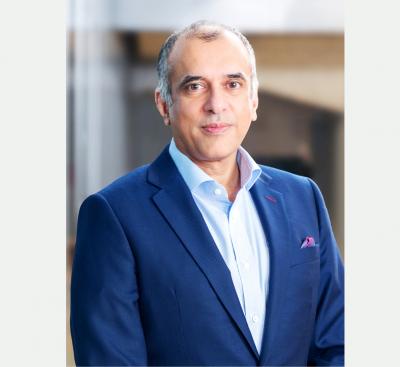
HSBC Holdings PLC is deepening its commitment to Taiwan as the economy emerges as one of the bank’s fastest-growing markets globally, driven by an artificial intelligence (AI) investment boom, expanding cross-border trade, and rising wealth creation. “The advantage that Taiwan has is a growth story linked to the semiconductor and broader AI industries, strong underlying corporate performance, and wealth creation,” said Surendra Rosha, HSBC’s co-chief executive for Asia and the Middle East, in an exclusive interview with the Taipei Times on June 2, during this year’s HSBC Taiwan Conference. That combination has helped HSBC cement its position as the most profitable international
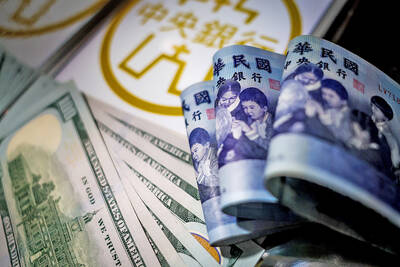
The New Taiwan dollar yesterday fell sharply against the US dollar to close at its lowest level since May 22 amid a massive outflow of funds from the country because of investors panicking over global equity markets. The NT dollar ended at NT$31.580 against the US dollar, slightly lower than its close of NT$31.568 on May 22, after moving between NT$31.5 and NT$31.648 on combined turnover of US$3.062 billion on the Taipei Foreign Exchange and the Cosmos Foreign Exchange. The NT dollar received a significant hit in the morning session, slumping as much as NT$0.173 at a time when other Asian currencies
Taiwan Semiconductor Manufacturing Co (TSMC, 台積電) is now ranked ninth among the world’s 100 most valuable companies after its market capitalization more than doubled over the past year, PricewaterhouseCoopers (PwC) Taiwan said in a report last month. TSMC’s market capitalization surged 101 percent year-on-year to US$1.427 trillion as of March 31, the accounting and consulting firm’s 2026 Global Top 100 Companies by Market Capitalization report said. The gain catapulted the world’s largest contract chipmaker from 12th place to ninth in the rankings, and it was the fastest-growing among the global top 10, it said. TSMC was the only Taiwanese company among the top
Taiwan Semiconductor Manufacturing Co (TSMC, 台積電) yesterday reported record revenue of NT$416.975 billion (US$13.17 billion) for last month, putting the world’s largest contract chipmaker on track to set a record for quarterly revenue. Last month’s figure surpassed March’s record NT$415.19 billion and represented increases of 1.5 percent from April and 30.1 percent from a year earlier. For the first five months of the year, TSMC generated NT$1.96 trillion in revenue, up 30 percent year-on-year, it said in a statement. TSMC has forecast second-quarter revenue of between US$39 billion and US$40.2 billion, representing sequential growth of about 10 percent and year-on-year growth of about


 RSS
RSS