


Suntech Power Holdings Co (尚德), the world’s biggest maker of silicon solar panels, expects China to account for as much as 20 percent of its sales within three years as the nation tries to curb greenhouse gas emissions.
Sales in China amount to about 2 percent of the total at the company based in Wuxi, Jiangsu Province, chief executive officer Shi Zhengrong (施正榮) said in a July 3 phone interview from Beijing.
“China, once it decides to do something, it happens very quickly,” Shi said. “I think with solar it will be similar.”
The world’s biggest greenhouse-gas emitting-nation plans to boost capacity for producing electricity from sunlight to 10 gigawatts by 2020, enough to supply about 10 million US homes, from 1.8 gigawatts now, the Chinese Renewable Energy Industries Association said. China’s solar targets are likely to be about a 10-fold increase in the next decade, Shi said.
“If China does invest heavily in solar power as it has promised, it will be an increasingly attractive proposition for solar companies,” said Jenny Chase, an analyst at New Energy Finance in London. “Solar companies don’t follow the sun for business, they follow the subsidies to countries like Germany and Spain, which are the big markets.”
About 78 percent of Suntech’s revenue is generated in Europe, while the US accounts for about 7.5 percent, data supplied by the New York-listed company showed. Germany will likely remain Suntech’s biggest market by 2012, Rory Macpherson, the head of investor relations at the company, said by telephone.
A series of policy announcements in China encouraging renewable energy use, including subsidies for fitting solar panels on roofs, helped Suntech’s US depositary receipts gain 42 percent in the second quarter. The ADRs have climbed 57 percent this year and closed at US$18.37 last Thursday.
Suntech’s targets for sales growth in China are supported by the potential for domestic producers’ business to increase from a low base, Chase said. Chinese companies are well placed to gain from future increased demand because the government will be inclined to favor local manufacturers, she said.
Suntech is building contacts with local authorities as it awaits details of how the government will expand solar power in the coming decade, Shi said.
Shares of contract chipmaker Taiwan Semiconductor Manufacturing Co (TSMC, 台積電) came under pressure yesterday after a report that Apple Inc is looking to shift some orders from the Taiwanese company to Intel Corp. TSMC shares fell NT$55, or 2.4 percent, to close at NT$2,235 on the local main board, Taiwan Stock Exchange data showed. Despite the losses, TSMC is expected to continue to benefit from sound fundamentals, as it maintains a lead over its peers in high-end process development, analysts said. “The selling was a knee-jerk reaction to an Intel-Apple report over the weekend,” Mega International Investment Services Corp (兆豐國際投顧) analyst Alex Huang
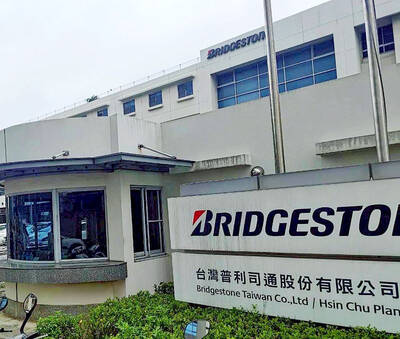
TRANSITION: With the closure, the company would reorganize its Taiwanese unit to a sales and service-focused model, Bridgestone said Bridgestone Corp yesterday announced it would cease manufacturing operations at its tire plant in Hsinchu County’s Hukou Township (湖口), affecting more than 500 workers. Bridgestone Taiwan Co (台灣普利司通) said in a statement that the decision was based on the Tokyo-based tire maker’s adjustments to its global operational strategy and long-term market development considerations. The Taiwanese unit would be reorganized as part of the closure, effective yesterday, and all related production activities would be concluded, the statement said. Under the plan, Bridgestone would continue to deepen its presence in the Taiwanese market, while transitioning to a sales and service-focused business model, it added. The Hsinchu
Taiwan Semiconductor Manufacturing Co (TSMC, 台積電) has approved a capital budget of US$31.28 billion for production expansion to meet long-term development needs during the artificial intelligence (AI) boom. The company’s board meeting yesterday approved the capital appropriation plan for purposes such as the installation of advanced technology capacity and fab construction, the world’s largest contract chipmaker said in a statement. At an earnings conference last month, TSMC forecast that its capital expenditure for this year would be at the higher end of the US$52 billion to US$56 billion range it forecast in January in response to robust demand for 5G, AI and
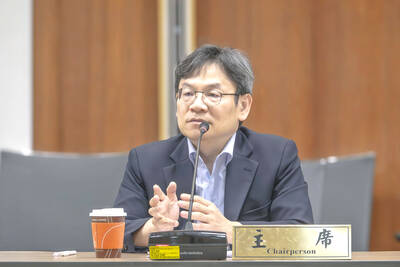
Taiwan Semiconductor Manufacturing Co’s (TSMC, 台積電) investment project in Arizona has progressed better than expected, but it still faces challenges such as water and labor shortages, National Development Council (NDC) Minister Yeh Chun-hsien (葉俊顯) said yesterday. Speaking with reporters after visiting TSMC’s Arizona hub and attending the SelectUSA Investment Summit in Maryland last week, Yeh said TSMC’s Arizona site turned a profit of NT$16.14 billion (US$514 million) last year in its first full year of mass production. “TSMC told me it was surprised by the smooth trial run of the first fab, which has left the company optimistic about the project’s outlook,”


 RSS
RSS