


The Cabinet’s economic “stimulus package” cleared its first reading by legislative committees on Monday, but lawmakers and academics yesterday remained skeptical about how effective the plan would be in expanding domestic demand and reining in inflation.
The Cabinet has said the NT$130.1 billion (US$4.28 billion) spending program, together with a supplementary budget, could push the nation’s economy up by 0.45 percent, in addition to easing the impact of rising commodity and fuel prices.
Democratic Progressive Party Legislator Huang Wei-cher (黃偉哲) said he doubted the Cabinet’s claim, as the bulk of the special fund, NT$66.8 billion, would be channeled to local governments to finance minor public works projects and absorb price hikes in construction materials.
“Insignificant public works projects can do little to stimulate economic growth,” Huang said. “The increased government spending is more likely to drive commodity prices higher than keep them down. The new government can at least learn to spend less if it does not know how to make more money.”
Huang also voiced concern that the spending package might add to the nation’s financial burden after the legislature scrapped the proposed sale of government shares in Chunghwa Telecom Co (中華電信), forcing the Ministry of Finance to agree to borrow an extra NT$52.8 billion to fill the gap.
Chinese Nationalist Party (KMT) Legislator Lee Hung-chun (李鴻均), a vehement opponent of the sale, said the government would risk losing control of the company and the ability to set prices for a business involving public interests.
The planned sale would reduce the government’s stake in Chunghwa by 6.9 percent to below the 34 percent level that Lee and other party lawmakers consider optimal. Currently, the Ministry of Transportation and Communications owns a 35.63 percent stake in Chunghwa, whose capital stands at NT$95.58 billion.
Lee said borrowing money was not a better solution and that the root of the problem lay in the necessity and relevance of the program.
“I don’t think the package can really help expand domestic demand or boost the economy,” Lee said by telephone.
“Still, I will toe the party line when it comes to voting,” Lee said.
The extra debt is estimated to cost the government NT$1.37 billion in interest a year.
Minister of Finance Lee Sush-der (李述德) said this amount would not have an unbearable impact on the nation’s finances, although he previously promoted the sale of Chunghwa shares as the best way to raise funds.
Norman Yin (殷乃平), a professor at National Chengchi University’s Department of Money and Banking, said that, since reclaiming power, KMT officials appeared to be pursuing contradictory approaches in dealing with public debt.
While it was an opposition party, Yin said, the KMT had criticized the former DPP administration for wasting tax dollars on unworthy construction programs, but now it was engaging in similar practices.
“It is odd for the government to seek to galvanize the economy by spending money on dead people,” said Yin, alluding to Taichung City’s proposal to construct funeral facilities with its share of the funding.
The special budget is expected to quickly pass its second and third readings before the end of the current legislative session, because the KMT controls more than two-thirds of the seats in the body.
Shares of contract chipmaker Taiwan Semiconductor Manufacturing Co (TSMC, 台積電) came under pressure yesterday after a report that Apple Inc is looking to shift some orders from the Taiwanese company to Intel Corp. TSMC shares fell NT$55, or 2.4 percent, to close at NT$2,235 on the local main board, Taiwan Stock Exchange data showed. Despite the losses, TSMC is expected to continue to benefit from sound fundamentals, as it maintains a lead over its peers in high-end process development, analysts said. “The selling was a knee-jerk reaction to an Intel-Apple report over the weekend,” Mega International Investment Services Corp (兆豐國際投顧) analyst Alex Huang
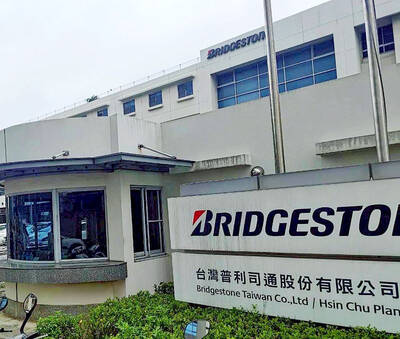
TRANSITION: With the closure, the company would reorganize its Taiwanese unit to a sales and service-focused model, Bridgestone said Bridgestone Corp yesterday announced it would cease manufacturing operations at its tire plant in Hsinchu County’s Hukou Township (湖口), affecting more than 500 workers. Bridgestone Taiwan Co (台灣普利司通) said in a statement that the decision was based on the Tokyo-based tire maker’s adjustments to its global operational strategy and long-term market development considerations. The Taiwanese unit would be reorganized as part of the closure, effective yesterday, and all related production activities would be concluded, the statement said. Under the plan, Bridgestone would continue to deepen its presence in the Taiwanese market, while transitioning to a sales and service-focused business model, it added. The Hsinchu
Taiwan Semiconductor Manufacturing Co (TSMC, 台積電) has approved a capital budget of US$31.28 billion for production expansion to meet long-term development needs during the artificial intelligence (AI) boom. The company’s board meeting yesterday approved the capital appropriation plan for purposes such as the installation of advanced technology capacity and fab construction, the world’s largest contract chipmaker said in a statement. At an earnings conference last month, TSMC forecast that its capital expenditure for this year would be at the higher end of the US$52 billion to US$56 billion range it forecast in January in response to robust demand for 5G, AI and
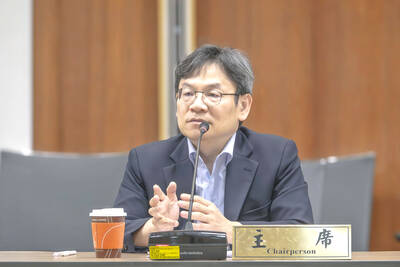
Taiwan Semiconductor Manufacturing Co’s (TSMC, 台積電) investment project in Arizona has progressed better than expected, but it still faces challenges such as water and labor shortages, National Development Council (NDC) Minister Yeh Chun-hsien (葉俊顯) said yesterday. Speaking with reporters after visiting TSMC’s Arizona hub and attending the SelectUSA Investment Summit in Maryland last week, Yeh said TSMC’s Arizona site turned a profit of NT$16.14 billion (US$514 million) last year in its first full year of mass production. “TSMC told me it was surprised by the smooth trial run of the first fab, which has left the company optimistic about the project’s outlook,”


 RSS
RSS