


The non-performing loan ratio of credit card lending continued to decrease to 2.32 percent last month, down 0.04 percentage points from a month ago and 0.6 percentage points lower from a year earlier, statistics released by the Financial Supervisory Commission yesterday showed.
The number of cards in circulation last month continued to shrink to 36.63 million, a decline of 0.43 percent from the previous month and 9.2 percent less than a year ago, the commission said in a statement posted on its Web site.
The outstanding amount of revolving credit last month dropped NT$6.7 billion (US$202.8 million), or 2.2 percent, from the previous month to NT$299.3 billion, the statistics showed.
Compared with a year ago, the revolving credit level was 25.8 percent lower, it said.
The commission said it would pay close watch on card issuers with bad loan ratios exceeding 3 percent, such as Cosmos Bank (萬泰銀行, 3.5 percent), EnTie Bank (安泰銀行, 6.8 percent) and The Chinese Bank (中華銀行, 16 percent).
Meanwhile, the bad loan ratio of cash card lending last month slid by 0.04 percentage points month-on-month to 7.48 percent, the commission's data showed.
The number of cash cards in effect dropped 1.7 percent month-on-month and 79 percent year-on-year to 1.78 million, while outstanding lending plunged 41 percent from a month ago and 35.7 percent from a year earlier to NT$142.7 billion last month, it said.
Cash card issuers that need further regulatory monitoring are Cosmos (4.09 percent), Taishin International Bank (
Overall, the asset quality of the local banking sector changed slightly last month, with the bad loan ratio of the nation's 41 banks rising 0.03 percentage points month-on-month to 2.35 percent, while the coverage ratio -- the indicator used to gauge the sufficiency of reserves for defaulted loans -- dropped 0.31 percentage points to 54.83 percent, the data showed.

Quanta Computer Inc (廣達) chairman Barry Lam (林百里) is expected to share his views about the artificial intelligence (AI) industry’s prospects during his speech at the company’s 37th anniversary ceremony, as AI servers have become a new growth engine for the equipment manufacturing service provider. Lam’s speech is much anticipated, as Quanta has risen as one of the world’s major AI server suppliers. The company reported a 30 percent year-on-year growth in consolidated revenue to NT$1.41 trillion (US$43.35 billion) last year, thanks to fast-growing demand for servers, especially those with AI capabilities. The company told investors in November last year that
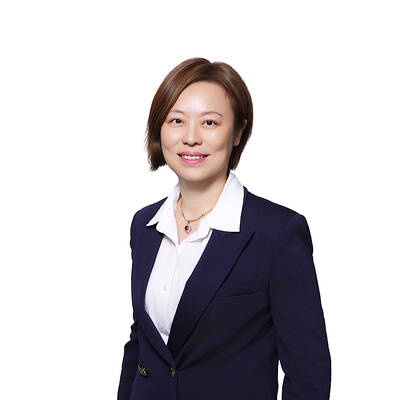
Intel Corp has named Tasha Chuang (莊蓓瑜) to lead Intel Taiwan in a bid to reinforce relations between the company and its Taiwanese partners. The appointment of Chuang as general manager for Intel Taiwan takes effect on Thursday, the firm said in a statement yesterday. Chuang is to lead her team in Taiwan to pursue product development and sales growth in an effort to reinforce the company’s ties with its partners and clients, Intel said. Chuang was previously in charge of managing Intel’s ties with leading Taiwanese PC brand Asustek Computer Inc (華碩), which included helping Asustek strengthen its global businesses, the company
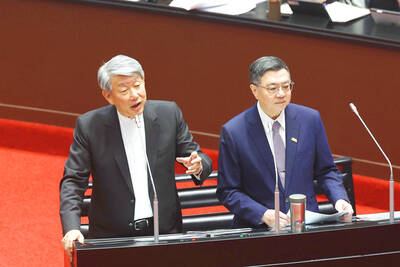
Taiwanese suppliers to Taiwan Semiconductor Manufacturing Co. (TSMC, 台積電) are expected to follow the contract chipmaker’s step to invest in the US, but their relocation may be seven to eight years away, Minister of Economic Affairs J.W. Kuo (郭智輝) said yesterday. When asked by opposition Chinese Nationalist Party (KMT) Legislator Niu Hsu-ting (牛煦庭) in the legislature about growing concerns that TSMC’s huge investments in the US will prompt its suppliers to follow suit, Kuo said based on the chipmaker’s current limited production volume, it is unlikely to lead its supply chain to go there for now. “Unless TSMC completes its planned six

TikTok abounds with viral videos accusing prestigious brands of secretly manufacturing luxury goods in China so they can be sold at cut prices. However, while these “revelations” are spurious, behind them lurks a well-oiled machine for selling counterfeit goods that is making the most of the confusion surrounding trade tariffs. Chinese content creators who portray themselves as workers or subcontractors in the luxury goods business claim that Beijing has lifted confidentiality clauses on local subcontractors as a way to respond to the huge hike in customs duties imposed on China by US President Donald Trump. They say this Chinese decision, of which Agence


 RSS
RSS