


Silicon Valley's historic orchards have virtually disappeared but one notable fruit still stands: Apple.
As the storied company celebrates its 30th birthday in a week, Apple Computer Inc will have brushed off its bruises from product failures and arguably misguided decisions to emerge with a shine that's more than skin-deep.
Its brand name and products -- from the Mac to the iPod -- resonate as both hip and innovative.
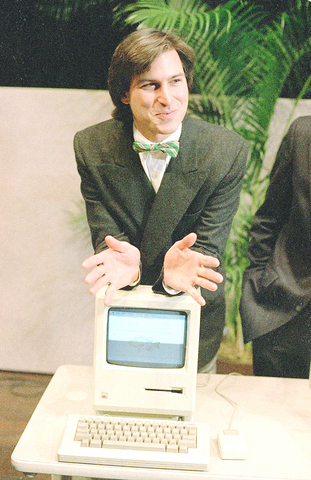
PHOTO: AP
For all of its recent successes, however, Apple also has its share of challenges ahead as it matures into a digital media provider.
In the digital music arena, where Apple dominates, French lawmakers are angling to force the company to change its successful way of chaining its popular iPod player to its online iTunes Music Store.
Recording labels are also chafing at Apple's insistence that its song downloads remain US$0.99 apiece. Apple CEO Steve Jobs rebutted by calling the record industry "greedy."
In the computer space, where Apple is seeing its best sales in years, information-security firms have discovered a few new vulnerabilities in its Macintosh operating system.
Though the security breaches have been innocuous, security experts say they signal that Apple is a higher-profile target now for hackers, who in the past have focused heavily on Microsoft Corp's predominant Windows system.
"Apple is on more people's radar now that the company is a major force," said Tim Bajarin, president of Creative Strategies, a technology consultancy. "And these are all growing pains."
Apple's journey began in 1976 when two college dropouts -- Jobs, a marketing whiz, and his friend Steve Wozniak, an engineering genius -- filed partnership papers on April Fools' Day, their eyes set on building and selling personal computers. Another friend, Ron Wayne, opted out of the risky venture within two weeks.
Their first product was a build-it-yourself computer kit. A year later, in 1977, the Apple II microcomputer was born. It was not the first personal computer but it was the most successful -- a hit not just among engineers, but home users too. Many credit the Apple II as the genesis of the personal computer revolution.
Apple's cultural and technological influences only grew from there. Some of the Cupertino, California-based company's creations have been duds that failed to make it any money, but became a source of inspiration and income for others.
The Apple Lisa, introduced in 1983, used an innovative icon-and mouse-based graphical user interface that laid the foundation of today's computers and replaced the previous arcane text-based systems. But the Lisa was a commercial flop: Its high price (US$9,995) sent business users to PCs from rival IBM Corp.
The hugely successful -- and more affordable -- Apple Macintosh followed in 1984, giving birth to desktop publishing by allowing users to create their own newsletters or printed material.
Microsoft eventually copied the user-friendly graphical interface and licensed its Windows software to manufacturers who copied the IBM PC. The clones proliferated while Macintosh sales were hobbled by Apple's decision not to license its software to other hardware makers.
The next decade was punctuated by an internal power struggle that forced then-chairman Jobs to leave the company, a series of execution missteps, and botched projects -- most notably the Newton, a handheld computer dubbed a personal digital assistant.
In 1996, when Apple was struggling for a foothold in the personal computing market and its efforts to upgrade its operating system were going nowhere, the company bought Jobs' second computer company, NeXT, returning the prodigal son to the fold, and later to the helm.
Jobs, whose charismatic persona is the face of Apple, led the company's resurrection with one breakthrough after another -- first with the iMac, then the slick new OS X operating system, then the iPod music player, then the market-leading online iTunes store.
A side venture Jobs acquired during his absence from Apple, Pixar Animation Studios Inc, had also put the already celebrated high-tech executive in the middle of Hollywood. The connection to Pixar, which is now being acquired by The Walt Disney Co, has since bolstered Apple's rising star in the world of digital entertainment and consumer electronics.
Apple's iPod and iTunes franchises have popularized the notion of music -- and more recently, video -- on the go. They also spawned the modern explosion in podcasts, or self-made broadcasts of audio programming over the Internet to portable gadgets.
Today, Apple's well-honed, self-propelled reputation as David fighting the Goliath of Microsoft and the rest of the PC industry belies reality.
Apple may still hold roughly only a 4 percent share of the worldwide PC market, but analysts say its current operating system set the bar for rival Microsoft with innovative features, including 3D-like imaging and a side pane for "widget" applications.
Many analysts expect that Apple's market-dominating iPod -- which works with both Windows and Macintosh machines -- and its new computers based on Intel Corp chips -- the same used by Windows -- will help grow Apple's slice of the PC market.
Meanwhile, Apple's financial health is better than ever. It posted record revenue of nearly US$14 billion for fiscal 2005 and is armed with more than US$8 billion in cash.
"Apple will continue to be a force in portable music and video, and desktop innovation," Bajarin said. "Its key challenge now is how it will extend the Mac more into the digital lifestyle, into the living room and the rest of the house, as well as to other portable devices."
No matter how well the company does with its future endeavors, many things people do today -- from desktop publishing to music downloads -- will long be regarded as the fruits of Apple.
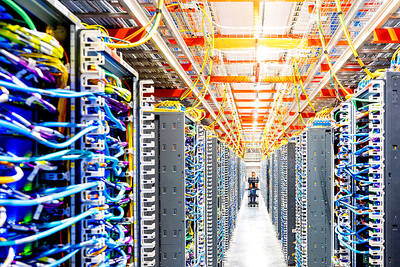
AI SPLURGE: The four major US tech companies have lost more than US$950 billion in value since releasing earnings and outlooks, while equipment makers were gaining Four of the biggest US technology companies together have forecast capital expenditures that would reach about US$650 billion this year — a flood of cash earmarked for new data centers and all the gear within them. The spending planned by Alphabet Inc, Amazon.com Inc, Meta Platforms Inc and Microsoft Corp, all in pursuit of dominance in the still-nascent market for artificial intelligence (AI) tools, is a boom without a parallel this century. Each of the companies’ estimates for this year is expected either near or surpass their budgets for the past three years combined. They would set a high-watermark for capital spending
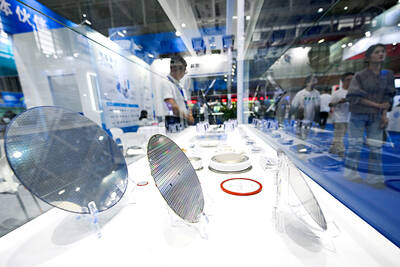
China’s top chipmaker has warned that breakaway spending on artificial intelligence (AI) chips is bringing forward years of future demand, raising the risk that some data centers could sit idle. “Companies would love to build 10 years’ worth of data center capacity within one or two years,” Semiconductor Manufacturing International Corp (SMIC, 中芯) cochief executive officer Zhao Haijun (趙海軍) said yesterday on a call with analysts. “As for what exactly these data centers will do, that hasn’t been fully thought through.” Moody’s Ratings projects that AI-related infrastructure investment would exceed US$3 trillion over the next five years, as developers pour eye-watering sums
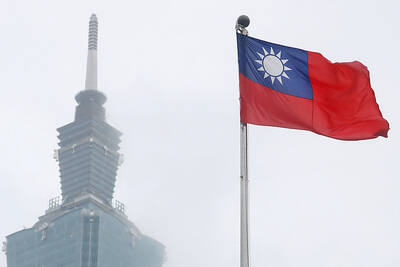
Bank of America Corp nearly doubled its forecast for the nation’s economic growth this year, adding to a slew of upgrades even after a rip-roaring last year propelled by demand for artificial intelligence (AI). The firm lifted its projection to 8 percent from 4.5 percent on “relentless global demand” for the hardware that Taiwanese companies make, according to a note dated yesterday by analysts including Xiaoqing Pi (皮曉青). Taiwan’s GDP expanded 8.63 percent last year, the fastest pace since 2010. The increase “reflects our sustained optimism over Taiwan’s technology driven expansion and is reinforced by several recent developments,” including a more stable currency,
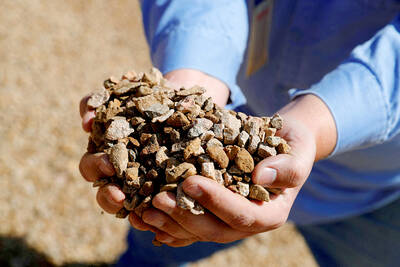
COLLABORATION: Taiwan and the US could jointly find solutions to weaknesses in supply chain resilience for critical materials, focusing on mining and initial refinement Taiwan is likely to purchase rare earths from the US in the future, and is also in talks with Australia and Canada to strengthen global rare earth supply chain security, Minister of Economic Affairs Kung Ming-hsin (龔明鑫) said yesterday. Taiwan and the US last month concluded the sixth Economic Prosperity Partnership Dialogue, during which both sides signed a joint statement endorsing the principles of the Pax Silica Declaration, pledging to deepen cooperation in areas including critical minerals. At the time, Kung said the two sides would establish working groups to advance cooperation in areas including artificial intelligence, digital infrastructure, critical materials and


 RSS
RSS