


Starting next month, Taiwanese consumers will be able to view real-time local TV programs on their laptops even when abroad, as long as they have a broadband connection.
This is made possible because Sony Taiwan Ltd is set to launch its latest LocationFree TV product here in the middle of next month, the firm's division president Hiroyuki Oda told reporters yesterday.
"Taiwan is one of the most important IT bases in Asia, and consumers here easily embrace new high-tech products," he said, explaining why Taiwan was chosen as the third country for Sony to introduce the product.
The product was first unveiled in early October in Japan and the US.
LocationFree TV enables people to watch television programs on the go. With a broadband connection, its base station can broadcast TV and content from devices such as DVD players or hard-disk recorders across the Internet to wherever viewers are.
"LocationFree TV will especially benefit Taiwanese citizens residing abroad, as they will be able to watch all the local TV programs, just as they do at home," Oda said.
He brushed aside concerns about competition from similar Internet TV services.
Real time
Internet TV offers selected programs and limited content for home viewers, but not real-time viewing from any location, he said.
Since the service has been well received by Japanese and US consumers, the Japanese firm expects the same response in Taiwan, Oda said, while declining to reveal target sales or available units.
The product is priced at NT$9,990 (US$299).
LocationFree TV will gradually become available in other European or Asian countries next year, but the timeframe for its release has not yet been finalized, he added.
In addition to computers, users of PlayStation Portable gaming consoles will be able to watch TV as well.
More audio and visual products such as personal digital assistants or phones will possibly be added as viewing devices for LocationFree TV in the future, Oda said.
LCD sales rise
In other news, Sony said local sales of its 32-inch liquid-crystal-display (LCD) TVs will rise above 3,000 units this month, a figure which would make it the top seller in the 32-inch LCD TV category.
"We sold more than 1,000 units of the 32-inch Bravia series in October, which made us the No. 2 seller in the category. As we are increasing production capacity of these TVs to accommodate strong local demand, sales will double this month," Oda said.
In late September Sony debuted the 32-inch series at NT$59,900, a price similar to local brands, in an attempt to regain its past market leadership.
As Sony aims to grab the top spot in the local LCD TV market next year, it will expand its products to entice more buyers, and may include a 45-inch lineup, he added.

The Fair Trade Commission’s (FTC) ongoing review of Grab Holdings Ltd’s US$600 million acquisition of Foodpanda Taiwan’s operations, announced on March 23, has taken on fresh urgency as industry experts warn that the transaction could embed significant Chinese cybersecurity vulnerabilities into Taiwan’s digital infrastructure through Grab’s deep ties to autonomous-driving firm WeRide (文遠知行). Less than 16 months after the FTC blocked Uber Eats’ direct attempt to acquire Foodpanda Taiwan — citing potential combined market shares of 80 to 90 percent — the emergence of Grab as the buyer has prompted questions about whether the same competitive harm is simply being rerouted
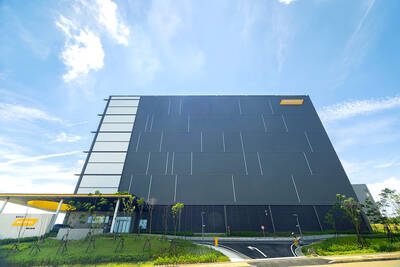
POWER BUILDUP: Powered by Nvidia’s B200 Blackwell chips, the data center would support MediaTek’s computing power demand and business growth, the company said Smartphone chip designer MediaTek Inc (聯發科) yesterday launched a new artificial intelligence (AI) data center with a maximum capacity of 45 megawatts to meet its rising demand for computing power required to develop new advanced chips for AI applications. The company has completed the first-phase computing power buildup at the data center in Miaoli County’s Tongluo Township (銅鑼), providing 15 megawatts of capacity to support its research and development (R&D) capabilities, despite an industrywide shortage of key components, MediaTek said. Supply constraints have plagued a wide range of key components, including memory chips, solid-state drives, power supply units and central
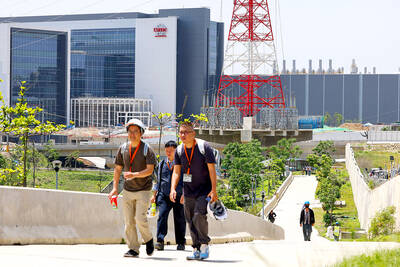
IMAGE SENSORS: The Japanese company would be the controlling shareholder of the venture, with development and production lines to be set up in Kumamoto Taiwan Semiconductor Manufacturing Co (TSMC, 台積電) yesterday said it has signed a non-binding memorandum of understanding (MOU) with Sony Semiconductor Solutions Corp to create a joint venture to develop and produce next-generation images sensors. The partnership seeks to explore and address emerging opportunities in physical artificial intelligence (AI) applications, such as automotive and robotics, paving the way for innovations and expanded technological advancements, TSMC said in a statement. Sony would be the majority and controlling shareholder of the joint venture, the statement said, adding that the company would set up development and production lines in its newly constructed fab in Kumamoto Prefecture’s

The nation’s foreign exchange reserves climbed back above US$600 billion at the end of last month, as investment gains, currency valuation effects and renewed foreign inflows offset volatility seen earlier in the month, the central bank said yesterday. Reserves stood at US$602.49 billion, up US$5.6 billion from the previous month, the central bank said. The rebound reflected returns on reserve assets, fluctuations in major currencies against the US dollar and the central bank’s market operations aimed at maintaining orderly trading conditions, Department of Foreign Exchange Director-General Eugene Tsai (蔡炯民) said. Financial markets were volatile early last month, with foreign investors recording net purchases


 RSS
RSS