


Smartphone chip designer MediaTek Inc (聯發科) yesterday launched a new artificial intelligence (AI) data center with a maximum capacity of 45 megawatts to meet its rising demand for computing power required to develop new advanced chips for AI applications.
The company has completed the first-phase computing power buildup at the data center in Miaoli County’s Tongluo Township (銅鑼), providing 15 megawatts of capacity to support its research and development (R&D) capabilities, despite an industrywide shortage of key components, MediaTek said.
Supply constraints have plagued a wide range of key components, including memory chips, solid-state drives, power supply units and central processing units, the company said.
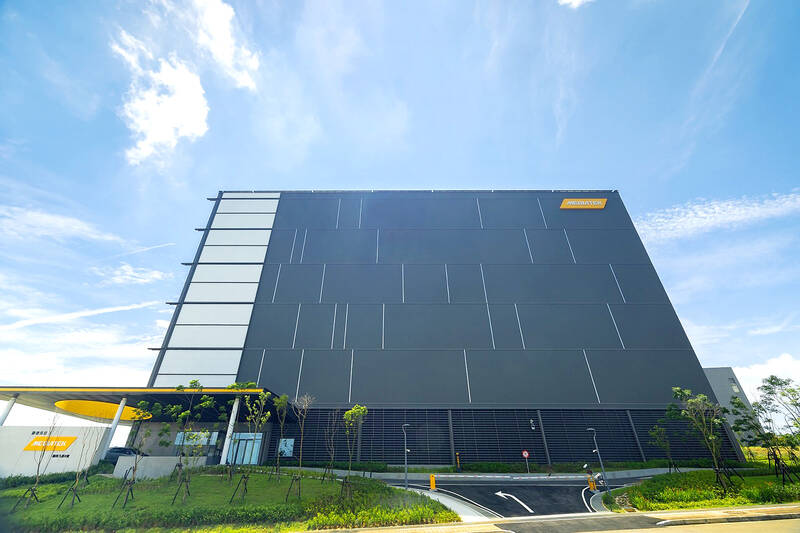
Photo courtesy of MediaTek Inc
The second-phase and third-phase expansions, each with an installed capacity of 15 megawatts, would be activated in accordance with the company’s business developments, MediaTek information security division deputy director Joseph Huang (黃博揚) said at a news conference.
The new AI data center provides up to 138 billion tokens per month for AI model training or inference, MediaTek said.
Tokens are units of data processed by AI models during training and inference, enabling prediction, generation and reasoning.
The token number is more than double than the 60 billion tokens consumed at the end of last year, Huang said.
Compared with leasing data center space, MediaTek believes operating an in-house data center is the most effective way to support its computing power demand and business growth, as well as cater to its functional and capability requirements, he said.
The Miaoli data center is powered by Nvidia Corp’s B200 Blackwell chips and enterprise-grade AI supercomputing infrastructure. It is also the first large-scale data center in Taiwan introducing immersion cooling technology to address the power consumption issue, reducing overall power usage effectiveness to 1.1.
When asked whether MediaTek would consider adopting tensor processing units, which are custom-designed application-specific integrated circuits (ASICs) developed by Google, to accelerate machine learning workloads, Huang said the company would not rule it out.
For now, Nvidia chips are still the optimal choice to support MediaTek’s R&D workloads, he said.
The new data center came one week after MediaTek said it aimed to capture 10 to 15 percent of the world’s AI ASIC market, even though the market is expected to accelerate to US$80 billion next year, rather than in 2028 as had been estimated previously.
MediaTek, which tapped into the AI ASIC market in the past few years by designing AI chips for other firms, said its first AI ASIC project is to contribute about US$2 billion in revenue in the fourth quarter of this year and generate multiple billions of dollars next year.
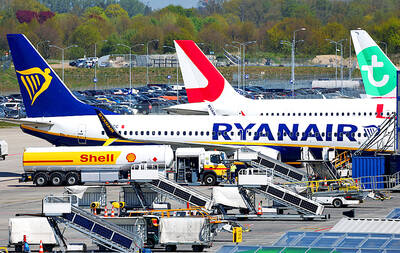
Ryanair, Transavia, Volotea and other low-cost airlines are feeling the financial pain from high jet fuel prices as a result of the Middle East war and are cutting flights. The closure of the Strait of Hormuz has taken a huge chunk of oil supplies off the market, sending the price of jet fuel soaring and triggering fears of shortages that could force airlines to cancel flights. Airlines are not waiting for a lack of supplies to react. “Travel alert: Airlines are cutting thousands of flights right now,” Travel Therapy host Karen Schaler said in an Instagram reel this past weekend.
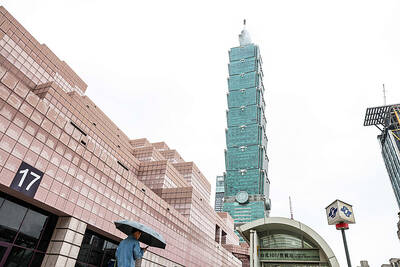
MANAGING RISKS: Taiwan has secured LNG sufficient to cover 95 percent of electricity demand for next month, UBS said, describing the government’s approach as proactive UBS Group AG has raised its forecast for Taiwan’s economic growth this year to 8 percent, up from 6.9 percent previously, and said expansion could reach as high as 8.6 percent if external energy shocks are avoided. The upgrade reflects a stronger-than-expected first-quarter performance and sustained momentum in artificial intelligence (AI)-driven exports, which UBS said are providing a firm foundation for growth despite geopolitical and energy risks. Taiwan’s GDP expanded 13.69 percent year-on-year in the first quarter, the fastest growth since the second quarter of 1987, the Directorate-General of Budget, Accounting and Statistics (DGBAS) reported on Thursday. On a seasonally

The Fair Trade Commission’s (FTC) ongoing review of Grab Holdings Ltd’s US$600 million acquisition of Foodpanda Taiwan’s operations, announced on March 23, has taken on fresh urgency as industry experts warn that the transaction could embed significant Chinese cybersecurity vulnerabilities into Taiwan’s digital infrastructure through Grab’s deep ties to autonomous-driving firm WeRide (文遠知行). Less than 16 months after the FTC blocked Uber Eats’ direct attempt to acquire Foodpanda Taiwan — citing potential combined market shares of 80 to 90 percent — the emergence of Grab as the buyer has prompted questions about whether the same competitive harm is simply being rerouted
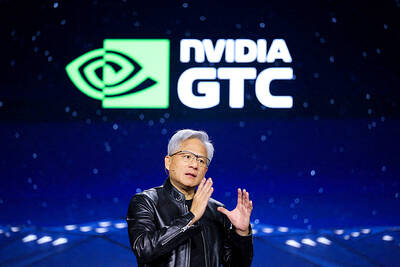
The list of Asian stocks that benefit from business partnership with Nvidia Corp is getting longer, as the region further integrates into the artificial intelligence (AI) chip giant’s business ecosystem. Just in the past week, South Korea’s LG Electronics Inc, Taiwan’s Nanya Technology Corp (南亞科技), as well as China’s Huizhou Desay SV Automotive Co (德賽西威) and Pateo Connect Technology Shanghai Corp (博泰車聯) have become the latest to rally on news of tie-ups, supply-chain participation or product collaboration with the US chip designer. Asian suppliers account for about 90 percent of Nvidia’s production costs, up from about 65 percent last year, data compiled


 RSS
RSS