


Taiwan Semiconductor Manufac-turing Co (TSMC, 台積電), the world's top contract chipmaker, yesterday said it has no immediate plans to make chips with relatively advanced technology at its Chinese plant because of the government's restrictions on such activities.
The company's clarification came after a Chinese-language newspaper reported that the chipmaker recently planned to move a batch of old equipment to its plant in Shanghai -- including machinery capable of making chips on more advanced 0.18-micron processing technology -- to get around a government ban on using advanced technology in China.
"We won't make chips on 0.18-micron processing technology in China unless we have approval from the government," Tzeng Jinn-haw (曾晉皓), a spokesman for TSMC, said in a phone interview.
Tzeng said it is true that some old machines -- which will eventually be moved to the Shanghai factory -- can make chips using different technologies, including the latest0.18-micron processing technology.
"It is certain that we will continue to move more old equipment to our Chinese plant to expand our capacity. But, we haven't set a schedule for the relocation in the near future yet," Tzeng said.
TSMC aims to boost the output of its Shanghai factory to around 15,000 wafers per month by the end of this year, from 5,000 wafers a month at the beginning of the year.
Local chipmakers are now only permitted to make chips on less-advanced 0.25-micron processing technology in China.
The restriction, however, is contrary to the government's recent relaxation of rules governing the exporting of semiconductor equipment. The new rules abide by the Wassenaar Agreement, which allows local chipmakers to make chips outside the nation using 0.18-micron processing technology.
The government explained in a statement yesterday that local chipmakers are only allowed to export such equipment after they have received the green light from the investment watchdog, the Ministry of Economic Affairs.
TSMC and local peers have been calling for further relaxation of the rules, in a bid to fend off growing competition in the fast-growing Chinese chip-manufacturing market, as well as to meet customers' growing needs for chips made on 0.18-micron processing technology.
But, political factors have been getting in the way.
"It's a matter of national security rather than an issue of industry development," Minister of Economic Affairs Ho Mei-yueh (何美玥) said last month.
The decision was a far cry from the ministry's internal report, which found that Taiwan's semiconductor industry will not be hurt if the government allows local chipmakers to produce chips on 0.18-micron processing technology in China, according to Ho.
To safeguard Taiwan's competitiveness, the government agreed only in 2003 to allow three Taiwanese chipmakers to make chips using less advanced 0.25-micron processing technology as from the end of this year.
TSMC is the first Taiwanese chipmaker to get government approval to manufacture chips in China. Taiwan's biggest memory-chip maker, Powerchip Semiconductor Corp (

Shares of contract chipmaker Taiwan Semiconductor Manufacturing Co (TSMC, 台積電) came under pressure yesterday after a report that Apple Inc is looking to shift some orders from the Taiwanese company to Intel Corp. TSMC shares fell NT$55, or 2.4 percent, to close at NT$2,235 on the local main board, Taiwan Stock Exchange data showed. Despite the losses, TSMC is expected to continue to benefit from sound fundamentals, as it maintains a lead over its peers in high-end process development, analysts said. “The selling was a knee-jerk reaction to an Intel-Apple report over the weekend,” Mega International Investment Services Corp (兆豐國際投顧) analyst Alex Huang
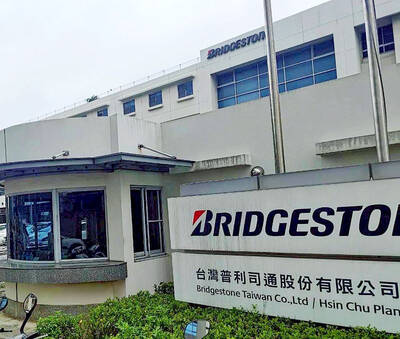
TRANSITION: With the closure, the company would reorganize its Taiwanese unit to a sales and service-focused model, Bridgestone said Bridgestone Corp yesterday announced it would cease manufacturing operations at its tire plant in Hsinchu County’s Hukou Township (湖口), affecting more than 500 workers. Bridgestone Taiwan Co (台灣普利司通) said in a statement that the decision was based on the Tokyo-based tire maker’s adjustments to its global operational strategy and long-term market development considerations. The Taiwanese unit would be reorganized as part of the closure, effective yesterday, and all related production activities would be concluded, the statement said. Under the plan, Bridgestone would continue to deepen its presence in the Taiwanese market, while transitioning to a sales and service-focused business model, it added. The Hsinchu
Taiwan Semiconductor Manufacturing Co (TSMC, 台積電) has approved a capital budget of US$31.28 billion for production expansion to meet long-term development needs during the artificial intelligence (AI) boom. The company’s board meeting yesterday approved the capital appropriation plan for purposes such as the installation of advanced technology capacity and fab construction, the world’s largest contract chipmaker said in a statement. At an earnings conference last month, TSMC forecast that its capital expenditure for this year would be at the higher end of the US$52 billion to US$56 billion range it forecast in January in response to robust demand for 5G, AI and

Taiwan Semiconductor Manufacturing Co’s (TSMC, 台積電) investment project in Arizona has progressed better than expected, but it still faces challenges such as water and labor shortages, National Development Council (NDC) Minister Yeh Chun-hsien (葉俊顯) said yesterday. Speaking with reporters after visiting TSMC’s Arizona hub and attending the SelectUSA Investment Summit in Maryland last week, Yeh said TSMC’s Arizona site turned a profit of NT$16.14 billion (US$514 million) last year in its first full year of mass production. “TSMC told me it was surprised by the smooth trial run of the first fab, which has left the company optimistic about the project’s outlook,”


 RSS
RSS