


ProMOS Technologies Inc (茂德科技), ranked No. 3 among Taiwan's makers of memory chips for computers, yesterday said it is entering final talks with South Korea's Hynix Semiconductor Inc on jointly developing advanced technologies.
The chipmaker's remarks were in response to a report that co-operation between the two might falter due to concerns of the South Korean government.
"The talks are under way. We just met two days ago," ProMOS Technologies spokesman Albert Lin (
ProMOS Technologies is aggressively seeking new technological support after it severed a long-term partnership with Infineon Technologies AG of Germany in late 2002.
Last week, ProMOS Technologies told investors that it was close to inking an agreement with Hynix, the world's No.2 memory chipmaker, to collaborate in developing both advanced 90-nanometer and more advanced stack-capacitor technologies.
At the time, Lin said they might formally sign a contract by the end of this month.
"We are moving on that schedule," he said.
If the cooperation is secured, ProMOS Technologies plans to produce memory chips in its second 12-inch fab in Taichung, central Taiwan. The new plant, worth US$3.2 billion, is scheduled to ramp up production in the third quarter of next year.
But investors do not consider technology support to be the most pressing issue for the Taiwanese chipmaker, compared to the capital crunch it faces for the construction of a new cost-saving 12-inch factory.
"Capital constraints are more a concern for me," said Paul Tsai (
ProMOS Technologies can continue to use existing technologies transferred from Infineon to make chips, until it finds a new technology source, Tsai said.
But, without a fresh and massive capital inflow, ProMOS could run out of cash to carry out the ongoing construction of its new factory in Taichung, he said.
ProMOS Technologies said it plans to raise US$300 million through the issuance of convertible bonds in the first quarter of next year, which is expected to be a slow season for the memory-chip industry.
"It would be a tough task for the company to raise that amount as the industry is dipping into a downtrend," Tsai said. "We believe the budget gap could be huge."
ProMOS Technologies only had NT$16.2 billion cashflow as of the third quarter, while it will need at least US$1.5 billion, or NT$50 billion, for capital expenditure in the second half of next year, when it starts to move in equipment, he said.
In the first three quarters of the year, ProMOS Technologies earned NT$8.2 billion, or NT$1.84 a share, on revenue of NT$32.2 billion.

Shares of contract chipmaker Taiwan Semiconductor Manufacturing Co (TSMC, 台積電) came under pressure yesterday after a report that Apple Inc is looking to shift some orders from the Taiwanese company to Intel Corp. TSMC shares fell NT$55, or 2.4 percent, to close at NT$2,235 on the local main board, Taiwan Stock Exchange data showed. Despite the losses, TSMC is expected to continue to benefit from sound fundamentals, as it maintains a lead over its peers in high-end process development, analysts said. “The selling was a knee-jerk reaction to an Intel-Apple report over the weekend,” Mega International Investment Services Corp (兆豐國際投顧) analyst Alex Huang
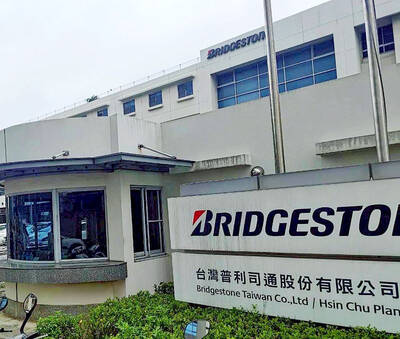
TRANSITION: With the closure, the company would reorganize its Taiwanese unit to a sales and service-focused model, Bridgestone said Bridgestone Corp yesterday announced it would cease manufacturing operations at its tire plant in Hsinchu County’s Hukou Township (湖口), affecting more than 500 workers. Bridgestone Taiwan Co (台灣普利司通) said in a statement that the decision was based on the Tokyo-based tire maker’s adjustments to its global operational strategy and long-term market development considerations. The Taiwanese unit would be reorganized as part of the closure, effective yesterday, and all related production activities would be concluded, the statement said. Under the plan, Bridgestone would continue to deepen its presence in the Taiwanese market, while transitioning to a sales and service-focused business model, it added. The Hsinchu

Taiwan Semiconductor Manufacturing Co (TSMC, 台積電) has approved a capital budget of US$31.28 billion for production expansion to meet long-term development needs during the artificial intelligence (AI) boom. The company’s board meeting yesterday approved the capital appropriation plan for purposes such as the installation of advanced technology capacity and fab construction, the world’s largest contract chipmaker said in a statement. At an earnings conference last month, TSMC forecast that its capital expenditure for this year would be at the higher end of the US$52 billion to US$56 billion range it forecast in January in response to robust demand for 5G, AI and

Taiwan Semiconductor Manufacturing Co’s (TSMC, 台積電) investment project in Arizona has progressed better than expected, but it still faces challenges such as water and labor shortages, National Development Council (NDC) Minister Yeh Chun-hsien (葉俊顯) said yesterday. Speaking with reporters after visiting TSMC’s Arizona hub and attending the SelectUSA Investment Summit in Maryland last week, Yeh said TSMC’s Arizona site turned a profit of NT$16.14 billion (US$514 million) last year in its first full year of mass production. “TSMC told me it was surprised by the smooth trial run of the first fab, which has left the company optimistic about the project’s outlook,”


 RSS
RSS