


The deadlock between government officials and the cable television industry over the roll-out of digital TV services is expected to be resolved later this month, an industry insider said yesterday.
Viewers may have to wait until after the presidential election, however, to see real progress.
The nation's three largest providers have locked horns with local governments and the television watchdog Government Information Office (GIO) over how much they can charge for new digital services and the set-top box that are needed to decode digital TV signals.
"We are involved in semi-legal actions against the Taipei City Government at present and hope to see some results later this month," Gary Tsai (蔡俊榮), a spokesman for the nation's largest cable provider, China Network Systems Co (CNS, 中嘉), told the Taipei Times yesterday.
"The bottom line is that consumers don't have to pay for the box and can rent it instead," he said.
Tsai said he is nevertheless "optimistic" for a full resolution to the dispute, especially after the presidential election next month when officials might be more willing to make changes.
Taipei City has capped the price of the digital set-top box at NT$3,500 (US$105), despite the industry's claim that each box sets them back NT$6,000.
CNS and its largest rival, Eastern Multimedia Co (EMC,
Taipei City has said it also wants to cap the monthly rental fee of the box at NT$140.
The nation's No. 3 operator, Taiwan Broadband Corp (TBC,
The industry faces other problems as well. The government has told providers to use the European DVB-C digital TV broadcast standard, but at least one of the three major players wants to stick with the US' ATSC standard.
The stalemate between the bickering parties has led to a disappointing market for digital television -- only 53,000 users in all of Taiwan, according to Hong Kong-based researcher Media Partners Asia Ltd.
"China has 200,000 digital set-top boxes, and Hong Kong 400,000," said Vivek Couto, executive director of Media Partners Asia.
"Taiwan is a much more developed market than China, which doesn't even have pay TV content," Couto said.
China does not cap the price of the set-top box, charging the equivalent of between NT$4,000 and NT$6,000 for locally-made models, and NT$24,000 for imported ones, Agence France-Presse reported yesterday.
The problem is that local governments have been permitted to set price limits on digital TV set-top boxes and limits on monthly fees in Taiwan, Couto said. The GIO has also regulated how providers can charge for new channels, saying that they cannot yet offer monthly packages, as is common in other markets like the US and Europe.
This is unacceptable to cable providers.
"The box shouldn't be the problem," Tsai said. "This is a market economy. We need to be able to charge at a point that customers can accept."
Taiwan has many premium channels, such as Home Box Office (HBO), Star TV and Cinemax, in its basic package of 80 channels, making it difficult to find channels for which viewers will pay extra.
"You can't shift HBO from the basic to a premium service, so you need new content," Couto said.
The solution is deregulation, Couto said.
"The box issue is a problem, but if it can be fixed and there is deregulation, there will be a lot more content [on Taiwan's pay TV services] from Japan and Hong Kong," he said.
The GIO wants digital cable in 85 percent of all TV households by 2006.
The GIO did not respond to requests for comment yesterday.

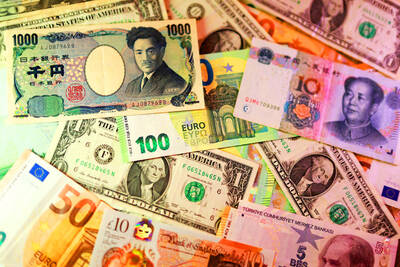
Taiwan’s foreign exchange reserves fell below the US$600 billion mark at the end of last month, with the central bank reporting a total of US$596.89 billion — a decline of US$8.6 billion from February — ending a three-month streak of increases. The central bank attributed the drop to a combination of factors such as outflows by foreign institutional investors, currency fluctuations and its own market interventions. “The large-scale outflows disrupted the balance of supply and demand in the foreign exchange market, prompting the central bank to intervene repeatedly by selling US dollars to stabilize the local currency,” Department of Foreign

Intel Corp is joining Elon Musk’s long-shot effort to develop semiconductors for Tesla Inc, Space Exploration Technologies Corp and xAI, marking a surprising twist in the chipmaker’s comeback bid. Intel would help the Terafab project “refactor” the technology in a chip factory, the company said on Tuesday in a post on X, Musk’s social media platform. That is a stage in the development process that typically helps make chips more powerful or reliable. The chipmaker’s shares jumped 4.2 percent to US$52.91 in New York trading on Tuesday. The Terafab project is a grand plan by Musk to eventually manufacture his own chips for

Some robotaxi passengers were left stranded in the middle of fast-moving traffic in a major Chinese city after their driverless vehicles stopped running, according to police and media reports on Wednesday. A preliminary investigation indicates more than 100 robotaxis came to a halt because of a “system malfunction,” police in the city of Wuhan said in a statement, without elaborating. No injuries were reported. One passenger told Chinese media that their robotaxi stopped after turning a corner. An instruction on a screen read: “Driving system malfunction. Staff are expected to arrive in 5 minutes.” After no one showed up, the passenger pushed
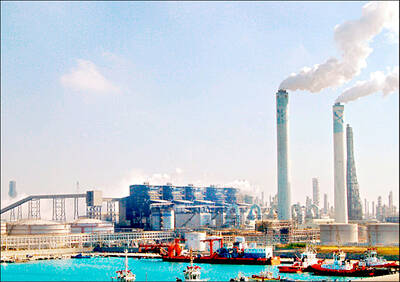
Taiwan Power Co (Taipower, 台電) yesterday said it plans to resume operations at two coal-fired power generators for three months to boost security of electricity supply as liquefied natural gas (LNG) supply risks are running high due to the Middle East conflict. The two coal-fired power generators are at Mailiao Power Plant in Yunlin County’s Mailiao Township (麥寮). The plant, operated by Formosa Plastics Group (台塑集團), supplied electricity to Taipower’s power grid until the end of last year. Taipower’s decision came about one month after Minister of Economic Affairs Kung Ming-hsin (龔明鑫) on March 10 said that the nation had no imminent


 RSS
RSS