


Taipei Times: Can you tell us more about what benefits digital TV is bringing your customers and why it is important for Taiwan's viewing public?
David Dea: What is the benefit to consumers in the home? A higher-quality video signal, as well as a faster Internet service at much less expense to the customer. We're connecting 1,000 customers a week in our service areas because of the higher speed, and we sell that service at 50 percent of the cost of the same speed on Chunghwa Telecom Co (
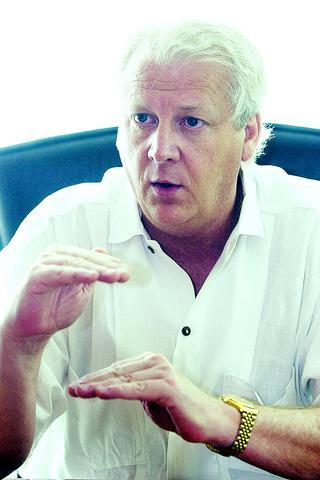
PHOTO: SEAN CHAO, TAIPEI TIMES
The best way to describe it is the BSkyB services [offered in the UK]. [BSkyB owner Rupert] Murdoch has done a wonderful job of developing a new array of interactive television that is really just beginning, including the sports service that has the capability of being able to watch a sporting event and reach over and change cameras, do picture-in-picture, just flip the screen, and at the same time view some information about the sports player and the team on the screen. It gives the capability to personally involve the user with that medium, because it is interactive.
TT: Apart from sports, in what other areas do digital services enhance current cable services?
Dea: The next area you will see is going to be education. Services are now developing some absolutely wonderful interactivity for educational purposes -- full-motion video so it is entertaining, personal and at the same time offers the benefit of education, whether it is formal or informal. Science programming etcetera is all being developed now, and within the next two to three years we are going to see that really be deployed in the industry.
Digital gives the ability to have a library and then the customer can access that library for full-motion video. For example, if I am watching a program on Prague on an interactive travel channel and I am interested in the castle as there may be an art exhibition, while I'm watching the video I can punch up current events and see the art gallery, and then I can hit a button and it will reach back and pull out a video from the library and show me the exhibition. That is the real benefit -- the interactivity.
TT: What about the commercial side? Can I then buy a ticket?
Dea: Absolutely. It is multi-featured. You'll be able to make your plane reservations. You will see the convergence of what we know today as the Internet with the television set.
TT: Many areas in Taiwan still do not have digital services. What are the major barriers you in the industry face?
Dea: The major barrier is the lacking or lagging government regulation in Taiwan. There is a desire to treat cable television as a utility as opposed to a developing, new technology in the market. There is an attitude by the government that it is a consumer issue. Well, basic cable television might require a more strict regulatory environment, but when we start getting off into these new services then things should become optional to the customer and the industry should be allowed to go ahead and invest and deploy new technologies and services without every time having to go through not one, but two regulatory levels. First is the Government Information Office, and then the local government. Taipei, for example, in the review of just the limited digital service, told the cable operators that you have to sell these set-top boxes, but with every one you deploy you lose US$50, so operators said they're not going to deploy the boxes.
TT: What changes do we need to make the environment more favorable to cable operators who want to offer digital services?
Dea: Three years ago there wasn't any conversation about this. There wasn't any talk about the three-in-one bill proposed, there wasn't any talk of the tiering plan or about the NICI [National Information and Communications Initiative committee under the Executive Yuan] independent regulatory body.
Last year a tremendous number of things started occurring. Lots of progress, but it's bump-and-grind progress. Until they complete the formation of NICI, pass the "three-in-one" bill and centralize the regulation, then it's going to be bump and grind.
TT: Is Taiwan at risk of being marginalized as its neighbors switch over to digital much more quickly?
Dea: Hong Kong, Singapore, Malaysia and other places even down the line, outside of the better westernized markets in Asia, are starting to pass Taiwan where it used to be the leading cable market and the leading media market of the region.
Taichung Mayor Jason Hu (
TT: How realistic is the 2006 deadline for switching over to digital, considering the lack of consensus between the industry and the government?
Dea: Unless things change very quickly, it is totally unrealistic. It will not happen. Right now there's an election on. The city of Taipei will be a digital desert unless they change their philosophy. They need to be proactive instead of reactionary.
TT: On Tuesday, yet another government department, the Ministry of Transportation and Communications, told you to agree on a standard digital TV signal. What obstacles are there to agreeing on a standard, and is it necessary? Can different standards co-exist?
Dea: It is a huge issue. The standard that has been adopted [in Taiwan by our competitors] is DVB and it is a European, French-driven technology. DVB has substantial limitations. But one of the benefits that was believed to be of DVB was smart-card technology. Smart-card technology is, has been, and will be broken and pirated. ATSC is an American technology standard that does not have these issues. We feel the government's role should not be to predicate or dictate technology. Their role should be to set policy.
TT: With all the obstacles thrown in your path, why do you stay in Taiwan? Aren't other territories like Hong Kong and South Korea more exciting and lucrative?
Dea: Taiwan has a good growth trend whether it is per capita income or GDP. It has a skilled base with a high educational level. They are also very high users of the media for information and entertainment services. It's a good market. Look at the number of magazines, newspapers, television stations, radio stations, some of them doing well, some aren't, because it's somewhat oversaturated, but it is still a market with a high consumption of media.
TT: The Consumers' Foundation is concerned that new services will be expensive and full of junk channels. What is your response to criticism like that?
Dea: Look to tomorrow and not to yesterday. The basic cable television service in Taiwan was homegrown to a great extent and that's why there are 80 channels of basic service. Yes, many of them are lower-grade quality, but they are home grown. Taiwan has per capita more televisions than any other market by far. The new services are not the basic, it is not an extension of the basic. We don't want to do that.
Right now we have one additional tier. There are 24 channels of video and 24 channels of digital radio. We cannot afford to add any more channels on the basic as there is a rate cap. We offer Adventure One, the Reality Channel, The Soundtrack Channel (like MTV but movie soundtracks), Fashion TV, Arirang, ABC out of Australia, Bloomberg. We are looking at BBC and MGM for that service. Especially with the English language programming, a lot of that is niche programming. That shouldn't be forced into the basic.
TT: Are you thinking of any other tiers or packages?
Dea: Not yet, not until the regulatory environment starts to open up. I'd very much like to break that out and have a news tier, a foreign language tier, an erotica tier, a sports tier, a movie tier, and let the customer go whatever direction they want to go. And that is international standards.
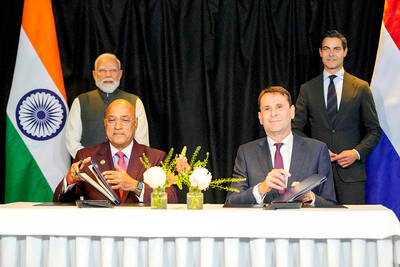
NEW MARKET: The partnership opens up India to the Dutch company, which already has a strong hold in the semiconductor market of South Korea, Taiwan and China ASML Holding NV entered into a partnership agreement with Tata Electronics Pvt Ltd aimed at ramping up India’s goal to develop domestic chip-manufacturing capabilities. The Dutch company’s technology would help power Tata Electronics’ planned 300 millimeter (mm) semiconductor foundry in Gujarat, according to a joint statement from the two companies on Saturday. The signing of a memorandum of understanding coincides with a visit by Indian Prime Minister Narendra Modi to the Netherlands, which is looking to deepen bilateral relations with New Delhi. ASML, whose top customers include Taiwan Semiconductor Manufacturing Co (台積電) and Samsung Electronics Co, makes lithography machines that can print
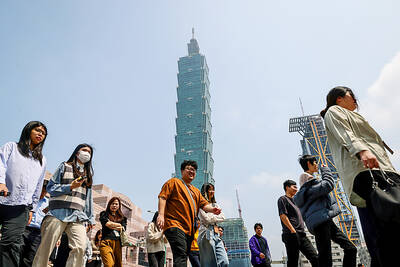
TECH RELIANCE: Growth is increasingly reflecting an unequal K-shaped distribution, where technology sectors outperform and other industries struggle, an expert said Standard Chartered Bank has significantly raised its forecast for Taiwan’s economic growth to 9.5 percent this year, up from 7.6 percent previously, citing surging artificial intelligence (AI) demand driving exports, semiconductor production and investment. The upgrade reflects a sustained AI supercycle that continues to fuel demand for advanced chips and technology infrastructure, which form the backbone of Taiwan’s exports, the bank said in a report this week. “We raise our 2026 growth forecast to reflect a much stronger-than-expected first-quarter GDP figure,” Standard Chartered senior economist for greater China and Asia Tommy Wu (胡東安) said in the report. Driven largely by a 35.3 percent
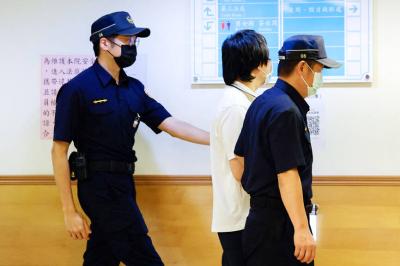
Tokyo Electron's Taiwan unit today said in a written response that it respects the judicial process, takes the court ruling seriously and would not appeal in the Taiwan Semiconductor Manufacturing Co (TSMC, 台積電) trade secrets case. Last month, a court fined the Taiwan unit of Japan's Tokyo Electron NT$150 million (US$4.74 million) in a case involving trade secrets related to TSMC's sensitive chip technology.
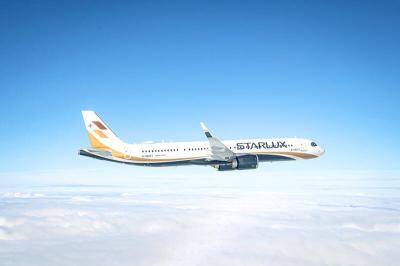
Two of Taiwan’s international carriers, Starlux Airlines Co (星宇航空) and EVA Airways Corp (長榮航空), have retained the five-star airline rating awarded by international airline review organization Skytrax. Starlux was awarded the distinction for a second consecutive year, while EVA Air received it for the 11th straight year, Skytrax said in statements released yesterday and on Thursday last week, respectively. The five-star rating is considered one of the airline industry's highest honors and is awarded following professional audits of airline product and frontline service standards, Skytrax said. The ratings are based on in-depth assessments using unified global quality standards rather than customer review scores


 RSS
RSS